
Chandigarh, October 22, 2026 (Yes Punjab News)
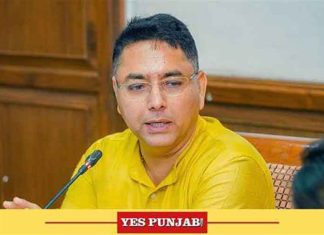
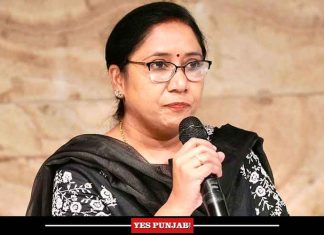
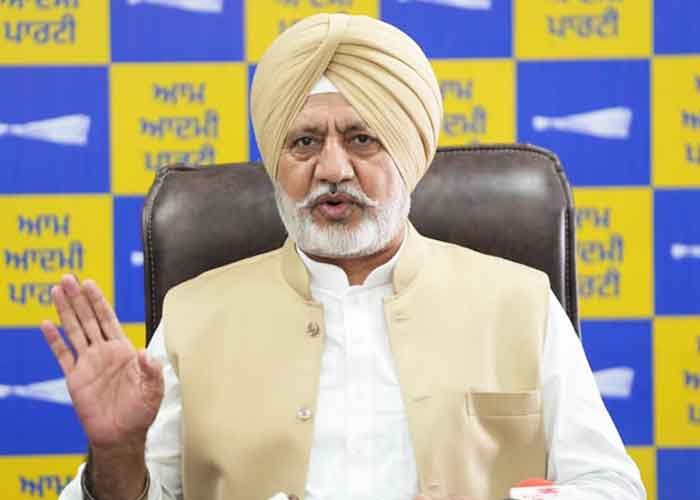
Aam Aadmi Party (AAP) Punjab media in-charge Baltej Pannu on Thursday criticised Congress MP and former Punjab Congress president Amarinder Singh Raja Warring over his reported remarks about discontinuing free electricity and other welfare benefits if the Congress returns to power in Punjab in 2027.
Addressing a press conference, Pannu alleged that Warring’s statement reflected the Congress party’s approach towards public welfare and raised concerns about the future of benefits currently provided by the Bhagwant Mann-led government. He claimed that withdrawing these facilities would increase the financial burden on ordinary families across the state.
“Congress ruled the country for decades, yet ordinary people continued to struggle for basic facilities. Even today, its intention is to burden the people of Punjab financially and deprive them of the benefits they receive under the Aam Aadmi Party government. Raja Warring’s statement has exposed the mindset of a party that wants ordinary families to remain financially constrained rather than progress,” Pannu said.
Highlighting the state government’s electricity policy, Pannu said the Mann government had fulfilled its major guarantee soon after assuming office in 2022. He claimed that more than 90 per cent of households in Punjab were now receiving zero electricity bills under the provision of 300 units of free electricity per month.
Pannu alleged that the Congress could not accept the financial relief being provided to households and claimed that a Congress government could discontinue the free electricity scheme, healthcare facilities, and other welfare measures.
He also raised concerns over the Mukh Mantri Sehat Yojna, under which families are eligible for cashless treatment worth up to ₹10 lakh, and Mohalla Clinics, which provide healthcare services. According to Pannu, these initiatives could face uncertainty if the Congress came to power.
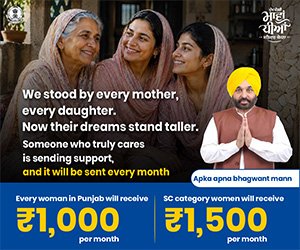
On women’s welfare, the AAP leader referred to the Mawan Dheeyan Satkar Yojna, under which, he said, women were to receive monthly financial assistance of ₹1,000 and ₹1,500. He alleged that the Congress wanted to withdraw this assistance rather than expand support for women and their families.
Pannu also highlighted the state government’s claims regarding agricultural infrastructure, saying canal irrigation coverage had increased from 21 per cent to 88 per cent of agricultural land under the Mann government. He said improved access to canal water was important for farmers and alleged that a change in government could put these gains at risk, particularly for smaller farmers.
Discussing transport-related relief, Pannu said the AAP government had closed 18 toll plazas, saving commuters a claimed ₹64 lakh every day. He alleged that previous governments had repeatedly extended toll operators’ contracts, in some cases by as many as 400 days, placing an additional financial burden on the public.
Pannu also cited the Sadak Surakhya Force as an initiative aimed at improving road safety. He said Union Transport Minister Nitin Gadkari had praised the force in Parliament and highlighted a reduction of more than 50 per cent in deaths at accident sites in Punjab.
On education, Pannu said the state government had undertaken reforms in government schools, improved educational facilities and sent teachers abroad for professional training. He also claimed that students from economically weaker families were clearing competitive examinations such as NEET.
He accused the Congress of seeking to reverse the government’s initiatives in electricity, healthcare, women’s welfare, irrigation and education. Referring to earlier warnings by Chief Minister Bhagwant Singh Mann about traditional political parties potentially withdrawing public benefits, Pannu said Warring’s remarks had brought the issue into focus ahead of the 2027 Assembly elections.
The Congress leader’s reported position and the AAP’s response have brought the future of welfare schemes into the political debate in Punjab, with the AAP asserting that the benefits currently provided to households should continue.
 FOLLOW NOW