Islamabad, August 24, 2026 (Yes Punjab News)
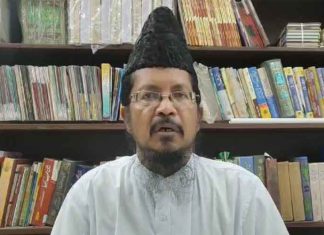
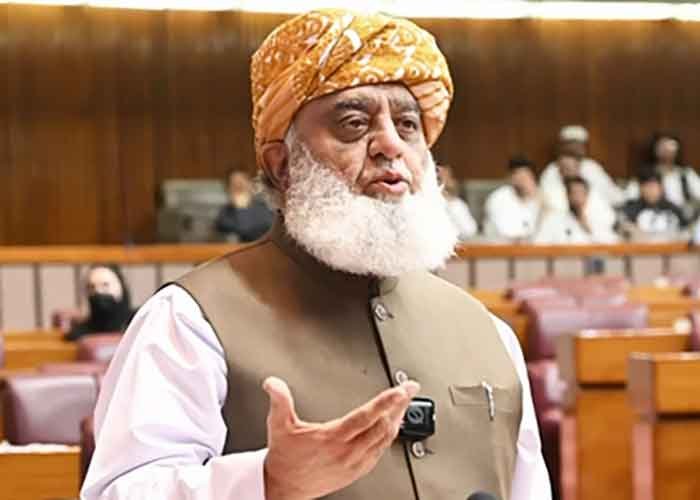
Jamiat Ulema-e-Islam (F) chief Maulana Fazlur Rehman has taken a sharp swipe at Pakistan Army chief Field Marshal Asim Munir, invoking the country’s defeat in the 1971 war with India and warning that prolonged violence and bloodshed could eventually lead to geographical changes.
Addressing a JUI-F workers’ convention in Peshawar, Rehman questioned the military establishment’s claims of strength while highlighting what he described as the hardships being faced by ordinary Pakistanis. His remarks came amid criticism of the concentration of political and constitutional powers in the hands of the military establishment.
“We are the protectors of this country. No one’s father can harm this country. I agree, you are very powerful,” Rehman said, before recalling the events of December 1971.
He referred to statements made by then Pakistan President and military ruler General Yahya Khan shortly before Pakistani forces surrendered in Dhaka. Rehman said similar declarations of strength had been heard in the past but had not prevented defeat.
“But I remember, and maybe some elders will too, that in December 1971, one day before laying down arms, General Yahya Khan had addressed the Army and had said, ‘We will fight in the streets, deserts, fields, factories, mountains, and we will fight against them. We will fight’. We heard these big words then, too,” he said.
The 13-day India-Pakistan war ended on December 16, 1971, with the surrender of Pakistani forces in Dhaka and the creation of Bangladesh.
Rehman questioned why the Pakistani people were being subjected to continued hardship. Referring to decades of conflict and bloodshed in the region, he warned that prolonged violence could have consequences for Pakistan’s territorial integrity.
“When blood flows like this, then it is a sign of geographical changes,” he said, adding that the authorities should make their intentions clear to the people.
Rehman also criticised what he described as the concentration of powers that constitutionally belong to Parliament and the federal government in the hands of a single individual within the establishment.
“You may be the Army Chief, Chief of Defence Forces, Field Marshal too — we have no objection to that — but the powers that should belong to Parliament have been handed over to a single individual in the establishment,” he said.
He alleged that Parliament could be sidelined in future legislation and constitutional amendments and called for greater unity among opposition parties inside Parliament to resist what he described as an erosion of constitutional authority.
 FOLLOW NOW