Geneva, September 17, 2026 (Yes Punjab News)
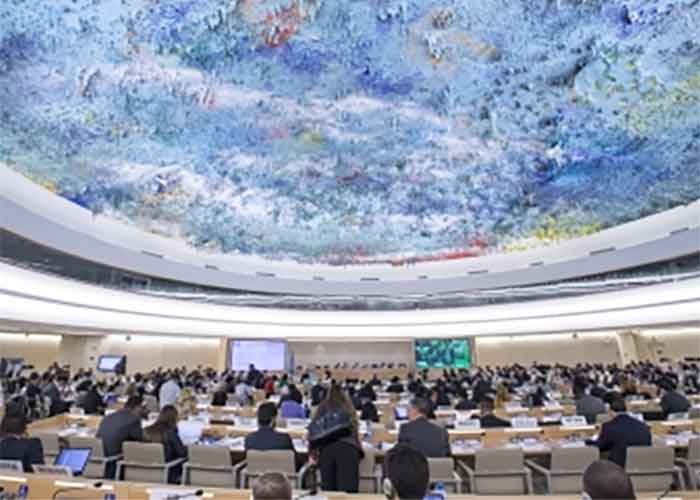
Several international speakers at a conference held on the sidelines of the 63rd session of the UN Human Rights Council on Thursday backed India’s decision to keep the Indus Waters Treaty (IWT) in abeyance, describing it as a sovereign response to Pakistan’s alleged support for cross-border terrorism.
The 63rd UN Human Rights Council session is being held in Geneva from September 7 to October 7, 2026.
The IWT was signed by India and Pakistan on September 19, 1960, to govern the utilisation of the waters of the Indus river system.
India placed the treaty in abeyance in April 2025 following the Pahalgam terror attack and has maintained that it will remain in abeyance until Pakistan credibly and irrevocably renounces support for cross-border terrorism. The Indian government reiterated this position in July 2026.
Addressing the conference titled “Community Water Rights and the Imperative to Keep the Indus Water Treaty in Abeyance,” Siegfried O Wolf, Director of Research at the South Asia Democratic Forum in Brussels, said India was within its rights to seek a review of the 1960 treaty.
Wolf argued that Pakistan’s conduct had, in his view, undermined the object and spirit of the agreement. He described the treaty as a voluntary Indian concession involving what he characterised as a structural imbalance in water allocation, financial contributions to the Indus Development Fund and restrictions related to storage and infrastructure.
He also referred to Pakistan’s repeated challenges to Indian hydroelectric projects, including Baglihar, Kishenganga and Ratle, describing them as part of what he called tactical legal warfare.
Rejecting Pakistan’s allegations that India blocks river flows, Wolf termed the claim an “engineering myth”, arguing that Indian projects on the western rivers are non-consumptive and return water downstream after power generation.
He further argued that Pakistan’s water crisis was rooted in domestic factors, including Punjab’s dominance, feudal landholding, urban bias and deteriorating canal infrastructure.
London-based human rights activist Arif Aajakia said access to water was a fundamental human right and alleged that Pakistan’s military establishment had denied adequate water access to Sindh.
Referring to major terror attacks in India, including the 2001 Parliament attack, the 2008 Mumbai attacks, Pulwama and the Pahalgam killings, Aajakia said India’s decision to place the 65-year-old treaty in abeyance was justified.
The conference followed a separate intervention by a Delhi-based NGO at the UNHRC last week, which called for a review of the IWT in light of changing water-security conditions and contemporary human-rights concerns.
In its oral statement during the 63rd UNHRC session under Item 3, the NGO linked access to water with the rights to life, health, food, housing, dignity and development.
It cited the UN recognition of access to safe and clean drinking water and sanitation as a fundamental human right, arguing that international water treaties should be implemented in ways that strengthen rather than constrain states’ ability to meet their human-rights obligations.
The NGO said the Indus Waters Treaty, despite representing decades of international cooperation, was signed more than six decades ago and that the region’s water-security environment had changed significantly.
It pointed to population growth, climate change, glacier retreat, groundwater depletion and increasingly unpredictable river flows as factors that have altered the region’s water-security challenges.
The organisation argued that treaty implementation should not prevent governments from meeting their obligations towards communities under their jurisdiction. It called water security a fundamental priority and described a review of the IWT as necessary, while referring to its current status in abeyance.
The issue remains legally and diplomatically contested. In an August 31, 2026 ruling, a Court of Arbitration constituted under the treaty held that the IWT remained in force and that India could not unilaterally suspend it. India rejected the proceedings and said the decision to keep the treaty in abeyance remained in force.
The NGO concluded that human rights and international cooperation should be viewed as complementary, with transboundary water governance placing communities, dignity and fundamental rights at the centre.
 FOLLOW NOW