
New Delhi, October 19, 2026 (Yes Punjab News)
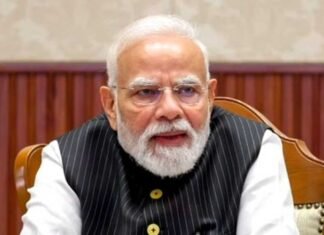
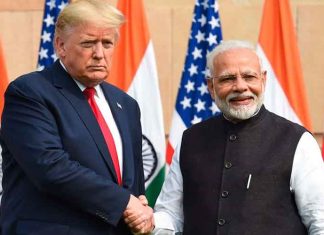
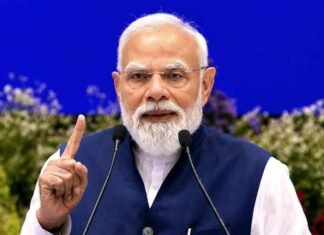
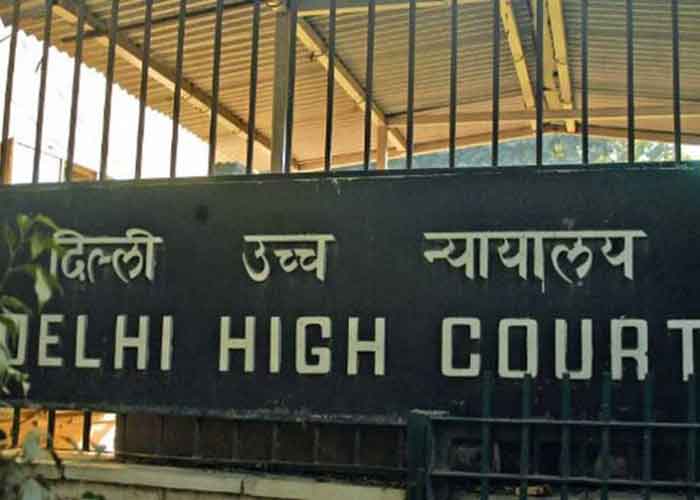
The Delhi High Court has set aside a Central Information Commission (CIC) order directing the Indian Air Force (IAF) to disclose records of foreign visits undertaken by Prime Ministers Narendra Modi and Manmohan Singh on IAF aircraft, ruling that the information could compromise national security and endanger the Prime Minister’s life and physical safety.
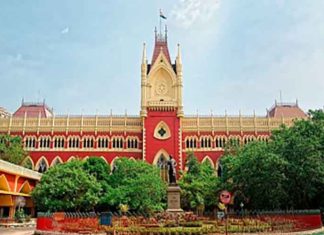
A single-judge Bench of Justice Amit Mahajan allowed a petition filed by the Central Public Information Officer (CPIO) of the Directorate of Personal Services at Air Headquarters. The court held that the IAF was justified in denying the information under Sections 8(1)(a) and 8(1)(g) of the Right to Information (RTI) Act, 2005.
The High Court observed that even after redacting the names and identifying particulars of security personnel, disclosure of the remaining information could enable sensitive aspects of the Prime Minister’s security arrangements to be reconstructed by correlating the records with information available in the public domain.
“This Court or the CIC cannot sit in appeal over the subjective satisfaction of the competent security agencies as to whether disclosure of particular information could jeopardise national security or endanger the life and physical safety of the Hon’ble Prime Minister,” Justice Mahajan said in an order passed on October 15.
The court was hearing a petition challenging the CIC’s July 8, 2020, order, which had allowed an appeal filed by Commodore Lokesh K. Batra (retd) and directed the IAF to provide certified copies of available and relevant Special Flight Returns (SFR-Part II) relating to the Prime Ministers’ foreign visits.
In June 2018, Batra had filed an RTI application seeking information about every foreign visit undertaken by the Prime Ministers on IAF aircraft from April 1, 2013, onwards.
The IAF provided certain travel details but refused to supply copies of the SFRs, citing exemptions under the RTI Act. It maintained that the records contained sensitive particulars relating to aircraft, aircrew, passengers and Special Protection Group (SPG) personnel accompanying the Prime Minister.
The IAF argued that disclosure of such information, when read alongside publicly available material, could provide strategic and tactical advantages to forces inimical to the country’s security.
Challenging the denial, Batra argued that the information concerned expenditure on foreign visits using public funds and was therefore a matter of significant public interest. He also clarified that he wanted details of private persons accompanying the Prime Minister at public expense, rather than the identities of security personnel.
The High Court, however, observed that the right to information was not absolute and had to be balanced against other public interests, including the protection of sensitive information.
Referring to Supreme Court judgments, Justice Mahajan said the RTI Act sought to harmonise transparency and accountability with the need to preserve confidentiality where disclosure could conflict with other public interests.
“The right to information is not absolute and must be balanced against other rights and interests protected by law, including the right to privacy,” the court observed.
It further noted that the prescribed SFR-II format contained not only passengers’ names but also their designations, appointments, identification numbers, flight references, passenger strength and agency particulars. According to the court, these details were interconnected and could facilitate the identification of security personnel while revealing the composition of the Prime Minister’s entourage and patterns of security deployment.
“Once the concerned authority was of the view that revealing certain information could jeopardise national security and the security of the Hon’ble Prime Minister, it was entitled to invoke the exemption under Section 8(1)(a) and Section 8(1)(g),” the High Court said.
The court further held that the use of public funds for the Prime Minister’s foreign visits did not, by itself, justify disclosing information that could compromise security arrangements.
“The mere fact that public funds have been expended on the foreign visits of the Hon’ble Prime Minister does not, by itself, justify disclosure of information which may compromise the security arrangements put in place for such visits,” the order stated.
Holding that the CIC had erred in directing disclosure even after redaction of the names and identifying particulars of security personnel, the Delhi High Court set aside the commission’s order.
On December 11, 2020, the High Court had stayed the operation of the CIC’s order while issuing notice on the IAF’s petition.
 FOLLOW NOW