
Greater Noida, October 20, 2026 (Yes Punjab News)
While Dussehra celebrations across India traditionally culminate in the burning of Ravan’s effigy to mark the victory of good over evil, some communities follow a different tradition, worshipping the king of Lanka and avoiding rituals associated with his destruction.
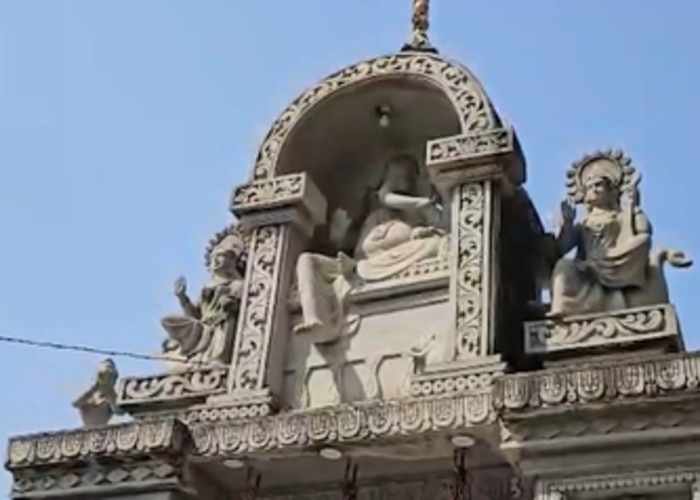
Bisrakh village in Uttar Pradesh’s Greater Noida district, around 30 km from the national Capital, is believed by locals to be Ravan’s birthplace. Residents consider burning his effigy disrespectful to their ancestors and instead mark Vijayadashami with prayers and religious ceremonies.
Mahant Ramdas Maharaj said the village was associated with sages Brahma and Pulastya and that Ravan was worshipped at the local temple throughout the year.
“This is Ravan’s birthplace and was once the ashram of Sage Brahma and Sage Pulastya. Ravan is worshipped here every day throughout the year. Today is Dussehra, and a ‘yagya’ is being performed. The temple has been beautifully decorated, and special prayers are being offered to Ravana,” he said.
According to local tradition, Bisrakh was earlier known as Vishveshara and is associated with Ravan’s father, Vishrava. The village is also believed to be the site of a Shiva Lingam established by Vishrava, where Ravan, a devotee of Lord Shiva, is said to have worshipped.
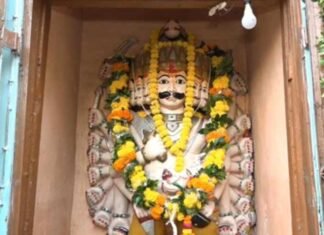
A similar tradition is observed at the Dashanan Temple in Kanpur’s Shiwala area. The shrine, located within the Kailash Temple complex, opens only once a year on Vijayadashami. Temple priest Pandit Ram Bajpai said the temple was built in 1868 by Maharaj Guru Prasad Shukla.
On Dussehra, the idol is ceremonially bathed with milk and holy water before prayers and aarti. Devotees visit to pay homage to Ravan’s learning, intelligence and devotion to Lord Shiva.
In Madhya Pradesh’s Vidisha district, a village named Ravan also worships the king of Lanka as its presiding deity, affectionately calling him “Ravan Baba”.
Located in Nateran tehsil, the village has an ancient temple that locals believe dates back to the Parmar era. It houses a 12-foot idol of Ravan in a reclining posture, where daily prayers and aarti are performed.
Rather than burning his effigy, villagers organise Ramayana recitations, devotional singing and a community feast on Dussehra. Priest Pandit Naresh Tiwari said residents seek Ravan Baba’s blessings before weddings and other auspicious occasions, believing that his blessings protect the community and help their undertakings proceed without obstacles.
These traditions reflect the diverse ways in which communities across India observe Dussehra, shaped by local beliefs and religious practices.
 FOLLOW NOW