
Washington, October 11, 2026 (Yes Punjab News)
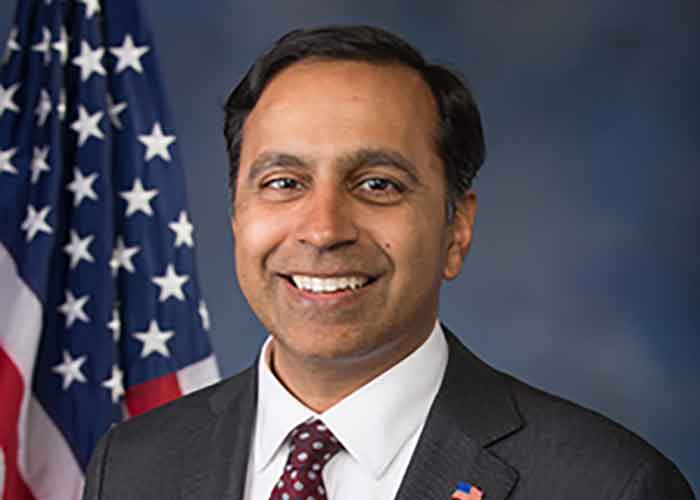
The number of Indian-American members in the US House of Representatives is expected to fall from six to four after the November 3 midterm elections, as Congressmen Raja Krishnamoorthi and Shri Thanedar prepare to leave the chamber. The group, informally known as the “Samosa Caucus”, could retain or regain additional representation if Democratic candidates Amish Shah in Arizona or Pia Dandiya in Florida win their closely contested races.
All six Indian-American members of the current House are Democrats: Ami Bera, Ro Khanna, Pramila Jayapal, Krishnamoorthi, Thanedar and Suhas Subramanyam.
Krishnamoorthi, who represents Illinois’s 8th Congressional District, gave up his House seat to run for the Senate. However, he lost the Democratic primary on March 17 to Illinois Lieutenant Governor Juliana Stratton, who secured 40.39 per cent of the vote against his 32.71 per cent.
“Obviously, this is not the result we sought… But unlike Donald Trump, I’m not going to question the outcome. I’m proud of the race we ran,” Krishnamoorthi said in his concession.
Thanedar, meanwhile, lost the August 4 Democratic primary in Michigan’s 13th Congressional District to state Representative Donavan McKinney. McKinney won 51.9 per cent of the vote, compared with Thanedar’s 48.1 per cent.
Justice Democrats spent nearly $1 million supporting McKinney, who also received an endorsement from Senator Bernie Sanders.
“I want to congratulate Representative Donavan McKinney on a hard fought race… It was the honor of my life to represent the 13th District in the United States Congress,” Thanedar said in a Facebook statement on August 5.
The other four Indian-American incumbents are contesting seats rated Solid or Safe Democratic by the Cook Political Report, Inside Elections and Sabato’s Crystal Ball. They are Bera in California’s 3rd District, Khanna in California’s 17th, Jayapal in Washington’s 7th and Subramanyam in Virginia’s 10th.
Two of these contests feature Indian-American candidates from opposing parties. Khanna faces Republican Ritesh Tandon, while Jayapal is challenged by Republican Nirav Sheth.
The possibility of expanding the caucus rests on two competitive races involving Democratic candidates Amish Shah and Pia Dandiya.
In Arizona’s 1st Congressional District, Shah, an emergency room physician, is challenging Republican Jay Feely, who has received backing from President Donald Trump. The Cook Political Report moved the contest from Toss-up to Lean Democratic on September 25, while Inside Elections and Sabato’s Crystal Ball continue to rate it a Toss-up.
An October poll by FirstStrategic put Shah at 44 per cent and Feely at 42 per cent, within the survey’s margin of error of 5.4 percentage points. Shah narrowly lost the seat to Republican David Schweikert in 2024.
After winning the Democratic primary in July, Shah said he intended to reach voters across party lines.
“Now, it’s my job to earn the support of every voter in this district—including Democrats who voted for another candidate, Independents frustrated with our political system, and Republicans disappointed with the state of the country,” he said.
In Florida’s redrawn 22nd Congressional District, Dandiya is contesting an open seat against Republican Casey Askar. The Cook Political Report rates the race a Toss-up, Inside Elections classifies it as Tilt Republican, and Sabato’s Crystal Ball rates it Lean Republican. Donald Trump won the district by 55 per cent to 44 per cent in 2024.
Polling in the Florida contest remains limited. A survey by Impact Research for House Majority PAC, a Democratic sponsor, placed Dandiya at 46 per cent and Askar at 44 per cent, while an August poll by Tavern Research showed the candidates tied.
Dandiya, a former teacher and principal born in Palm Beach County to parents who immigrated from India, would become Florida’s first South Asian member of Congress if elected.
“I am so thrilled and honoured to be your Democratic nominee for US Congress here in my home state of Florida,” she said after winning the Democratic primary in August.
The caucus is not expected to grow beyond six members in January, as no other Indian-American candidate is considered competitive in the House races described in the report. Republicans Tandon, Sheth and Mahesh Ganorkar, who is challenging Democrat Valerie Foushee in North Carolina’s 4th Congressional District, are all running in seats rated Solid Democratic.
The expected departures come during a difficult election cycle for incumbents. Twelve sitting House members lost their primaries this year, including seven Democrats.
Indian-American representation in Congress was limited before 2012. The only two Indian Americans to have served in Congress before that year were Democrat Dalip Singh Saund of California, who served from 1957 to 1963, and Republican Bobby Jindal of Louisiana, who served from 2005 to 2008.
Bera’s election in 2012 marked the beginning of a steady increase in representation. Khanna, Jayapal and Krishnamoorthi entered Congress in 2017, followed by Thanedar in 2023 and Subramanyam in 2025.
Indian Americans number approximately 5.5 million, accounting for around 1.6 per cent of the US population. In a survey conducted this summer by AAPI Vote and AAPI Data, Indian-American voters favoured Democratic House candidates over Republican candidates by 66 per cent to 18 per cent.
 FOLLOW NOW