

New Delhi, October 31, 2026 (Yes Punjab News)
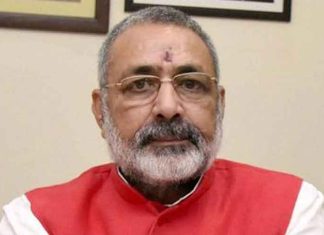
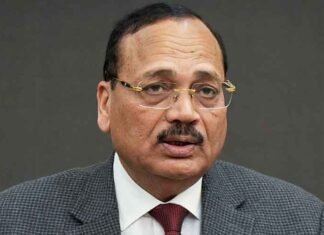
Joint Parliamentary Committee Chairman P.P. Chaudhary has said that simultaneous elections to the Lok Sabha and state Assemblies would benefit regional parties rather than weaken them, arguing that separate elections can allow a strong ruling party at the Centre to overshadow regional political forces.
In an exclusive interaction with IANS on Saturday, Chaudhary said the view was shared by journalist and economist Swaminathan Gurumurthy during a meeting of the JPC on Friday.
The committee is examining the proposed ‘One Nation, One Election’ Bill, which seeks to synchronise elections to the Lok Sabha and state Legislative Assemblies. The Bill has been referred to a 41-member Joint Parliamentary Committee for deliberations on the mechanisms needed to conduct simultaneous national and state elections.
Recalling India’s electoral history, Chaudhary said the Lok Sabha and state Assembly elections were held together in four general elections between 1952 and 1967. He added that eight or nine state Assemblies were subsequently dissolved prematurely to enable their elections to be held alongside Lok Sabha polls.
He argued that these developments reflected the constitutional intent behind holding simultaneous elections, noting that some members of the Constituent Assembly were also present during that period.
On Friday’s JPC meeting, Chaudhary said several eminent political scientists and economists, including Swaminathan Gurumurthy, Professor S. Mahendra Dev, Professor Pami Dua and Dr Shamika Ravi, presented their views on the political and economic implications of the proposed legislation. Mahendra Dev is the Chairman of the Economic Advisory Council to the Prime Minister.
Addressing concerns that ‘One Nation, One Election’ could marginalise regional parties or undermine federalism and the basic structure of the Constitution, Chaudhary said the experts had offered an opposing assessment.
“Rather the other way round; simultaneous elections would actually strengthen and promote regional parties, the federal structure, and the basic constitutional framework,” he said, recounting the experts’ position.
According to Chaudhary, the economists examined electoral trends from 1967 onwards, including the elections of 1971, 1977, 1980, 1984 and 1989, the coalition era from 1989 to 2014, and the Lok Sabha elections of 2014, 2019 and 2024.
He said their assessment was that when Lok Sabha and Assembly elections were held separately, a strong party ruling at the Centre often influenced state-level contests, contributing to the marginalisation of regional parties.
Citing this electoral pattern, Chaudhary said simultaneous polls gave regional parties a better opportunity to perform, while separate elections could allow national-level political strength to dominate state-specific issues.
“When elections to the state and Centre are held separately, in case of conflict between strong Centre and regional issues, the nation’s electoral history shows that a strong Centre will have an overriding effect,” he said.
Chaudhary maintained that simultaneous elections would therefore benefit regional parties, strengthen democracy and serve the national interest. He described Gurumurthy’s observation at the committee meeting as an “eye opener”.
 FOLLOW NOW