
Bengaluru, September 18, 2026 (Yes Punjab News)
Hindustan Aeronautics Limited (HAL) on Friday handed over two Light Combat Aircraft (LCA) Tejas Final Operational Clearance (FOC) Twin Seater Trainers and three HTT-40 Basic Trainer Aircraft to the Indian Air Force (IAF), along with four Dhruv Next Generation (NG) helicopters to Pawan Hans Limited (PHL).
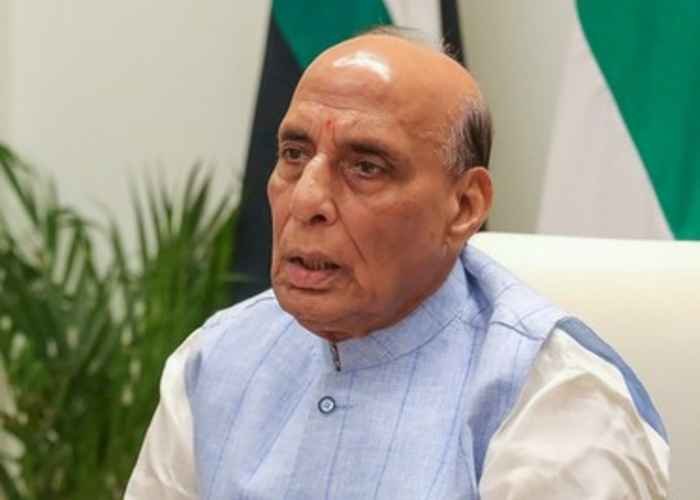
The handover ceremony in Bengaluru was attended by Defence Minister Rajnath Singh and Civil Aviation Minister K. Rammohan Naidu.
Rajnath Singh described the occasion as a significant milestone in India’s drive towards indigenous aerospace capability, technological confidence and self-reliance.
“Our aim is to make India capable, self-reliant and globally competitive in meeting its aerospace requirements,” the Defence Minister said.
He said India was steadily strengthening defence self-reliance through domestic production of advanced equipment, while the government was supporting Defence Public Sector Undertakings (DPSUs) and encouraging private industry by providing a level playing field.
Singh emphasised that aerospace self-reliance would require sustained development over time rather than a sudden transformation.
“There can be no sudden ‘big bang’ in the development of aerospace systems. It is a vast and gradual process involving a wide range of components,” he said, describing the challenges facing the sector as milestones in a long-term roadmap.
The Defence Minister said the handover also reflected increasing synergy between civil and military aerospace capabilities and called for an integrated ecosystem capable of meeting the requirements of both sectors.
He said indigenous capabilities in aircraft design, avionics, propulsion, composite materials, flight-control systems, manufacturing and certification would strengthen the wider aerospace industry.
Singh also highlighted the technology-driven nature of modern warfare, saying future air operations would increasingly depend on information, trained personnel, advanced technology, integrated systems and rapid decision-making. He expressed confidence that the LCA FOC Trainer would contribute to preparing pilots for operational requirements.
“While the Dhruv-NG exemplifies our indigenous civil aerospace prowess, LCA FOC Trainer stands as a symbol of indigenous military aerospace capability and the maturity of its fighter aircraft ecosystem,” he said.
On the HTT-40, Singh noted that India had traditionally depended on imported aircraft for basic pilot training, while HAL was now producing the trainer domestically to meet IAF requirements. He also expressed confidence in its export potential.
Calling HAL a key pillar of India’s indigenous aerospace efforts, Singh said the company’s expertise covered aircraft manufacturing, helicopter development, overhaul, repair, maintenance and aerospace engineering. He urged HAL to expand across the entire aerospace value chain, from design and development to manufacturing, certification, lifecycle support and global marketing.
He also stressed the importance of adhering to realistic project timelines, warning that delays in technical programmes could create gaps in defence preparedness, increase costs and heighten the risk of technologies becoming obsolete.
Singh called research and development a priority and urged young scientists, engineers, designers, test pilots and technicians to develop technologies that do not exist today and help position India at the forefront of global aerospace technology over the next decade.
He also called for stronger public-private collaboration, saying the two sectors should function as partners rather than competitors.
The Defence Minister said India must prepare for the aerospace transformation driven by artificial intelligence, autonomous systems, unmanned aerial systems, electronic warfare, cyber technologies and next-generation propulsion, with emphasis on indigenous development and integration.
Civil Aviation Minister K. Rammohan Naidu said the certification and induction of the Dhruv NG into civil operations marked an important milestone for India’s indigenous civil aviation ecosystem. He said it demonstrated the growing ability of Indian industry to develop and support advanced aerospace platforms for commercial applications.
HAL Chairman and Managing Director Ravi K. said the delivery of the Tejas FOC Twin Seater Trainers, HTT-40 Basic Trainers and Dhruv NG helicopters demonstrated HAL’s ability to develop and deliver platforms for diverse defence and civil aviation requirements.
The two Tejas Twin Seater Trainers handed over to the IAF are the final two aircraft under the FOC contract. They will support pilot training and provide an indigenous training pathway leading to frontline fighter operations.
The indigenously designed and developed HTT-40 is intended to meet the basic training requirements of the armed forces. The aircraft supports aerobatics, instrument flying, navigation, night flying and close formation flying.
The Dhruv NG represents HAL’s expansion into the civil and commercial helicopter segment. Configured for civil operations, it features enhanced systems, modern avionics and a more powerful engine and can be used for passenger transport, emergency medical services and offshore logistics.
Chief of the Air Staff Air Chief Marshal A.P. Singh, Secretary (Defence Production) Sanjeev Kumar and Civil Aviation Secretary Samir Kumar Sinha were also present at the ceremony.
 FOLLOW NOW