
Islamabad, October 29, 2026 (Yes Punjab News)
Pakistan is facing criticism over the alleged misuse of anti-terrorism legislation against opposition lawmakers and human rights defenders, even as banned militant groups and UN-designated terrorists continue to operate publicly in the country, according to a report published by PJ Media.
The report highlighted that Khyber Pakhtunkhwa Chief Minister Sohail Afridi has been named in an anti-terrorism case, adding to the list of Pakistani politicians facing charges under the country’s 1997 anti-terrorism law. It argued that political confrontations continue to intensify as opposition figures face legal action while militants allegedly operate with relative freedom.
“Pakistan is home to numerous terror groups. However, anti-terrorism legislation is systematically used in cases involving politicians. Former PM Nawaz Sharif faced charges under it in 2000, as did General Pervez Musharraf, who overthrew Sharif in a military coup a year earlier,” Turkey-born journalist Uzay Bulut wrote in the report.
“Ironically, Pakistan’s army was behind the downfall and sentencing of Sharif. The army also meddled in the country’s 2018 elections. Former PM Imran Khan, who is currently in jail, is also facing terrorism charges. In recent years, Kashmiri, Pashtun and Baloch activists were also accused of terrorism,” Bulut added.
Since its introduction, Pakistan’s anti-terrorism legislation has been amended several times, broadening its definitions and expanding the powers available to law enforcement agencies. Critics argue that the law can be used against a wide range of individuals, including lawyers, politicians and human rights defenders.
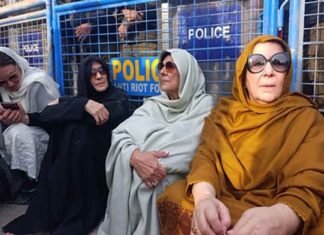
Human rights lawyers Imaan Zainab Mazari-Hazir and Hadi Ali Chattha have been in prison since January and are facing proceedings under anti-terrorism legislation. According to the report, both have received prison sentences totalling 17 years each, with the longest individual sentence being 10 years.
At the same time, the report alleged that UN-designated terrorists continue to deliver public speeches and raise funds in Pakistan to support militant activities. It also pointed to the country’s history of permitting certain militant organisations and radical Islamist political groups, particularly Tehreek-e-Labbaik Pakistan (TLP), to operate.
The report cited the 2020 controversy surrounding the republication of cartoons of Prophet Muhammad by French satirical magazine Charlie Hebdo as an example of the government’s response to pressure from Islamist groups.
“A striking example of how Pakistan’s government gave in to Islamic supremacists’ demands is when Charlie Hebdo cartoons were republished in France in 2020. Thousands of TLP supporters clashed with police on the edge of the capital, Islamabad, in protests over the display of the cartoons in France. The TLP only called off the protests, saying the Pakistani government had agreed to their demand for a boycott of French products,” the report stated.
The Pakistani government subsequently declared the TLP a terrorist group. The group then called for a march towards Islamabad, triggering clashes between police and protesters. The government again agreed to the group’s demands and released hundreds of its members.
Pakistan’s Interior Ministry later lifted the ban on the TLP, stating that the party would be permitted to participate in mainstream politics in the “larger national interest.”
The report also highlighted the case of Hafiz Muhammad Saeed, founder of Lashkar-e-Taiba (LeT), who has been designated a terrorist by the United Nations. Saeed has been placed under house arrest or detained several times in Pakistan but was subsequently released by courts citing a lack of evidence, according to the report.
Despite international designations and bounties, Saeed and other individuals identified as terrorists have continued to address public gatherings and mass rallies in Pakistan, the report claimed.
Bulut argued that Pakistan faces two fundamental problems with implications for its domestic stability and relations with neighbouring countries. The first, according to the author, is the country’s approach to distinguishing between “good and bad” terrorists.
The report described “bad terrorists” as those who target Pakistan’s military, police and civilians, while “good terrorists” are those who carry out attacks against India or promote causes aligned with the Pakistani regime’s ideology.
“The second fundamental problem is the profound inversion of power in the country. Pakistan’s army – rather than a civilian government — controls state policy. The country does not have an army — the army has a country. Behind a fragile, rotational facade of civilian governance, Pakistan’s military establishment dictates national policy,” Bulut wrote in PJ Media.
“Instead of seeking development and peace, Pakistan’s military regime seeks internal suppression and external aggression. This includes using some terrorist groups for its perceived state interests. The tragedy of Pakistan is an army that views peace as a threat to its budget and dissent as a crime against the nation. Hence, many actual terrorists roam freely while human rights lawyers are incarcerated in the country,” the author added.
 FOLLOW NOW