




Kolkata, October 29, 2026 (Yes Punjab News)
The CPI(M) has announced plans to challenge legally the West Bengal government’s proposed move to bar newly recruited teachers in state-run schools from contesting elections to panchayats, municipal bodies, the Lok Sabha and state Assembly.
The decision follows Chief Minister Suvendu Adhikari’s announcement that a new clause would be added to the West Bengal School Service Commission’s (WBSSC) recruitment rules to prevent future recruits from contesting elections. The proposal was cleared by the state cabinet on Wednesday.
Adhikari clarified that the proposed restriction would not apply to serving teachers who are already elected representatives.
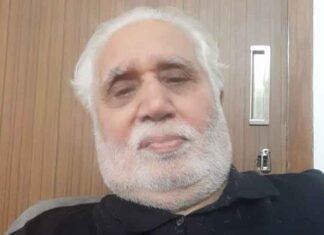
Bikas Ranjan Bhattacharya, senior advocate, former CPI(M) Rajya Sabha member and former Kolkata mayor, said he would approach the Calcutta High Court once the proposed provision was formally incorporated into the recruitment rules.
“It will not be easy to suppress the democratic rights of the common people. Any attempt to do this will be opposed legally,” Bhattacharya said, describing the proposed restriction as unconstitutional.
He said the legal challenge would follow once the government officially implemented the decision.
The proposal has also drawn objections from some serving teachers, who questioned the government’s argument that the restriction was intended to depoliticise the education sector.
A headmaster of a state-run higher secondary school, who declined to be identified, argued that the government should have addressed the presence of politically affiliated individuals on education-related committees if depoliticisation was its primary objective.
The headmaster also pointed out that existing education laws and regulations in West Bengal do not prohibit schoolteachers from participating actively in politics. Introducing the restriction through recruitment rules without corresponding changes to the existing legal framework, the headmaster said, could invite legal challenges.
The proposed clause has therefore raised questions about the relationship between recruitment conditions, teachers’ political participation and their democratic rights. Its legal implications are likely to be tested if the government proceeds with formal implementation.
 FOLLOW NOW


















































 plans a Calcutta High Court challenge to West Bengal’s proposed ban on newly recruited government-school teachers contesting elections.)