

Washington, October 18, 2026 (Yes Punjab News)
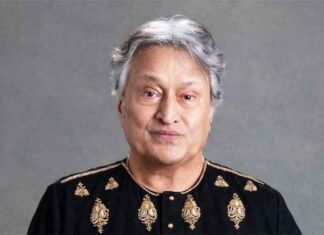
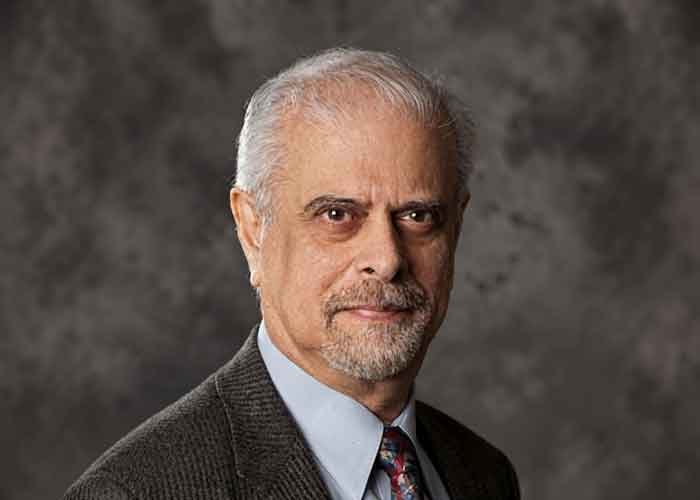
Indian-American engineer Azad M. Madni, a University Professor at the University of Southern California (USC), has been awarded the 2026 John Fritz Medal, widely regarded as the “Nobel Prize of Engineering”.
Established in 1902, the medal honours engineering leaders whose work has advanced human progress. Past recipients include Thomas Edison, Alexander Graham Bell, Claude Shannon, Gordon Moore, Andrew Viterbi and Elon Musk, USC’s Viterbi School of Engineering said.
Madni, executive director of USC’s Systems Architecting and Engineering Program, was recognised for his pioneering contributions to transdisciplinary systems engineering, the university said.
His citation acknowledges his “pioneering advances in transdisciplinary systems engineering through exploitation of disciplinary convergence, augmented intelligence, green learning, and interactive storytelling in virtual worlds”.
“Professor Madni’s pioneering work has helped transform how we design complex systems, and this extraordinary honour is a fitting recognition of the innovation, imagination, and impact that have defined his illustrious career,” USC President Beong-Soo Kim said.
Gaurav Sukhatme, interim dean of the Viterbi School of Engineering, noted that the school’s namesake, Andrew Viterbi, received the John Fritz Medal in 2011.
“Professor Madni’s recognition continues this remarkable legacy of engineering innovation at USC,” Sukhatme said.
Madni grew up in Mumbai, where he attended St. Mary’s High School before studying science at St. Xavier’s College.
He has said that US President John F. Kennedy’s 1962 speech outlining the goal of sending humans to the Moon inspired him to pursue aerospace engineering. Madni moved to the United States in 1965 to study engineering at the University of California, Los Angeles (UCLA), where he earned his bachelor’s degree in 1968, master’s degree in 1971 and doctorate in 1978.
Madni has recalled that pursuing a doctorate was necessary for him to obtain a US green card at the time.
“At that time, the only option available to get a green card was to pursue a doctorate, with proof of two-year self-support,” he said in an oral history interview with the Institute of Electrical and Electronics Engineers (IEEE).
At Rockwell International, Madni worked on NASA’s Space Shuttle programme, developing a model-based approach to testing the shuttle’s navigation system.
He subsequently led research at Perceptronics and founded Intelligent Systems Technology, Inc. in 1994. He joined USC in 2009.
A member of the US National Academy of Engineering, Madni has also received the NAE Gordon Prize, the IEEE Simon Ramo Medal and the ASME Spirit of St. Louis Medal.
At USC, he holds joint and courtesy appointments across engineering, medicine and education. He also serves as the Northrop Grumman Foundation Fred O’Green Chair in Engineering.
 FOLLOW NOW