New Delhi, September 29, 2026 (Yes Punjab News)
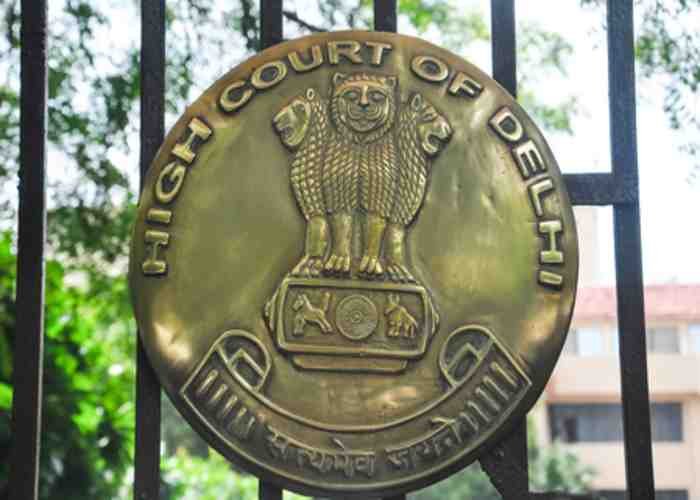
The Delhi High Court has imposed a cost of ₹1 lakh on a lawyer for appearing in a virtual hearing from a moving car, observing that the convenience of online proceedings must not come at the expense of courtroom decorum or disrupt judicial functioning.
A single-judge Bench of Justice Om Prakash Shukla imposed the cost on advocate Nachiketa Goyal, who was appearing for the decree holders in two connected enforcement petitions filed by South Indian Bank Ltd and Union Bank of India Ltd against the National Highways Authority of India (NHAI).
At the outset of the hearing, the Bench noted that Goyal was participating in the proceedings “from a moving car”.
“While this Court appreciates the convenience offered by virtual hearings, such convenience cannot come at the cost of the decorum of the Court or cause disturbance in the conduct of judicial proceedings,” the High Court observed.
The Bench further noted that it had to deal with more than 70 matters a day, and that background noise and movement during virtual hearings could disrupt proceedings.
The order referred to the Delhi High Court’s Electronic Evidence and Video Conferencing Rules, 2025, which state that advocates should endeavour to avoid joining proceedings from vehicles, except in exceptional circumstances and with the court’s permission.
Justice Shukla observed that the requirement was not merely procedural but was intended to ensure that lawyers appearing virtually did so from an environment conducive to the proper functioning of the court.
Finding no exceptional circumstances in the present matter, the Bench held that the counsel’s conduct was in violation of the rules.
“In view of the aforesaid, a cost of Rs. 1 lakh is imposed upon learned Counsel for the Decree Holder, payable to Delhi High Court Legal Services Committee within one week from today,” the order stated.
During the hearing, the Bench also noted that the stamp duty on the arbitral award dated November 13, 2024, which the decree holders were seeking to enforce, had been paid on December 24, 2025. The court observed that the payment was made more than one month after the award’s execution and was not in accordance with an earlier judgment of the High Court.
Advocate Manish Dembla, who also appeared for the decree holders, submitted that the stamp duty, along with the applicable penalty, had already been deposited before the Collector. He undertook to place proof of the payment on record within one week.
The High Court directed that the proof be filed within the stipulated period and scheduled the next hearing in the connected matters for October 15.
 FOLLOW NOW