

Chandigarh, September 7, 2026 (Yes Punjab News)
The Punjab State Food Commission (PSFC) is planning to establish a centralized Command and Control Centre at the Mahatma Gandhi State Institute of Public Administration (MGSIPA), Sector 26, Chandigarh, to enable direct interaction with Public Distribution System (PDS) beneficiaries and obtain ground-level feedback for future reforms.
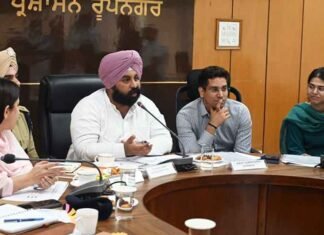
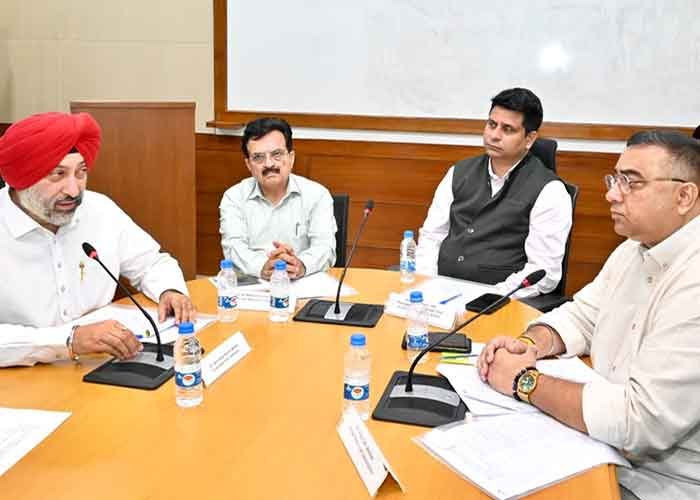
The proposal was discussed during a seminar on “PDS: Reforms, Transparency, Technology and Portability” held at MGSIPA on Monday, where officials and experts deliberated on measures to make the PDS more efficient and beneficiary-oriented.
PSFC Chairman Bal Mukand Sharma stressed the importance of obtaining feedback from beneficiaries at the ground level and taking follow-up action based on their concerns. He also appreciated the field teams of the Food, Civil Supplies and Consumer Affairs Department and highlighted the role of Anganwadi and mid-day meal workers in the broader food distribution system.
Additional Director Food, Civil Supplies and Consumer Affairs Dr. Anjuman Bhaskar gave an overview of the National Food Security Act (NFSA), 2013, along with the Antyodaya Anna Yojana (AAY) and Priority Household (PHH) schemes. Under PHH, beneficiaries receive 5 kg of wheat per person per month, while AAY beneficiary families receive 35 kg of wheat per month.
She said ration distribution under the NFSA has been undertaken on a quarterly basis since 2023. At present, 39.74 lakh ration cards covering 1.36 crore beneficiaries are under the NFSA, with 100 per cent Aadhaar seeding. Punjab has 14,450 Fair Price Shops distributing foodgrains to beneficiaries.
Dr. Bhaskar also highlighted the department’s technology-driven reforms, including the Ration Card Management System, Aadhaar-enabled PDS and the FEAST portal for monitoring the foodgrain supply chain from mandis to godowns and Fair Price Shops. Wheat distribution is carried out through 100 per cent biometric authentication using e-PoS machines, while e-KYC has been made mandatory for fresh ration cards.
The e-KYC process has been completed for 1.35 crore beneficiaries between June 2024 and June 2026.
Under the Meri Rasoi scheme, around 36.72 lakh kits were distributed in May 2026. Distribution for the second quarter, from July to September 2026, began on August 8. Each monthly kit contains two kg of lentils, two kg of sugar, one kg of salt, 200 grams of turmeric powder and one litre of mustard oil.
PSFC members Chetan Parkash Dhaliwal and Vijay Dutt shared their experiences from field visits, while member Jasvir Singh Sekhon spoke about the social impact of the PDS.
Responding to Vijay Dutt’s suggestion for a centralized command and control centre at the MGSIPA office to directly obtain beneficiary feedback, Principal Secretary Food, Civil Supplies and Consumer Affairs Rahul Tiwari expressed agreement with the proposal. He also suggested installing an IVR system with SMS facilities to reach beneficiaries.
Director Food, Civil Supplies and Consumer Affairs Varinder Kumar Sharma said the primary objective behind establishing the PSFC was to provide an independent mechanism for obtaining feedback and appreciated its contribution towards strengthening nutritional security.
J.S. Bedi of IDC Chandigarh and Dr. Satish Verma praised the digitization initiatives in the PDS and stressed the need for monitoring ground-level operations and improving coordination among departments to ensure hassle-free distribution.
Depot holders who were found doing good work were also presented appreciation certificates.
During the second session, held on “Promoting Nutrition in Government Sponsored Schemes,” Bal Mukand Sharma underlined the importance of nutrition for children in the 0-3 years age group and lactating mothers. Referring to his recent visit to McGill University in Montreal, where he interacted with experts, he advocated bio-fortification as a means of strengthening nutritional security.
Director, Government Food Lab, Ravneet Kaur emphasised the need to ensure that children receive nutritious food in an appropriate manner and at the right time.
Dr. Ajit Kaur Dua of PBTI stressed quality assurance, greater variety in food and adequate availability of proteins, while Dr. Kiran Bains of Punjab Agricultural University, Ludhiana, highlighted the importance of safe and hygienic food preparation practices and greater awareness about nutritious foods.
 FOLLOW NOW