

Moga, October 16, 2026 (Yes Punjab News)
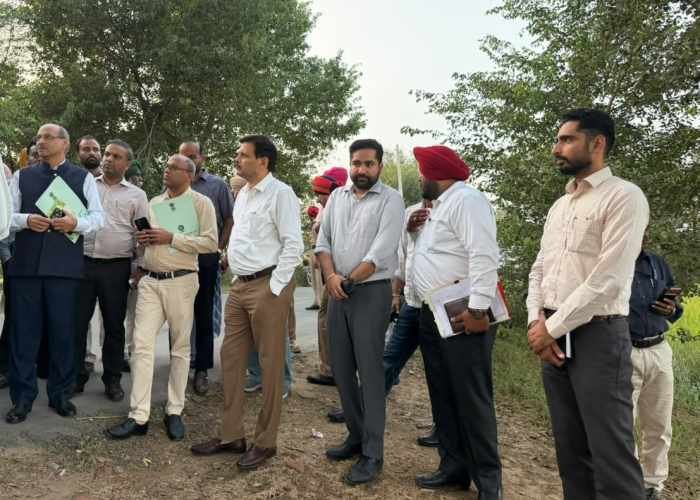
A delegation of the Commission for Air Quality Management in NCR and Adjoining Areas (CAQM) visited Punjab’s Moga district on Friday to assess the implementation of measures aimed at preventing stubble burning during the ongoing paddy harvesting season.
The team, led by T.S. Panwar, Member (Technical), reviewed preventive arrangements at identified hotspot locations and stressed the need for continuous monitoring, according to an official statement.
During the visit, the delegation met district officials and inspected selected hotspot villages to assess the situation on the ground, the administration’s preparedness and coordination among the departments concerned.
The team reviewed arrangements for both in-situ and ex-situ management of paddy residue, including the availability and deployment of crop residue management (CRM) machinery, field-level surveillance and coordination among stakeholders.
The delegation also examined field-level coordination and the timeliness of action to prevent stubble-burning incidents during the harvesting season. The visit forms part of CAQM’s ongoing monitoring of paddy residue management in hotspot districts across Punjab.
CAQM Expands PTZ Camera Monitoring of NCR Industries
In a separate move, CAQM has expanded technology-based monitoring of air-polluting industries in the National Capital Region (NCR) by extending the requirement for installing and operating Pan-Tilt-Zoom (PTZ) cameras to all categories of industries covered under Statutory Direction No. 98.
The Commission said the measure would strengthen remote monitoring of fuel use, industrial emissions and compliance with prescribed pollution-control requirements. The latest order supersedes an earlier order issued on October 5, 2026.
The requirement applies to all 17 categories of highly polluting industries identified by the Central Pollution Control Board (CPCB), medium and large Red Category industries, food and food-processing and textile units with boilers or thermic fluid heaters, and metal industries operating furnaces in the NCR.
All industrial units covered by the order must install and operationalise the required PTZ cameras, with arrangements for real-time transmission of video feeds, by November 30, 2026, the statement said.
 FOLLOW NOW