
New Delhi, October 22, 2026 (Yes Punjab News)
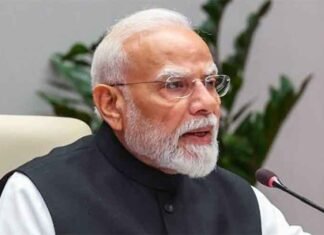
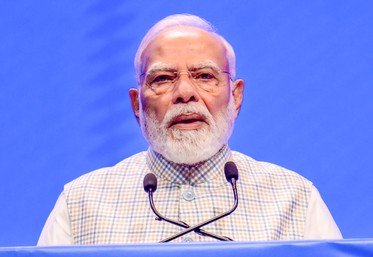
Prime Minister Narendra Modi has said India is moving beyond its traditional role as a global services hub to become a centre for advanced research, innovation and product development, with the country’s growing intellectual capabilities increasingly attracting international attention.
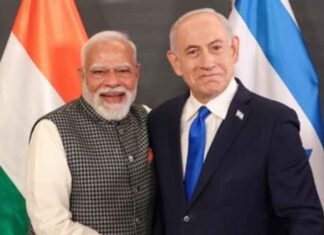
Addressing the NDTV World Summit, Modi described the transformation as a shift from a “back office” to a “brain office”, arguing that the world now relies on India’s mind-power alongside its manpower.
Highlighting employment and economic measures, the Prime Minister said nearly 70 lakh jobs had been created in a short period under the Viksit Bharat Rozgar Yojana. He also cited tax relief for the middle class, stating that the tax burden had been reduced to zero for annual incomes of up to ₹12 lakh.
On research and innovation, Modi said India ranked third globally in research publications and recorded approximately 1.5 lakh patent filings in 2025. He added that nearly 20 per cent of the world’s design workforce was based in India, with Indian engineers contributing to advanced semiconductor design, including chips at the 2–3 nanometre scale. Academic institutions and students, he said, had designed more than 300 types of chips.
The Prime Minister also highlighted the expansion of Global Capability Centres (GCCs), saying India had emerged as a major destination for such facilities. While these centres traditionally focused on support services, he said they were increasingly undertaking higher-value functions, including cloud engineering, analytics and product development.
Modi said government policies and investment decisions were aimed at strengthening domestic capabilities and reducing dependence on foreign suppliers, particularly in sectors critical during potential global disruptions.
Citing pharmaceuticals as an example, he said India had resumed domestic production of Penicillin-G in Kakinada, Andhra Pradesh, after decades of dependence on imports for key pharmaceutical raw materials.
He added that the production-linked incentive (PLI) scheme for active pharmaceutical ingredients had attracted investments exceeding ₹5,000 crore and supported nearly 40 projects, helping establish domestic supply chains for essential medicines.
The Prime Minister said such initiatives were part of India’s broader effort to build technological strength, economic resilience and self-reliance across critical sectors.
 FOLLOW NOW