
New Delhi, September 29, 2026 (Yes Punjab News)
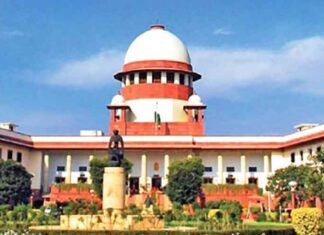
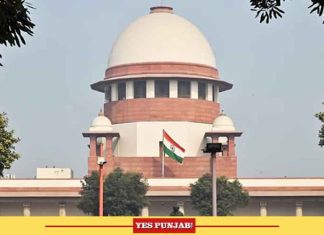
The Supreme Court on Tuesday questioned the wide disparity between the maximum retail price (MRP) of medicines and the prices at which they are supplied to retailers, asking the Centre why a uniform margin cap could not be prescribed for pharmaceutical products.
A Bench of Justices Vikram Nath and Sandeep Mehta expressed concern over cancer medicines carrying an MRP of Rs 27,000 while being supplied to retailers at a price of around Rs 3,000.
The apex court also raised questions about the practice of corporate hospitals requiring patients to purchase medicines exclusively from their in-house pharmacies, observing that patients who procure medicines from outside may not be assured of treatment.
“Corporate hospitals say you have to buy from our chemist. If you bring it from outside, we are not assuring treatment. If that patient is taking treatment under a government scheme, who reimburses? The taxpayer pays. Why not uniform criteria?” the Bench asked.
The court further questioned the distinction between essential and non-essential medicines under the Drug Price Control Order (DPCO), asking why a uniform percentage margin could not be prescribed for pharmaceutical products covered under the Essential Commodities Act.
Highlighting the potential impact of the large gap between MRP and the price to retailers (PTR), the Bench said such disparities could undermine patients’ confidence in the medicines they purchase.
“Suppose there is a medicine, the patient goes to the chemist; the chemist says MRP may be Rs 27,000, I will give it for Rs 3,000. Will the patient think it is genuine? He will think it will be a spurious one. Where does this huge chunk of money go?” the Bench observed.
Solicitor General Tushar Mehta, appearing for the Centre, told the court that the government would have to work out a solution while balancing the interests of all stakeholders.
“We will have to find a way out. Some way that balances equities. Let me sit with the officers and then respond,” Mehta submitted, seeking an adjournment.
The Supreme Court has scheduled the next hearing in the matter for October 12. The proceedings stem from public interest litigations (PILs) concerning the regulation of medicine prices, generic medicines, medical devices and prescription practices.
During the previous hearing on September 22, the apex court had questioned why a cancer medicine purchased by a retailer for around Rs 2,700 could carry an MRP of Rs 27,000. The Bench had described the tenfold difference as “broad daylight dacoity”.
“There are medicines, essential cancer medicines, whose MRP is 27,000 and the PTR is 2700. That’s absolute dacoity, broad daylight dacoity,” Justice Mehta had observed.
The court had also questioned why manufacturers should be allowed to fix MRPs substantially higher than the prices at which medicines are supplied to retailers.
PIL litigant Kishan Chand Jain had argued that there was no effective regulatory mechanism governing the initial pricing of medicines outside the controlled-price list. He submitted that manufacturers could initially fix prices at any level, with restrictions applying mainly to subsequent price increases.
Senior advocate Kapil Sibal, appearing for the Indian Pharmaceutical Alliance, had argued that manufacturers were not responsible for the high prices ultimately paid by patients, contending that retailers were earning substantial margins.
 FOLLOW NOW