

New Delhi, September 16, 2026 (Yes Punjab News)
Jamiat Ulama-i-Hind president Maulana Arshad Madani has criticised the proposed expansion of the Uniform Civil Code (UCC) to all 21 states governed by the BJP-led National Democratic Alliance (NDA), questioning whether the country will be governed by the Constitution or by the ideological agenda of a political party.
Union Home Minister Amit Shah had said on September 13 that he was confident the UCC would be implemented in all 21 BJP-NDA-ruled states before the 2029 Lok Sabha elections. The proposal has received support from NDA constituents but has also drawn criticism from Opposition parties and Muslim organisations.
Madani described the proposed expansion as a challenge to constitutional supremacy and religious freedoms. He said Jamiat Ulama-i-Hind was committed to defending the secular Constitution, democracy and rule of law.
The organisation has approached the Uttarakhand High Court against the UCC, with senior advocate Kapil Sibal appearing on its behalf, Madani said.
“We cannot accept any law that is against Sharia. Muslims can compromise on everything, but they can never compromise on their religion and faith,” he said, adding that the issue concerned the constitutional and religious rights of Muslims.
Madani argued that Muslim personal laws have a religious basis and questioned the need for a mandatory common civil code when alternative civil laws are already available.
He also cited the exemption of Scheduled Tribes from UCC-related laws and questioned why, in his view, constitutional protections relating to religious freedom under Articles 25 and 26 could not similarly be respected.
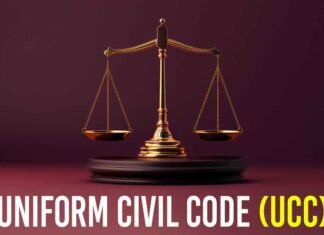
The UCC seeks to provide common rules on personal-law matters such as marriage, divorce, inheritance and adoption irrespective of religion. Uttarakhand is currently the only state where a UCC is fully in force, while Gujarat, Assam and Madhya Pradesh have also moved legislation forward.
Madani further questioned the “one country, one law” argument, pointing to variations in state laws and implementation, and maintained that the UCC debate extends beyond Muslim personal law to questions surrounding religious freedom and India’s secular constitutional framework.
 FOLLOW NOW