
New Delhi, September 15, 2026 (Yes Punjab News)
A claim that 17 rebel Trinamool Congress MPs could join the BJP before next month’s Durga Puja has triggered political speculation in West Bengal, but the proposed defection faces significant legal, procedural and political hurdles.
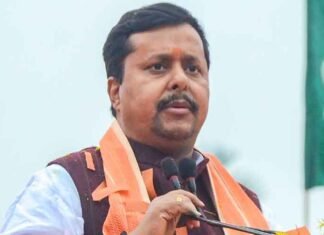
The claim was made by Jagadish Chandra Barma Basunia, a first-time Lok Sabha MP from Cooch Behar. However, his statement has not received public backing from his fellow rebels or BJP leaders. Some Trinamool MPs have contradicted him, while others have maintained silence.
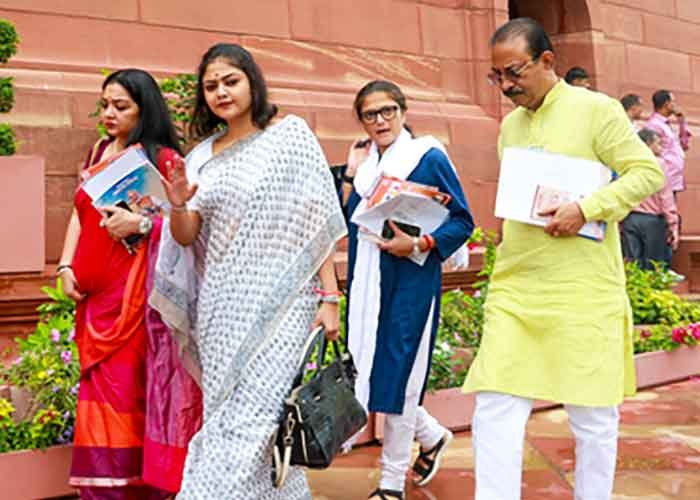
Basunia and 19 other Trinamool MPs broke away from the party following its defeat in the West Bengal Assembly elections earlier this year. After the BJP declined to induct them, the rebels aligned themselves with the Nationalist Citizens Party of India (NCPI), a political outfit registered in 2023 that has little visible presence in West Bengal.
The move was widely viewed as an attempt to avoid immediate disqualification under the anti-defection provisions. However, the Lok Sabha Speaker has not recognised NCPI as a separate parliamentary group. The official Lok Sabha website continues to list 28 Trinamool MPs, all elected on the party’s symbol in the 2024 general election.
The constitutional position further complicates the rebels’ prospects. Under the Tenth Schedule, legislators can avoid disqualification when at least two-thirds of a legislature party merges with another political party. Such a merger, however, has to be formally recognised by the Speaker.
The Trinamool Congress has already approached the Supreme Court seeking the removal of the 20 MPs, and the matter remains under judicial consideration.
The BJP has also sought to distance itself from the reported mass induction. West Bengal BJP president Samik Bhattacharya rejected Basunia’s claim, saying the party was not negotiating to induct the rebels as a group. He also indicated that the BJP would not accept leaders merely because they wanted to join, reflecting organisational and political reservations within the party.
Several rebel MPs have similarly rejected Basunia’s suggestion that they are preparing to join the BJP. Satabdi Roy and Abu Taher Khan, among others, have said Basunia was speaking in his personal capacity.
Three MPs from Murshidabad — Abu Taher Khan, Khalilur Rahman and Yusuf Pathan — have consistently indicated that they do not intend to join the BJP. They have cited the religious and political composition of their constituencies. Although the MPs have supported the ruling National Democratic Alliance (NDA), joining the BJP directly could carry political risks in Murshidabad, where Muslims constitute almost 70 per cent of the population.
Political observers believe NCPI may have served as a temporary political vehicle for the rebels while they awaited the Speaker’s decision. But the absence of recognition has left them in a legally uncertain position, neither functioning as members of the Trinamool parliamentary group nor being formally recognised as an NCPI bloc.
Consequently, even if 17 MPs were prepared to join the BJP, the constitutional and procedural obstacles would remain. The Speaker’s decision and the pending Supreme Court proceedings are central to determining the rebels’ status.
Against this backdrop, Basunia’s announcement appears to be more a political claim than evidence of an imminent second exodus from the Trinamool to the BJP. Until the legal and procedural questions are resolved, the proposed mass defection remains uncertain.
 FOLLOW NOW