

New Delhi, October 30, 2026 (Yes Punjab News)
The Central Bureau of Investigation (CBI) has told the Supreme Court that there is a strong likelihood of former judge Giribala Singh influencing trial proceedings and intimidating witnesses in the case concerning the death of former model and actress Twisha Sharma. The agency has supported the plea seeking transfer of the trial from Bhopal to Delhi.
In a counter-affidavit filed before the apex court, the CBI stated that Giribala Singh, a retired Principal District and Sessions Judge, was an influential person in Bhopal and could potentially compromise the fairness of proceedings pending before the Sessions Court.
“Respondent No. 2 Giribala Singh may influence the trial proceedings of the case and intimidate the witnesses of the case,” the CBI stated in its affidavit.
The counter-affidavit was filed in response to a transfer petition submitted by Twisha’s father, Navnidhi Sharma, seeking to move the criminal trial from the court of the Xth District and Sessions Judge in Bhopal to a competent court in Delhi.
The CBI further submitted that Giribala Singh, who had served as a District Judge and was serving as President of the District Consumer Disputes Redressal Commission in Bhopal at the time of the incident, could influence the proceedings because of her position and connections.
The agency also pointed out that her son, Samarth Singh, who was Twisha’s husband and is a co-accused in the case, is a practising advocate in Bhopal.
Referring to its investigation, the CBI alleged that Giribala Singh had interfered with the handling of evidence after Twisha’s death and attempted to manage the crime scene and tamper with evidence.
According to the affidavit, the investigation established that Giribala Singh had called a technician and obtained copies of CCTV footage relating to the relevant period. It further stated that on May 13, 2026, she contacted the owner of Xpression Beauty Parlour to enquire about Twisha’s visit on the previous day and arranged for the relevant CCTV footage to be collected through certain individuals.
The CBI said these circumstances, coupled with Giribala Singh’s background as a former District Judge, raised concerns that she could influence the trial and intimidate witnesses.
Twisha was found hanging at her matrimonial home in Bhopal on the night of May 12, 2026, and was declared brought dead at AIIMS Bhopal. Following the incident, an FIR was registered at Katara Hills police station against her husband, Samarth Singh, and mother-in-law, Giribala Singh, under provisions of the Bharatiya Nyaya Sanhita (BNS) and the Dowry Prohibition Act. The case involved allegations of cruelty and harassment over dowry.
The Madhya Pradesh government subsequently transferred the investigation to the CBI, which re-registered the case on May 25, 2026, following the Supreme Court’s suo motu cognisance of the matter.
The agency said it filed a chargesheet against the two accused on August 17, 2026, for offences punishable under Sections 85, 108 and 3(5) of the BNS. Further investigation into allegations concerning dowry death, dowry and other aspects was continuing.
The CBI added that the trial court had taken cognisance of the offences and that proceedings had reached the stage of arguments on the framing of charges. The next hearing was scheduled for October 31.
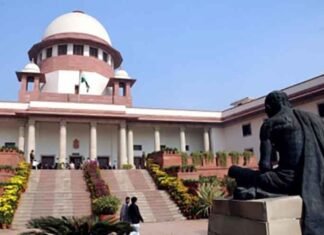
On October 16, the Supreme Court had stayed the ongoing trial before the Bhopal court and issued notices to the CBI, Giribala Singh and Samarth Singh on the transfer petition filed by Navnidhi Sharma.
Twisha’s father has expressed apprehension that his daughter would not receive a fair trial in Madhya Pradesh, citing the influence allegedly wielded by her mother-in-law and concerns over the handling of the initial investigation and bail proceedings.
On Friday, a Bench comprising Chief Justice of India Surya Kant and Justices Joymalya Bagchi and V. Mohana adjourned the hearing. According to the computerised case status available on the Supreme Court’s website, the transfer petition is tentatively listed for November 19.
 FOLLOW NOW