

Chandigarh, October 22, 2026 (Yes Punjab News)
The Commission for Air Quality Management (CAQM) has reviewed stubble-burning prevention measures, district-level preparedness and enforcement mechanisms in Punjab and Haryana, warning that any administrative laxity leading to an increase in farm fires will be viewed seriously.
CAQM Chairperson Rajesh Verma held separate meetings with officials of both states to assess paddy stubble management strategies and measures to curb other major sources of air pollution.
During the review of Punjab’s preparations, the Commission examined the availability and effective deployment of Crop Residue Management (CRM) machinery at the district and farmer levels. Officials also discussed gaps in machinery utilisation and arrangements for collecting, transporting and managing paddy straw through in-situ and ex-situ methods.
The Commission stressed the need to strengthen the crop-residue supply chain and ensure that available machinery is used effectively during the peak harvesting season.
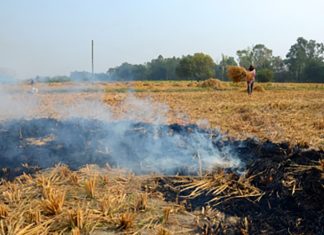
Monitoring mechanisms also came under review, including field verification of burnt-area assessments based on satellite fire alerts and the deployment of drones and low-cost sensors to track stubble-burning incidents across districts.
In Haryana, the review covered a wider range of pollution sources, including stubble burning, vehicular emissions, road and open-area dust, construction and demolition activities, and industrial pollution.
The Commission also assessed the implementation of Haryana’s State Action Plan for stubble-burning prevention, focusing on enforcement, CRM machinery utilisation, crop-residue supply-chain management and technology-based monitoring.
Emphasising the need for sustained action on the ground, the CAQM said paddy straw management should not be viewed solely as a measure to prevent crop-residue burning. Instead, it should be treated as an opportunity to improve public well-being while developing a stronger circular-economy ecosystem through the productive use of paddy straw.
The Commission cautioned district administrations in both states that any negligence resulting in a rise in stubble-burning incidents would be taken seriously.
 FOLLOW NOW