Washington, September 30, 2026 (Yes Punjab News)
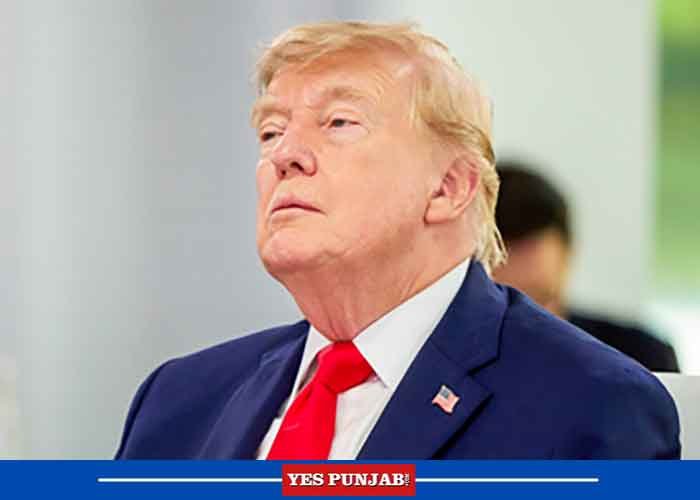
US President Donald Trump and the leaders of several major technology companies have signed a White House accord committing to safeguards, independent audits and board-level oversight in the development and deployment of advanced artificial intelligence systems described by the administration as “super intelligence”.
The “White House Accord on Super Intelligence”, described as a “Joint Commitment on Frontier Responsibilities”, was signed by Trump and technology executives. Their signatures appear on the document released by the White House on Tuesday.
The voluntary agreement calls on companies developing frontier technologies to establish multiple layers of controls to ensure their systems operate safely and as intended.
“In order to build a positive future for the American people and the world, we believe every company is responsible for developing its own technology safely and in a way that builds trust with customers and the public,” the accord states.
Under the commitment, participating companies will implement internal controls to monitor the capabilities and alignment of their AI models during training and deployment. The safeguards are intended to address risks involving cybersecurity, biosecurity and chemical threats, as well as prevent models from hacking or gaining unintended access to technical systems.
The accord outlines a multi-layered oversight framework. Companies will empower internal teams to verify that controls, monitoring and detection systems are functioning as intended and that identified problems are addressed.
They will also engage independent external auditors or evaluators to assess the effectiveness of their safeguards.
At the corporate level, each company will designate an independent committee of its board of directors to oversee the process. The committee will receive reports from internal and external auditors and evaluators and ensure that identified issues are addressed.
“Together, these steps will give each company, its customers, and the public confidence that the technology is operating as intended,” the document says.
The participating companies have also committed to meeting regularly to establish standards and best practices aimed at improving the safety of their systems.
Although the accord is voluntary, it leaves open the possibility that its provisions could eventually be incorporated into legislation or regulations.
“Over time, it may make sense to codify these steps into laws or regulations,” the document states, adding that the companies consider the controls and audits critical to ensuring a safe future, regardless of whether they become legally mandatory.
The accord was signed by Trump, Google CEO Sundar Pichai, Anthropic CEO Dario Amodei, Meta CEO Mark Zuckerberg, OpenAI President Greg Brockman, xAI founder Elon Musk and Nvidia CEO Jensen Huang.
The signing coincided with Trump’s executive order directing the executive branch to replace the terms “Artificial Intelligence” and “AI” with “Super Intelligence” and “SI” in official government usage.
Trump said the revised terminology better reflected the capabilities of the technology.
“This isn’t — this is extreme intelligence. It’s superior intelligence. It’s, supreme also intelligence, but the word super is the best word of all and it’s the simplest,” Trump said at the White House event.
He also presented the development of advanced AI as a strategic competition, particularly in relation to China.
“Whoever wins super intelligence wins,” Trump said. “You’re going to have a winner and a loser, and you’re probably not going to have a second place.”
The White House has increasingly placed advanced computing at the centre of its technology and economic agenda, with earlier administration actions focused on accelerating innovation, expanding infrastructure and strengthening the security of advanced systems.
As recently as June, executive orders issued by the administration continued to use the term “Artificial Intelligence”. The latest measures signal a shift in the administration’s terminology and policy framework.
Alongside the industry accord and the change in official terminology, the administration also launched America.gov, a digital gateway for federal services that the White House says will use “Super Intelligence” to help Americans navigate government information and services.
 FOLLOW NOW