

Washington, September 30, 2026 (Yes Punjab News)
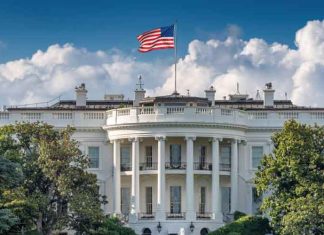
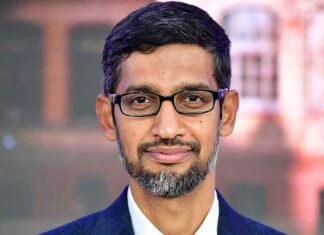
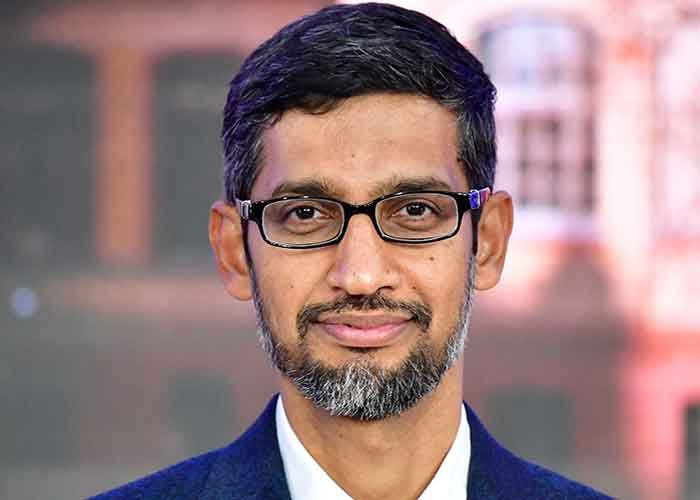
Google CEO Sundar Pichai and other leading technology executives have signed a voluntary White House accord committing their companies to internal controls, independent audits and board-level scrutiny as they develop increasingly advanced artificial intelligence systems.
US President Donald Trump described the agreement as “morally binding” and said participating companies would largely be responsible for regulating their own activities.
Titled the White House Accord on Superintelligence Joint Commitment on Frontier SI Responsibility, the agreement establishes common expectations for companies developing advanced AI models. Its proposed safeguards include internal risk assessments, external evaluations and independent reviews by company boards.
The accord does not establish legally enforceable standards or create a government regulator.
Pichai, an Indian-born technology executive, said the technology offered significant benefits but required the industry to take greater responsibility for addressing potential risks.
“I think this movement is historic and consequential, and I think there are extraordinary benefits to this technology,” Pichai said.
“We have to make sure we are addressing the risks, and the president has asked us as an industry to step up,” he added.
Pichai said participating companies were introducing processes similar to the financial controls used by major corporations.
Trump said the accord would provide a measure of protection against the misuse of advanced AI, describing it as “morally binding” and emphasising that it would be based on self-regulation.
He also said his administration was considering forming a committee of around 10 people to monitor the industry. However, no final decision was announced regarding the committee’s membership, authority or enforcement structure.
“I think I’m seeing tremendous self-policing, and they understand that they have to self-police,” Trump said.
Meta CEO Mark Zuckerberg said the participating companies wanted to assure the public that their products would function as intended. He said the accord called for robust internal controls and systems to identify potential problems, alongside internal risk reviews, external auditors and independent scrutiny by boards of directors.
“The idea isn’t that this is the only thing that we will ever do,” Zuckerberg said. “It is that this is a start and an accord that the whole industry could come to.”
Nvidia CEO Jensen Huang said AI safety requirements did not necessarily conflict with technological progress.
“There’s no conflict between innovation, technology, and safety,” Huang said.
He added that the technology would be advanced responsibly, citing its potential significance for humanity and the future prosperity of the United States.
Anthropic CEO Dario Amodei adopted a more cautious position, acknowledging AI’s potential benefits, including advances in medicine, while highlighting the serious risks associated with the technology.
“I think the technology has very real risks, and you know, the mechanism how we address those risks is still under discussion,” Amodei said.
Trump argued that companies had strong commercial incentives to prevent AI-related failures, as their reputations and businesses could be affected. He also said the Justice Department, FBI and CIA would pursue criminals who misused the technology.
The accord comes amid a global debate over whether voluntary commitments by technology companies are sufficient to address the risks posed by increasingly capable AI systems, which could influence employment, security, elections and access to information.
The European Union has adopted legally binding, risk-based AI regulations, while the United States has relied more heavily on executive actions, agency guidance and voluntary commitments by companies.
 FOLLOW NOW