

Washington, November 6, 2026 (Yes Punjab News)
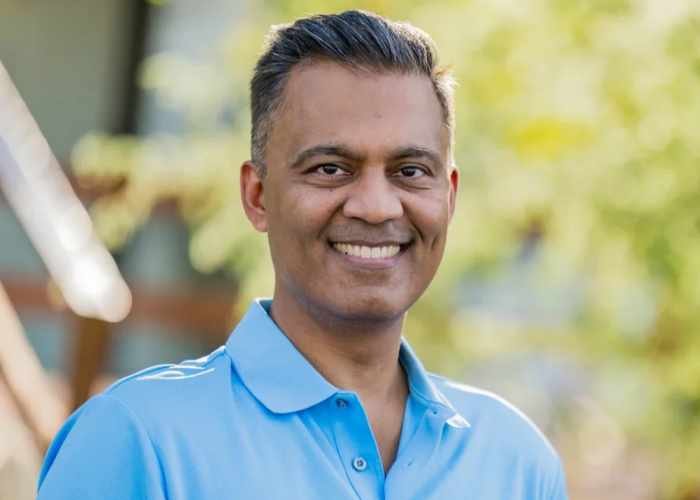
Indian-American emergency physician Amish Shah has won Arizona’s 1st Congressional District, defeating Trump-backed Republican Jay Feely and completing a political comeback after losing his previous bid for the US House in 2024.
Shah, a former Arizona state legislator, emerged victorious in the contest for the Scottsdale-area seat, which President Donald Trump carried by around three percentage points in the 2024 presidential election. The seat became vacant after Republican David Schweikert decided to run for governor.
“I pledge to work in a bipartisan way in Congress, just like I did in the State House,” Shah said in his victory statement.
Indian American Impact, an advocacy organisation that supported his campaign, said Shah would become the first South Asian American to represent Arizona in Congress.
The 48-year-old physician built his campaign around healthcare access, household affordability and economic concerns. His political journey has taken him from emergency rooms and professional football sidelines to the Arizona Legislature and now the US Congress.
Born and raised in Chicago to Indian immigrant parents, Shah has spoken about how his Gujarati heritage and Jain upbringing shaped his approach to public service. He has cited the principles of nonviolence, nonmaterialism and openness to different perspectives as influences on his political outlook. A visit to Mahatma Gandhi’s Sabarmati Ashram also helped strengthen his interest in public service.
Shah studied economics and medicine at Northwestern University before earning a master’s degree in public health from the University of California, Berkeley. He trained in emergency medicine in the Bronx and later worked at hospitals in Manhattan and Queens. His medical career also included responsibilities involving the New York Jets’ airway management team and research into emergency care in professional football.
After completing a sports medicine fellowship at the University of Arizona, he entered politics and won election to the Arizona House of Representatives in 2018. He was re-elected in 2020 and 2022, building a record that included working across party lines on legislation.
Among the measures he supported were restrictions on overnight fireworks and provisions requiring animal shelters to scan microchips. Both became law, while his proposal to prohibit cat declawing did not advance.
Shah resigned from the state legislature in early 2024 to contest the congressional seat but lost to Schweikert that November.
His return required overcoming another challenge in the Democratic primary, where the Democratic Congressional Campaign Committee had backed former television journalist Marlene Galan-Woods. Shah defeated her before receiving the committee’s support for the general election.
The campaign against Feely was marked by substantial outside spending, with more than $25 million reportedly spent by outside groups after the primary. Shah focused on affordability and criticised Feely’s alignment with Trump, including the administration’s tariff and foreign policies.
Healthcare was another defining issue. Shah has previously supported universal, single-payer Medicare for All and more recently advocated allowing people to buy coverage through Medicare. His Republican opponent sought to portray him as a socialist, a label disputed by the local Democratic Socialists of America chapter.
Shah also received support from the Maricopa County deputies’ association, which cited his backing for law enforcement resources. His legislative record included efforts to work with Republicans on public safety measures.
He has additionally expressed support for skilled Indian workers coming to the United States and for comprehensive immigration reform.
Following his victory, Shah reiterated his commitment to representing the entire constituency, regardless of how residents voted.
“I will try my best to keep that trust sacred,” he said.
The new US Congress is scheduled to convene on January 3. Shah will take office with priorities including living costs, healthcare, water and economic development, while facing the challenge of delivering results in a politically divided district.
 FOLLOW NOW