
New Delhi, August 3, 2026 (Yes Punjab News)
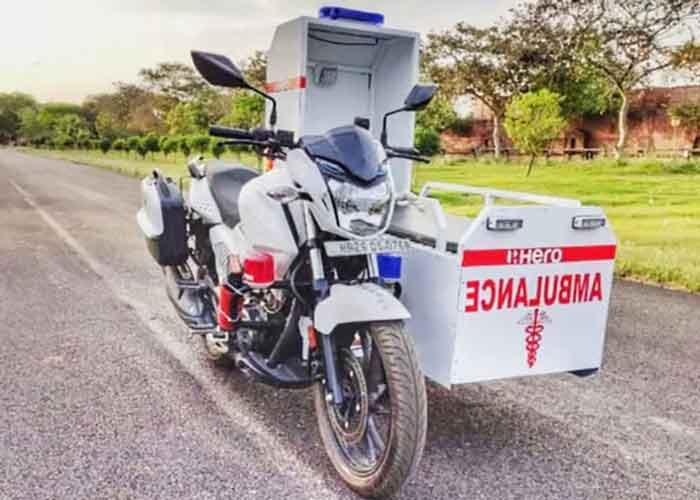
The Centre on Monday proposed a regulatory framework for two-wheeler ambulances to improve emergency medical services, particularly in rural, remote and hilly areas where conventional ambulances often face accessibility challenges.
The Ministry of Road Transport and Highways (MoRTH) issued a draft notification seeking to formally recognise and regulate two-wheeled road ambulances under the Central Motor Vehicles Rules.
According to the ministry, such vehicles can significantly improve emergency response times and provide last-mile access to healthcare in areas with difficult terrain, narrow roads and limited access for standard ambulances.
At present, two-wheeler ambulances are not recognised as a separate vehicle category under the Central Motor Vehicles Rules, resulting in the absence of uniform national standards governing their design, safety features, registration, type approval and fitness certification.
To address this gap, the ministry has proposed adopting AIS-209 (Part 1):2026, a new standard prescribing construction and functional requirements for life-support two-wheeled road ambulances.
Under the draft rules, all L2-category two-wheeler ambulances manufactured on or after October 1, 2027, will be required to comply with the new standard. Emergency warning top lights installed on these vehicles will also have to meet the prescribed specifications from the same date.
The proposed framework also gives state governments the flexibility to determine the areas where two-wheeler ambulances can be deployed, allowing decisions to be made based on local geographical conditions and healthcare needs.
In addition, the ministry has proposed classifying two-wheeler ambulances as transport vehicles. As a result, they will be subject to mandatory fitness certification, with certificates required to be renewed every two years.
The proposed regulations are aimed at creating a uniform legal and safety framework for two-wheeler ambulances while enhancing access to timely emergency medical care across underserved regions.
 FOLLOW NOW