

New Delhi, October 14, 2026 (Yes Punjab News)
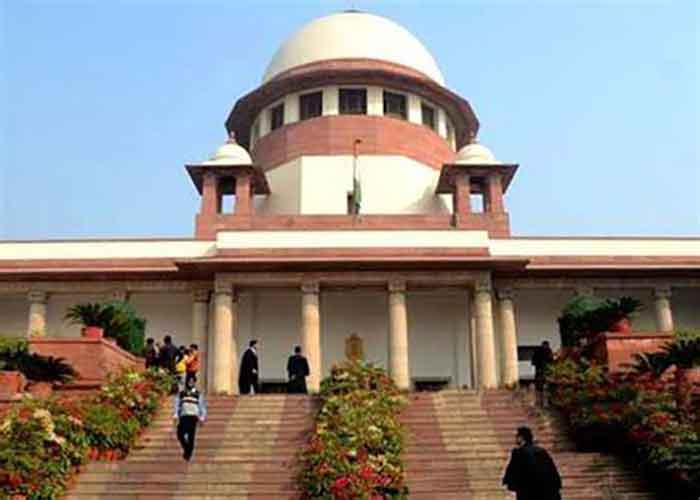
A public interest litigation (PIL) has been filed in the Supreme Court seeking uniformity in judicial terminology, abbreviations, case classifications, procedural norms, court fees and case registration processes across India.
The plea, filed by advocate Ashwini Kumar Upadhyay under Article 32 of the Constitution, seeks directions to the Law Commission of India to prepare a comprehensive report in consultation with the Supreme Court and all High Courts. Alternatively, it seeks the constitution of an expert committee or directions to the Union Law Ministry to undertake the exercise.
The petition has named the Union government, the Secretary General of the Supreme Court, the Registrars General of all High Courts and the Law Commission of India as respondents.
It contends that significant variations in judicial terminology, case classifications, abbreviations, procedures and court fees across High Courts cause inconvenience to litigants, advocates and authorities, even though the courts function within the same constitutional and legal framework.
“The terminology used by different High Courts for different types of cases is not uniform. This causes inconvenience not only to the general public but also to advocates and the authorities as well,” the petition stated.
The plea further argues that different High Courts often use different terms and abbreviations for similar categories of cases, making judicial procedures more difficult to navigate.
Petition Cites Differences in Case Classifications
Citing examples from various High Courts, the petition pointed out that criminal appeals are abbreviated as CRA, CR.A, CRAPL and CRL.A in different jurisdictions. Similarly, contempt appeals are referred to as CONTA, CONTAPP, CPTA and ConApp.
The plea also highlighted differences in the classification of writ petitions. According to the petition, the Delhi High Court has multiple categories of writ petitions, while the Gujarat High Court deals with such matters under a single category of “WRIT PETITION (PIL)”.
The Gauhati and Himachal Pradesh High Courts also have several categories of writ petitions, while the Jammu and Kashmir and Ladakh High Court follows its own classification system, the petition stated.
Differences were also cited in the nomenclature of company matters, which are identified as COMPET in the Gauhati High Court, COMP in the Gujarat High Court and COP in the Himachal Pradesh High Court.
The petition further pointed to inconsistencies within the Bombay High Court and its Benches at Nagpur, Aurangabad and Panaji, arguing that different terminology and descriptions for similar case types create difficulties for advocates practising across these jurisdictions.
According to the plea, the Bombay High Court’s principal seat has 330 case types with descriptions but without abbreviations. Its Nagpur and Aurangabad Benches have 77 and 61 such case types, respectively.
Plea Flags Disparities in Court Fees
The petitioner also raised concerns over the absence of uniformity in court fees for similar matters of comparable valuation across states and High Courts. The plea argues that such differences adversely affect access to justice.
“Judicial equality is a matter of constitutional right, its differentiation based on the jurisdiction of courts violates the Right to Equality enshrined under Articles 14-15 of the Constitution,” the petition stated.
Citing specific examples, the plea said a criminal miscellaneous application under Section 482 of the Code of Criminal Procedure, 1973, attracts a court fee of Rs. 2.65 in the Punjab and Haryana High Court, compared with Rs. 2.50 in the Delhi High Court.
It also stated that the court fee for a first appeal in matrimonial cases is Rs. 19.50 in Punjab and Chandigarh, while the same appeal attracts a fee of Rs. 24.50 in Haryana.
Differences in fees for transfer applications and company petitions were also highlighted. The petitioner argued that litigants are required to pay different amounts for similar legal proceedings depending on the jurisdiction.
“Unequal Court Fees in different States discriminate among citizens based on their place of birth and residence,” the petition contended, adding that such disparities also promote regionalism.
The plea referred to state-specific amendments to the Court Fees Act, 1870, arguing that the resulting differences reinforce the need to examine the possibility of a uniform court fee structure.
Representation to Law Commission
The petition stated that Upadhyay had submitted a representation to the Chairman of the Law Commission of India on September 5, seeking uniformity in judicial terminology, abbreviations, norms, phrases, court fees and case registration processes.
However, the petitioner claimed that no steps had been taken to address the issue and that the need for standardisation remained unresolved.
The plea ultimately seeks a comprehensive exercise involving the Supreme Court and all High Courts to establish common standards for case classifications, judicial terminology, abbreviations, court fees and registration procedures across the country.
The petition’s proposals are before the Supreme Court, and the reliefs sought are requests made by the petitioner.
 FOLLOW NOW