
New Delhi, November 6, 2026 (Yes Punjab News)
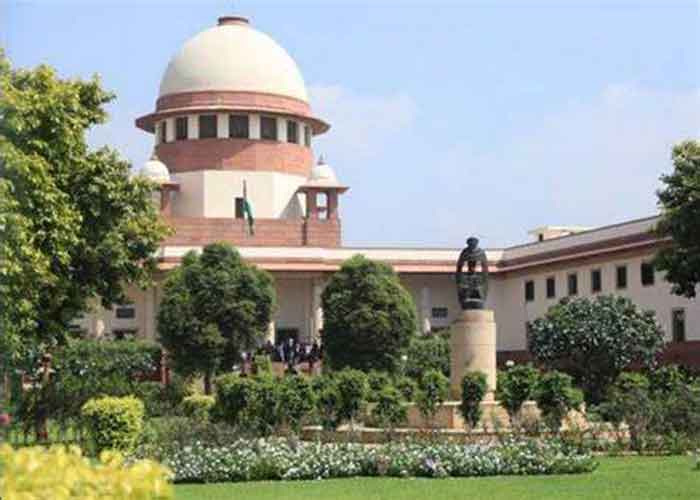
The Supreme Court on Friday reiterated that the salary income of parents cannot be mechanically included while determining the creamy layer status of candidates seeking reservation benefits under the Other Backward Classes (OBC) category.
A Bench of Justices P.S. Narasimha and R. Mahadevan rejected the Centre’s request to modify its earlier ruling on the interpretation of government instructions governing OBC creamy layer determination, clarifying that the judgment was not open to reconsideration.
The clarification came while disposing of miscellaneous applications filed by the Union government seeking permission to apply the earlier criteria to candidates recommended through the Civil Services Examination (CSE) 2025 and to limit the retrospective impact of the March 11, 2026 judgment.
The court held that the principle laid down in its earlier judgment would apply to service allocation for OBC candidates selected through CSE 2025, as the allocation process had not yet been finalised.
“Since the process of allocation remains pending and there is no convincing or reasonable justification for deferring the implementation of the judgment dated 11.03.2026, the creamy layer principle, as interpreted in the said judgment, shall govern the allocation of services to OBC candidates selected through the Civil Services Examination, 2025,” the Bench said.
The March judgment concerned candidates who had cleared the Civil Services Examination but were denied OBC reservation benefits after the Department of Personnel and Training (DoPT) treated them as belonging to the creamy layer by including the income of their parents employed in public sector undertakings (PSUs).
The candidates had challenged the decision before the Central Administrative Tribunal, subsequently securing relief from the Madras, Delhi and Kerala High Courts. Dismissing the Centre’s appeals in March, the Supreme Court had directed the government to consider the claims of the candidates and intervenors in accordance with the principles laid down in its judgment and implement the directions within six months.
In its latest order, the Bench clarified that the earlier ruling did not require reopening completed selections, appointments or service allocations, or disturbing the seniority of other employees. However, its interpretation of the 1993 Office Memorandum and the 2004 clarificatory letter would remain binding under Article 141 of the Constitution.
The court also said that claims of similarly placed candidates whose cases are pending before courts, tribunals or other competent authorities could be considered on their individual merits in light of the March judgment.
The Centre had sought two years to establish equivalence between posts in PSUs, banks and other organisations and government posts, and to formulate a uniform mechanism for determining creamy layer status.
Declining to prescribe a timeline for the exercise, the Bench said the matter fell within the domain of the executive and legislature. It extended the time for compliance with its earlier judgment by two months before disposing of the applications.
 FOLLOW NOW