
New Delhi, November 9, 2026 (Yes Punjab News)
Delhi’s air quality deteriorated sharply on Monday, a day after Diwali celebrations, with several localities recording pollution levels in the severe category and Sonia Vihar registering an alarming Air Quality Index (AQI) of 449.
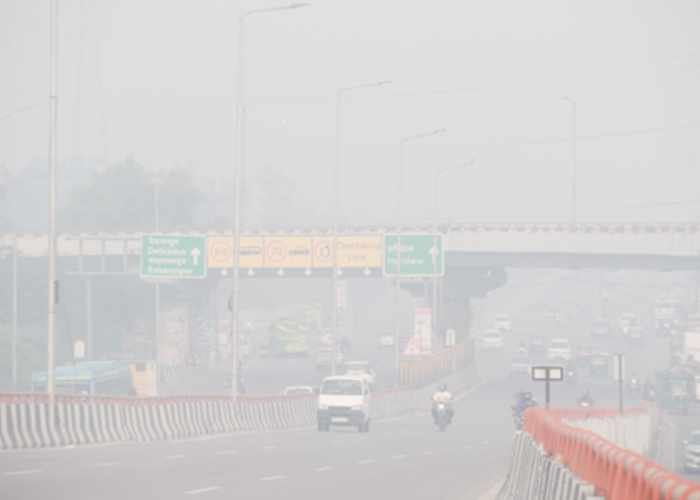
A thick layer of smog enveloped parts of the national Capital during the morning, reducing visibility and affecting several residential neighbourhoods. Areas around Inderlok were among those experiencing visibly hazy conditions.
According to the Central Pollution Control Board’s (CPCB) Sameer application, Delhi’s average AQI stood at 376, placing the city in the very poor category. However, readings at individual monitoring stations showed significantly worse conditions.
Sonia Vihar recorded the highest AQI at 449, followed by Burari Crossing at 445 and Vivek Vihar at 441. Jahangirpuri registered 439, Delhi University’s North Campus 437 and Rohini 435.
Other locations reporting severe air quality included DTU (431), Bawana (424), Chandni Chowk and Patparganj (418 each), Mundka (413), NIH Narela and Punjabi Bagh (408 each), and the Commonwealth Sports Complex and ITO (404 each).
The alarming readings have renewed questions over the effectiveness of restrictions imposed to control firecracker emissions during Diwali. Despite Supreme Court directions governing the use of firecrackers, bursting continued in several parts of the city beyond the permitted hours, according to the report.
Concerns have also emerged over the availability of real-time pollution monitoring data during the peak pollution period on Diwali night.
R.K. Puram and Nehru Nagar, near Lajpat Nagar, were among the areas reporting particularly high pollution levels until 9 pm. According to a media report, the Delhi Pollution Control Committee (DPCC) website stopped displaying live readings from several monitoring stations for a few hours after pollution levels began rising sharply.
The affected monitoring locations reportedly included R.K. Puram, Nehru Nagar, Mundka, Sonia Vihar and Dwarka.
Separately, Delhi Minister Kapil Mishra accused Aam Aadmi Party (AAP) National Convenor Arvind Kejriwal of running a campaign from his residence to malign Deepavali under the pretext of raising pollution concerns.
The post-Diwali pollution spike has once again highlighted the challenge of controlling emissions in the national Capital. While firecracker use has drawn attention, vehicular emissions, industrial activity, construction dust and weather conditions also contribute to Delhi’s air pollution.
 FOLLOW NOW