

Washington, October 13, 2026 (Yes Punjab News)
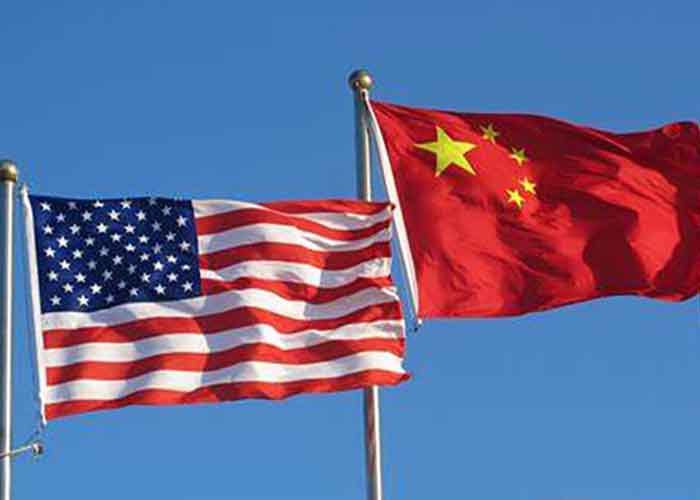
The tariff war between the United States and China has sharply reduced trade between the world’s two largest economies, but exporters have cushioned much of the immediate impact by redirecting shipments to alternative markets, particularly in Asia, according to the International Monetary Fund (IMF).
In its October 2026 World Economic Outlook released on Tuesday, the IMF said Chinese exports to the US fell 22 per cent between February 2025 and January 2026, while American exports to China declined 25 per cent during the same period.
The fall in bilateral trade reduced China’s overall export growth by 3.3 percentage points and US export growth by 1.7 percentage points. However, both countries expanded shipments to other destinations, limiting the broader impact on their exports.
By January 2026, Chinese exports to markets outside the US were 4.7 percentage points above their pre-tariff trend, while American exports to destinations other than China were 2.6 percentage points above their earlier trend. As a result, total exports from both countries remained within approximately one percentage point of their pre-tariff trajectories.
The IMF’s analysis found that Chinese exports of products affected by US tariffs to alternative markets increased by an amount equivalent to 52 per cent of the trade at risk within a year. After adjusting for growth that would likely have occurred without the tariffs, the increase attributable to trade diversion stood at 39 per cent.
For US products affected by Chinese retaliatory tariffs, shipments to third markets rose by an amount equivalent to 17 per cent of the trade at risk, with only 7 per cent attributable to the tariff shock after accounting for existing trends.
The difference partly reflected the two countries’ dependence on each other before the escalation. The US accounted for around 15 per cent of China’s exports, while China represented about 7 per cent of American exports.
Asia emerged as the main beneficiary of the shift in global trade flows, with emerging and advanced Asian economies together absorbing approximately half of the redirected trade. The European Union received nearly one-fifth, while smaller shares went to the Middle East, Central Asia, Africa and the Western Hemisphere.
Electrical machinery accounted for much of the increase in shipments to Asia, while vehicles featured prominently in redirected exports to the Middle East and Central Asia.
Despite the adaptability demonstrated by businesses, the IMF warned that trade diversion would not eliminate the longer-term costs of protectionism, which could raise operating expenses, duplicate production facilities and weaken supply-chain efficiency.
The Fund projected global trade volume growth to slow from 5 per cent in 2025 to 4.6 per cent in 2026 before rising marginally to 4.7 per cent in 2027.
It also pointed to new bilateral and regional trade arrangements, including agreements involving India and the European Union and the United Kingdom, as potential avenues for lowering trade barriers and strengthening supply-chain resilience.
 FOLLOW NOW