
Brussels, June 13, 2026
The clash between the authorities and the Jammu Kashmir Joint Awami Action Committee (JAAC) in Pakistan-occupied Kashmir (PoK) has raised wider concerns about political representation, democratic accountability, and the use of anti-terror laws against grassroots movements.
What began as a campaign for electoral reform has quickly expanded into a broader crisis marked by communication blackouts, heavy security deployment, arrests, political violence, and competing claims over public order and democratic rights. The dispute had centered on the JAAC’s appeal for a peaceful protest on June 9, a report has stated.
Ahead of the protest, an official notification issued on June 6 formally designated JAAC a proscribed organisation and accused it of “terrorism, promoting hatred, creating anarchy, disturbing public order, and acting in a manner prejudicial to the peace and security” of the region, Dimitra Staikou, a Greek lawyer, writer, and journalist, wrote in ‘Europa Wire’.
“The escalation had begun even before the ban. At approximately 11:30 pm on June 5, authorities imposed a region-wide communications blackout. Mobile internet, broadband services, and, in many areas, voice communications were suspended until June 12 as a precautionary measure ahead of the planned protest.
The restrictions significantly limited the ability of residents to contact family members, access emergency assistance, and independently document events as tensions escalated,” Staikou detailed.
“Following the ban, arrests of JAAC leaders, supporters, and associated individuals reportedly intensified. Authorities also moved against offices and networks linked to the movement.
Reports emerged that activist Sohrab Barkat had been arrested in connection with a YouTube video published on June 5, reinforcing perceptions among supporters that the crackdown extended beyond organisational leadership,” she added.
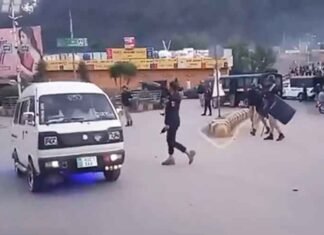
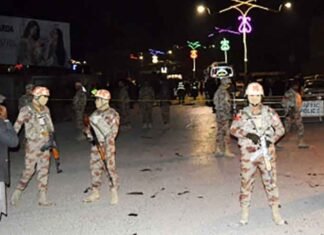
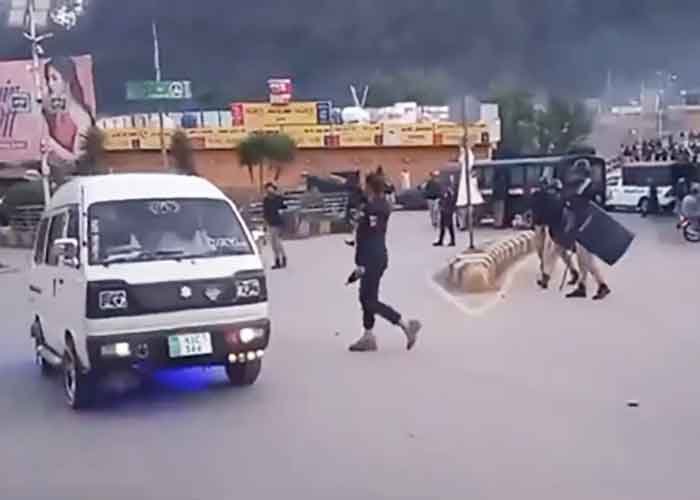
According to the expert, the crisis escalated into a new phase on June 7, when violent clashes erupted in Rawalakot city of Poonch district in PoK, between security forces and JAAC supporters. Citing local accounts, she said the confrontations involving protesters, police, and federal reinforcements continued throughout the night.
“Local sources and JAAC supporters claimed that total casualties may have reached between 150 and 200 people, while official figures remained substantially lower. Authorities nevertheless acknowledged fatalities among both security personnel and civilians,” Staikou mentioned.
She further noted that the demonstrations increasingly reflected growing public anger over limited political representation, communication shutdowns, arrests, and perceptions of security-led suppression of local political activity.
Stressing that the development in PoK raises broader human rights concerns, Staikou said, “A movement calling for political reform was met with anti-terror measures, arrests of activists and supporters, restrictions on communications, and extensive security deployments.”
While the justification for these actions remains contested, she said, they clearly limited the ability of the people to organise, communicate, and document events during one of the most volatile periods the region has experienced in recent years.(Agency)
 FOLLOW NOW