

New Delhi, October 24, 2026 (Yes Punjab News)
The arrest of a couple in Punjab for allegedly running a honey-trapping operation to obtain information about key military installations has exposed a suspected espionage network linked to Pakistan’s Inter-Services Intelligence (ISI), with investigators flagging the growing use of fake communication channels to target Indian military personnel.
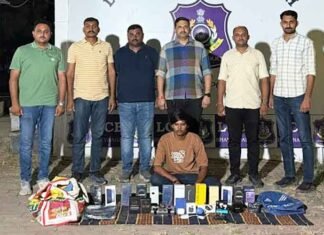
The husband and wife, who lived in Kalu Wala village in Ferozepur district near the India-Pakistan border, have been accused of sharing sensitive information about Army movements and deployments in border areas. Investigators have also found that the woman allegedly impersonated a police officer to mislead people and gain access to confidential information.
An Intelligence Bureau official said honey-trapping had long been used as a tactic to extract sensitive information. However, the increasing use of impersonation and forged communication channels to obtain confidential details has emerged as a major concern for security agencies.
According to officials, individuals allegedly recruited by the ISI are creating fake communication channels that appear to belong to senior police and Army officers. These channels are designed to build credibility and identify junior personnel who may be vulnerable to such approaches.
“Once created, these communication channels do not begin operations immediately. They keep a watch on junior officers who are likely to fall into such communication channels,” an official said.
The channels may remain inactive for a period before sending messages to selected junior officers. These communications often create a sense of urgency, prompting recipients to respond quickly without verifying the sender’s identity.
Another official said artificially created emergencies could pressure junior personnel into sharing information before checking whether the communication was genuine.
Once the required information is allegedly obtained, the forged communication channels are shut down, making it more difficult for investigators to trace their operators and establish links with wider espionage networks.
Officials have also warned that such messages are designed to place lower-ranking personnel under pressure, potentially leading them to bypass established security protocols while transmitting sensitive information.
“There have been cases whereby officials have been told to provide access to unauthorised networks,” an official said.
The emerging tactics come amid continued efforts by Indian intelligence agencies to identify and dismantle suspected espionage networks operating on behalf of Pakistan.
During Operation Sindoor in May 2025, launched in response to the Pahalgam terror attack, India demonstrated its military capabilities against Pakistan while also seeking to strengthen its position in the intelligence domain, according to the assessment cited in the report.
Officials said several suspected modules had subsequently been busted and honey-trapping networks dismantled on the basis of actionable intelligence. They also assessed that Pakistan had struggled to fully revive several of its alleged proxies and continued to face difficulties with infiltration attempts.
Against this backdrop, officials believe the ISI is adapting its methods to obtain information about the Indian armed forces, increasingly relying on impersonation-based networks rather than maintaining communication channels for extended periods.
The reported strategy involves setting up a channel for a specific operation, using it to obtain information and then shutting it down before establishing another under a different identity.
This short operational lifespan presents a fresh challenge for Indian intelligence agencies, as investigators have less time to trace communication links, identify the people operating the channels and determine the extent of information allegedly compromised.
Security officials have stressed the importance of verifying the authenticity of official communications and adhering to established protocols, particularly when messages demand urgent action or request access to sensitive information.
The latest case in Punjab has once again highlighted concerns over attempts to exploit personal relationships, impersonation and pressure tactics to obtain information about military deployments and installations near the border.
 FOLLOW NOW