


Brussels, June 6, 2026
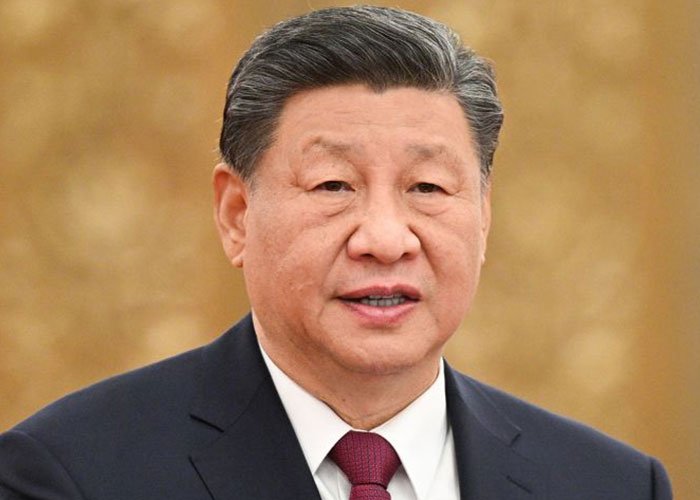
Chinese President Xi Jinping has been accused of weaponising legislation to extend repression beyond Tibet’s borders. China’s new Law on Promoting Ethnic Unity and Progress, adopted in March this year and scheduled to come into force in July 2026, has drawn criticism from the UN experts, who warned that it risks “entrenching forced assimilation and encouraging transnational repression”, a report has highlighted.
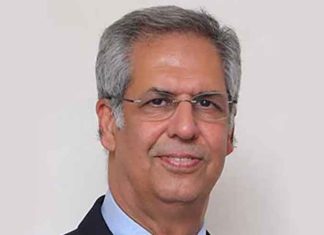
This legal framework reflects Beijing’s efforts aimed not only at reshaping identity within China but also intimidating diaspora communities and redefining sovereignty, legitimacy, and cultural rights on terms of the Chinese authorities, Khedroob Thondup, the nephew of the Dalai Lama, wrote for the ‘European Times’.
“When Xi Jinping rose to power as Chinese Communist Party General Secretary in 2012 and state president in 2013, he inherited a Tibet already under tight control. Yet what distinguishes his tenure is the transformation of Tibet from a contested periphery into a laboratory of authoritarian consolidation. Xi’s Tibet policy is not reactive. It is deliberate, systematic, and emblematic of his broader project to secure China’s borders while erasing cultural pluralism,” Thondup stated.
“Xi has consistently framed Tibet as a national security issue. The region’s proximity to India, its symbolic connection to the Dalai Lama, and its history of resistance make it, in Beijing’s eyes, a potential fault line. Under Xi, Tibet has been subjected to deepening securitisation,” he added.
According to the report, refugee flows from Tibet have been curtailed amid tightened militarised border controls and restrictions on traditional escape routes through Nepal.
“Surveillance technologies, including DNA collection, facial recognition, AI-enabled monitoring, and border surveillance, have turned Tibet and Tibetan communities in the region into some of the most closely monitored populations in the world. Dissent, including in private digital spaces, has been criminalised under an expanding legal and security framework,” it stated.
The report noted that Xi’s Sinicisation campaign that mandates religious groups align their doctrines, customs and morality with Chinese culture extends beyond Tibet, but its impact in the region is particularly severe. It stated that Chinese education policies have led to the separation of many Tibetan children from families, placing them in boarding schools and preschools, while Mandarin replaced the Tibetan language of instruction.
“Religious practice has been curtailed: monasteries have faced raids and surveillance, images of the Dalai Lama are banned, and monks have been subjected to detention and political indoctrination. These measures are not incidental. They reflect Xi’s conviction that cultural distinctiveness is a threat to national unity,” it mentioned.
Highlighting the broader implications, the report said that since 2012–2013, Xi has transformed Tibet into a “crucible of authoritarian control”. It argued that the Chinese President’s policies of “surveillance, assimilation, securitisation, and legal warfare” are not merely domestic measures but part of strategic moves to consolidate control over China’s frontier regions and portray its “authoritarian model globally”.
“Tibet is therefore not only a human rights tragedy, but also a geopolitical warning: Xi’s Tibet is the future he envisions for contested spaces worldwide,” the report stated.(Agency)
 FOLLOW NOW