
Kolkata, May 17, 2026
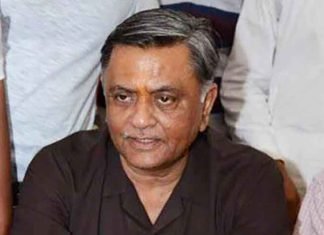
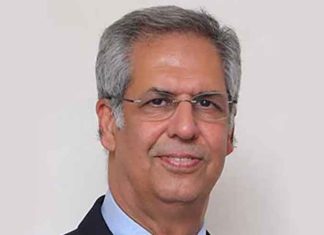
Ambikesh Mahapatra, the Jadavpur University professor who was arrested in 2012 for circulating a cartoon of former West Bengal Chief Minister Mamata Banerjee, on Sunday launched a sharp attack on the Trinamool Congress supremo, accusing her of fostering “hooliganism” in the state and enforcing “excessive control over institutions”, ranging from the police administration to the media.
Mahapatra was arrested in April 2012 after forwarding an email containing a cartoon sequence to a housing society web group. The cartoon was a parody inspired by legendary filmmaker Satyajit Ray’s celebrated film Sonar Kella (The Golden Fortress) and satirised Mamata Banerjee’s decision to replace party colleague Dinesh Trivedi with Mukul Roy as India’s Railway Minister.
At the time, the Trinamool Congress government booked him under the controversial Section 66A of the Information Technology (IT) Act, which criminalised sending “offensive” messages online, along with several sections of the Indian Penal Code.
Speaking to IANS about the episode and the prolonged legal proceedings that followed, Mahapatra alleged that the police, lower courts and the ruling establishment had acted in coordination against him.
“In this case, the hooliganism of the ruling TMC party was combined with the police administration and the lower criminal court; they were all working together… The TMC, Police, and Administration were jointly orchestrating a ‘fear psychosis’… Everything was happening under the instructions of Mamata Banerjee,” Mahapatra said.
He further pointed out that Section 66A of the IT Act was later struck down by the Supreme Court as unconstitutional.
“The final verdict on that matter stated that Section 66A of the IT Act is unconstitutional and deleted from the Indian law book henceforth. At that time, the Supreme Court also said that all ongoing cases in India regarding Section 66A should be closed. According to this, our case should also have been closed, but it was not until 2023,” he said.
Despite the Supreme Court’s ruling against Section 66A, Mahapatra’s criminal case continued for over a decade. It was only in January 2023 that an Alipore District Court in Kolkata acquitted him of all charges, bringing an end to what he described as an 11-year-long legal ordeal.
Calling the case a deliberate attempt to suppress dissent, Mahapatra alleged that it reflected a broader attack on democratic freedoms.
“This indicates that it was a conspiracy from the supremo of the ruling party. A conspiracy was going on to attack freedom of speech, to attack the free human rights constituted by the Indian Constitution,” he said.
Mahapatra also claimed that similar incidents took place repeatedly during the Trinamool Congress’ long tenure in power in West Bengal.
“In these 15 years, this kind of work (arrests) has been done extensively. You might know about Shiladitya Chowdhury, a farmer from the West Midnapore district. Mamata Banerjee had him arrested too, and a criminal case against him is still going on today. He was arrested in August 2012. Then a student, Tanya Bhardwaj of the Presidency College, was arrested. So, these kinds of cases repeatedly happened in the past 15 years,” he added.
Continuing his criticism, Mahapatra accused Banerjee of running both her party and the state administration in an authoritarian manner.
“Mamata Banerjee’s actions and her administration were running as a one-woman party, a one-woman administration, and everything was done by one person, that is, Mamata Banerjee,” he said.
He further alleged that there was no internal democracy within the Trinamool Congress.
“In her political party since 1998, she has always been the president of the party. There is no democracy. In her party, she is the autocrat. The same pattern has been reflected in the administration since 2011. Her vindictive nature and one-woman party nature are not fit for a democracy or for a country like the Republic of India,” Mahapatra claimed.
Mahapatra further claimed that Banerjee’s only political objective revolved around retaining authority.
“There was only one ideology of Banerjee: ‘We want power. I will be the supremo of this power,’” he said.
Referring to the political atmosphere after the recently concluded Assembly elections in West Bengal, Mahapatra claimed that people were now experiencing a sense of relief and calm.
The BJP secured a decisive majority in the state elections, defeating Mamata Banerjee-led Trinamool Congress.
“After Mamata Banerjee’s rule ended, we are feeling some peace of mind. This is a very positive signal and brings peace of mind,” Mahapatra added.(Agency)
 FOLLOW NOW