

New Delhi, April 24, 2026 (Yes Punjab News)
In a significant political development that could reshape the balance within Parliament, seven Members of Parliament from the Aam Aadmi Party (AAP) have announced their resignation and decision to join the Bharatiya Janata Party (BJP).
The announcement was made during a press conference led by Raghav Chadha, who was joined by fellow Rajya Sabha MPs Sandeep Dikshit and Ashok Mittal.
Seven MPs Announce Collective Exit from AAP
According to Chadha, the group includes prominent figures such as cricketer-turned-politician Harbhajan Singh, entrepreneur Vikramjit Singh Sahney, industrialist Rajinder Gupta, and former Delhi Commission for Women chairperson Swati Maliwal.
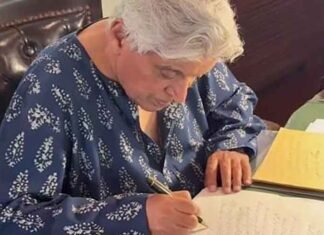
Chadha stated that all seven leaders have formally resigned from their positions within AAP and submitted a signed letter confirming their decision to the appropriate parliamentary authorities.
Claim of Legal Merger with BJP Parliamentary Group
Highlighting the numerical strength of the group, Chadha asserted that the defection involves more than two-thirds of AAP’s total representation in the Rajya Sabha. He argued that this qualifies them, under constitutional provisions, to merge their faction with the BJP’s parliamentary group without attracting disqualification under anti-defection laws.
The leaders emphasized that their move was in accordance with legal provisions, and they have collectively chosen to align with the BJP.
Unexpected Departures Shake Party Leadership
While Chadha’s strained relationship with the party leadership had been visible in recent months—particularly after his removal as deputy leader in the Rajya Sabha—the exit of other senior leaders has come as a surprise.
The inclusion of figures like Sandeep Dikshit and Ashok Mittal, along with high-profile personalities such as Harbhajan Singh and Rajinder Gupta, marks a major shift within AAP’s upper house representation.
Swati Maliwal, who had earlier distanced herself from the party, has now formally aligned with the group.
Implications for AAP and Indian Politics
All seven leaders were considered influential voices within AAP and were believed to be close to party chief Arvind Kejriwal. Their collective exit is being viewed as a significant setback for the party, especially at a time when political alignments are under close scrutiny.
The development could have broader implications for parliamentary dynamics, as well as for AAP’s strategic positioning at the national level.
The departure of seven Rajya Sabha MPs from AAP to BJP represents one of the most notable political shifts in recent times. As the situation unfolds, attention will remain on how both parties respond to this development and what it means for the future of opposition politics in India.
 FOLLOW NOW