


Gandhinagar, May 17, 2026
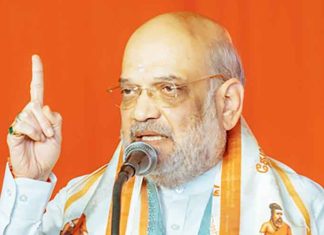
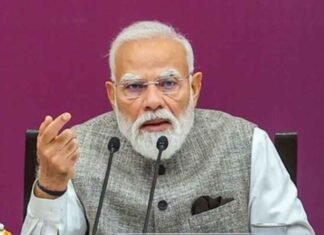
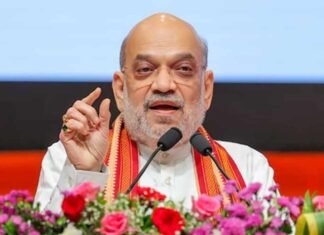
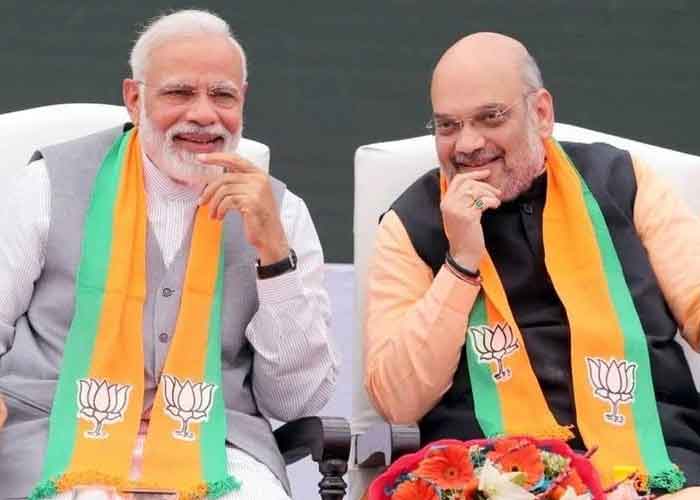
Union Commerce and Industry Minister Piyush Goyal on Sunday said that Prime Minister Narendra Modi and Union Home Minister Amit Shah represented examples of “design thinking” in governance, mentioning that structured planning, innovation and entrepreneurship were central to India’s development model.
Speaking during the inauguration of the Innovation and Incubation Centre at the National Institute of Design (NID), Goyal said India’s progress towards “Viksit Bharat @2047” would depend on design, innovation and research.
“If there are role models for this, then Prime Minister Narendra Modi and Home Minister Amit Shah are those role models,” Goyal said.
He described their approach as one based on “meticulous planning, detailing and executing programmes in a structured way”.
The minister said design was not limited to aesthetics or products but reflected “an entire way of thinking”.
Goyal argued that no country had become developed solely based on natural resources, population or consumption, adding that developed economies were built on “innovation, design thinking and entrepreneurship”.
“India historically possessed advanced traditions of design and innovation. Looking at ancient Indian architecture and Vastu principles, traditional systems involved well-thought-out structural design elements linked to ventilation, sunlight and planning at homes,” he said.
The minister also cited mathematics, surgical science in the time of Sushruta and metallurgy represented by Delhi’s Iron Pillar as examples of India’s historical innovation capabilities.
“There is the Iron Pillar in Delhi from Emperor Ashoka’s time, which never rusts. That means how much research and innovation we had in metallurgy,” he said.
Goyal said years of colonial rule had weakened that culture of innovation, but India was now reconnecting with its strengths.
“We have to define the destiny of Bharat in the 21st century. Design, innovation and research are the roadmap towards a developed and prosperous country,” he said.
The minister described Gujarat as an “entrepreneurial powerhouse” under Chief Minister Bhupendra Patel and said: “The state reflected a combination of modern sectors such as semiconductors, electronics, defence and aerospace along with traditional industries like gems, jewellery, diamonds and textiles.”
“Entrepreneurship exists in Gujarati DNA itself. Gujarati brothers and sisters will always find opportunities in new ways,” he added.
He also said the Innovation and Incubation Centre would encourage “out-of-the-box thinking” and help students, faculty and industries collaborate more effectively.
According to Goyal, the centre’s purpose would be to “open people’s minds” and promote new approaches to solving problems.
“The real test of innovation is not whether it is advanced technology, but whether it improves people’s lives. Innovation should create jobs, improve productivity and strengthen the economy,” he noted.
Goyal further said India’s future economy would increasingly depend on artificial intelligence, automation, skilled manpower, creative design and technology-driven manufacturing rather than low-cost labour alone.(Agency)
 FOLLOW NOW