

New Delhi, April 19, 2026
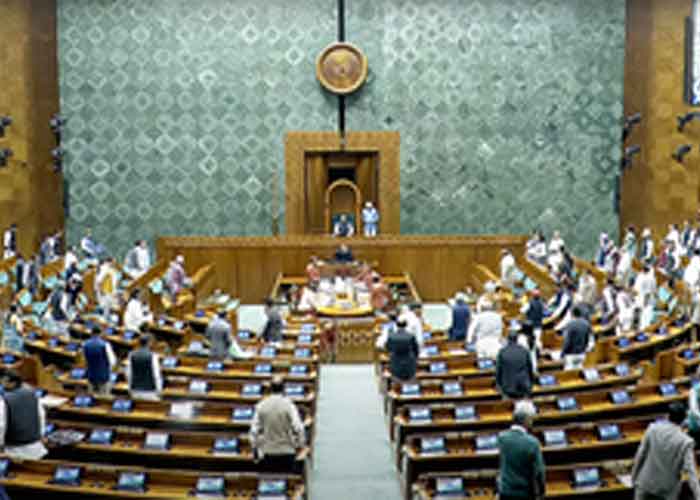
When the results of the women’s reservation bill were announced in the Lok Sabha on the evening of April 17, the reaction was immediate — desks were thumped, slogans filled the air, and the 230 opposition members were on their feet, celebrating. It felt strange, almost uncomfortable to watch. This was a bill many believed could mark a real shift in India’s political landscape, yet its defeat was being greeted with applause rather than disappointment.
There was something unsettling about this. A proposal that promised to alter the landscape of Indian politics — to finally widen the narrow doorway through which women enter Parliament — had just been voted down. And still, the opposition was jubilant. It felt less like politics and more like a moment where instinct overtook introspection.
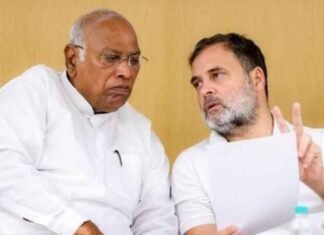
At one level, the reaction is not difficult to decode. For the first time in over a decade, the government led by Prime Minister Narendra Modi had been handed a clear legislative setback in the Lok Sabha. For the opposition, led by Rahul Gandhi, this was the moment to claim political ground — an opportunity to stall what the government had positioned as a flagship reform.
But politics, when reduced purely to scorecards, often forgets the people it is meant to serve. In that moment, the larger significance of the bill appeared to recede. This was not just another piece of legislation. It was an idea that had been deferred for decades. The promise of reserving seats for women in Parliament has hovered over India’s legislative history like an unfinished sentence — spoken of, debated, postponed, revived, and now, once again, stalled.
The opposition has tried to articulate its reasons. Rahul Gandhi and his allies — including M.K. Stalin, Akhilesh Yadav, and Mamata Banerjee — argued that linking the bill to delimitation raises deeper structural concerns. They contended that any redrawing of constituencies tied to population changes could alter the balance of political power across states, potentially disadvantaging those that have managed population growth more effectively, particularly in the South.
The resistance was not merely rhetorical. M.K. Stalin, holding a constitutional post, burnt a copy of the bill and asked his MPs to wear black as a mark of dissent. His argument centred on the fear that population-based delimitation would penalise southern states by reducing their relative representation in Parliament. Mamata Banerjee, too, opposed the linkage, going so far as to call it a “conspiracy” that could eventually be used to manipulate electoral rolls and pave the way for measures like the National Register of Citizens.
These concerns were firmly countered by the government. Union Home Minister Amit Shah dismissed them as a deliberately constructed narrative aimed at derailing the reform. He attempted to allay fears with numbers, pointing out that the five southern states — Karnataka, Andhra Pradesh, Telangana, Tamil Nadu, and Kerala — currently hold 129 Lok Sabha seats, accounting for 23.76 per cent of the total 543. Even with a hypothetical 50 per cent increase in seats, he argued, their share would rise proportionately, reaching 195 seats, thereby preserving their political weight.
On paper, the argument appears reasonable. But politics is rarely settled on paper alone. The Rahul Gandhi-led opposition remained unconvinced. Akhilesh Yadav went a step further, remarking that even if the BJP were to promise a woman Prime Minister, he would not take it at face value.
In downing the bill, the opposition may have won a tactical momentary victory. But it sidestepped what could have been a moment of reckoning. Beyond the procedural disputes and political positioning lay a simple reality — women remain significantly underrepresented in India’s highest decision-making body.
The numbers tell the story. From just 22 women in the first Lok Sabha to 78 in the 17th — the highest ever — the trajectory shows progress, but at a pace that is difficult to defend. The current House, with around 75 women members, still falls far short of reflecting a country where women constitute nearly half the population.
The proposed reform, particularly if tied to a future expansion of seats, could have transformed that equation. With the Lok Sabha potentially growing to over 800 members, nearly 272 seats could be reserved for women. That is not a marginal adjustment; it is a structural shift — one that could redefine participation, reshape policy priorities, and alter the very grammar of representation.
And that is precisely why this moment feels heavier than a routine legislative defeat. It is not just about what was rejected, but about what has been postponed yet again. It also raises uncomfortable questions for the Congress-led opposition.
Indian politics has never lacked powerful women leaders. From Indira Gandhi to J. Jayalalithaa, individual success stories have been celebrated. But these exceptions coexist with a system that remains structurally skewed. The rise of a few does not compensate for the absence of many.
Perhaps that is why the opposition’s celebration in the House felt jarring. It seemed disconnected from the larger goal. Governments will come and go. Victories will be claimed and losses absorbed. But some ideas demand a politics that rises above immediate advantage — one that recognises when the stakes extend beyond electoral gain.
It is here that the Rahul Gandhi-led opposition appears to have fallen short.
Reforms of this magnitude require more than legislative numbers; they require political trust and accommodation. The question now remains unavoidable — should a reform of this scale become collateral damage in a broader political contest?
The image of that April 17 evening — desks thumping, slogans echoing — will eventually fade into the archive of parliamentary theatre. But the discomfort it leaves behind should not lessen because beneath the noise was a quieter truth — an opportunity slipped through once again.
India does not lack capable women leaders. It lacks enough of them in the rooms where decisions are made. And until that changes, every delay carries a cost — not measured in votes or victories, but in voices that remain unheard.
The real tragedy of April 17 is not that the government lost a bill. Sadly, the country lost an opportunity which women across India continue to wait for. The thumping of the desks in celebration by the opposition will continue to echo for a long time.(Agency)
 FOLLOW NOW