

New Delhi, June 10, 2026
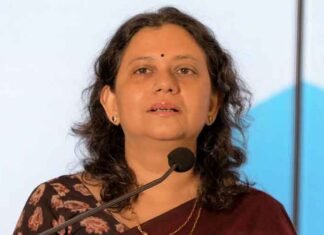
Meenakshi Natarajan, currently in news over the rejection of her nomination as Congress candidate for Rajya Sabha election in Madhya Pradesh scheduled for June 18, has earlier, too, made headlines, though she prefers to remain in the background as an aide to party leader and Lok Sabha Leader of Opposition Rahul Gandhi.
Political temperatures rose on Tuesday after her nomination was rejected during scrutiny, with Madhya Pradesh Chief Minister Mohan Yadav alleging Congress having fielded a candidate with a concealed criminal record and lacked support from its own MLAs, according to reports.
Critics recall Natarajan’s 2012 Private Member Bill proposing strict media regulation, which was widely condemned as an attempt to curb press freedom.
A controversy erupted, and the Congress leadership distanced itself from the Bill.
Now, the nomination raises questions, highlighting the uneasy balance between political loyalty and public perception.
Natarajan, then among Rahul Gandhi’s innermost circle, had drafted the Bill in Lok Sabha that sought sweeping powers to regulate India’s print and electronic media.
Then referred as the Print and Electronic Media Standards and Regulation Bill, the proposal immediately ignited a storm of criticism, with many viewing it as an attempt to gag press freedom.
Some recall the draft legislation as having suggested the creation of a three-member media regulatory authority, appointed by the government.
It was supposed to wield powers to ban or suspend coverage of events deemed a threat to national security, suspend operations of media organisations for nearly a year, and even cancel licences of repeat offenders.
Perhaps most controversially, the authority was to be exempted from the Right to Information Act (RTI), as reported then, thus effectively shielding its decisions from public scrutiny.
The provisions reportedly raised eyebrows even within the Congress, and given Natarajan’s proximity to Rahul Gandhi, speculation swirled over whether the proposal was an idea floated at his behest to test waters.
The Bharatiya Janata Party (BJP) demanded that Rahul Gandhi himself clarify his position.
Facing mounting criticism, the Congress quickly distanced itself, with senior party leaders declaring that the bill did not reflect Rahul Gandhi’s views.
Congress members and Ministers in Parliament stressed that it was Natarajan’s personal initiative as a private member, and not a government-backed proposal.
After days of silence, Natarajan herself clarified that Rahul Gandhi had no role in the draft. She insisted the Bill had not been introduced and described it as her “personal views”.
She failed to appear in the House the day the Bill was scheduled to be introduced, and the proposed legislation was never tabled.
Effectively, the legislation died before it could even be debated.
The episode was widely interpreted as a misstep — an overreach that embarrassed the Congress leadership and reinforced suspicions of hostility toward media freedom.
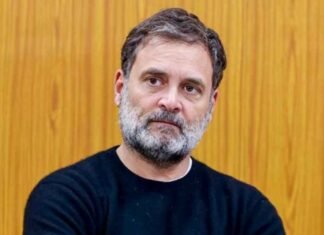
A year later, perhaps in an attempt to distance himself from unpopular measures and project himself as a reformist voice within the Congress, Rahul Gandhi tore up a piece of legislation introduced by his own party-led United Progressive Alliance government, sending shockwaves across the political establishment.
Claiming that what “government has done is wrong”, he stressed that it was high time that political parties stopped taking decisions based on political considerations.
Incidentally, the ordinance overturned a Supreme Court ruling mandating disqualification of convicted lawmakers facing at least a two-year jail sentence.
The move stunned Congress benches, with senior leaders scrambling to explain the contradiction between his stance and the government’s position.
Opposition parties mocked the Rahul Gandhi’s act as theatrics, claiming he was undermining his own Prime Minister (late Manmohan Singh).
The clause was part of a Lokpal Bill introduced by the then Manmohan Singh government amid mounting public pressure during the Anna Hazare-led anti-corruption movement.
The Lokpal Bill went through multiple revisions before finally being passed in 2013, though its implementation remained slow and contested.
Rahul Gandhi’s act is remembered less for its legislative impact and more as a political statement — an attempt to craft his image as a leader willing to challenge the status quo, even at the cost of embarrassing his own government.
Observers noted parallels with the 1988 Defamation Bill introduced by then Rajiv Gandhi’s government, which had also reportedly sought to curb press freedom. That proposal triggered nationwide protests and was eventually withdrawn, marking it one among his government’s political setbacks.
Natarajan’s Bill, though never formally introduced, evoked similar fears of censorship and underscored the risks of attempting to legislate media control in a democracy, where its drafting exposed deep anxieties within the Congress about media scrutiny.(Agency)
 FOLLOW NOW