

Washington, May 20, 2026
US Vice President JD Vance said the Trump administration was pursuing intensive negotiations with Iran but warned Washington remained prepared to resume military operations if Tehran failed to agree to a deal preventing it from acquiring nuclear weapons.
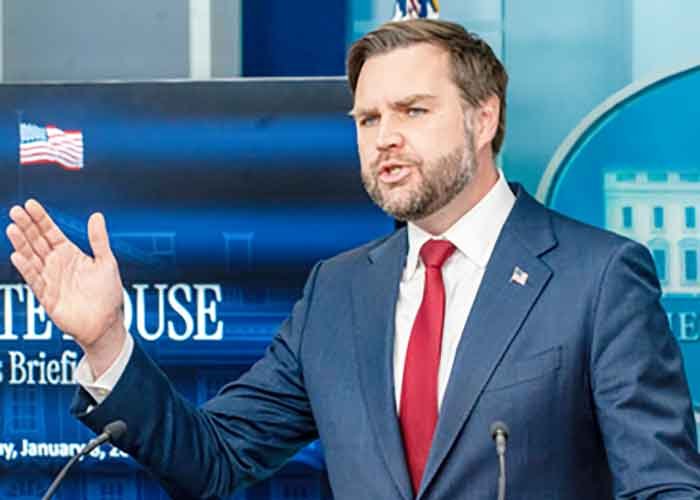
“There are two options, two pathways we can go down when it comes to the Iran situation,” Vance told reporters during a White House media briefing.
“What the president of the United States has said is, number one, Iran can never have a nuclear weapon,” he said, arguing that an Iranian bomb could trigger a wider global nuclear arms race and destabilise the Middle East and beyond.
Vance said the administration believed Tehran was interested in reaching an agreement and claimed recent diplomatic engagement had yielded progress.
“We think the Iranians wanna make a deal,” he said. “But we’re not gonna know until we’re actually putting pen to paper on signing a deal.”
The Vice President described his recent diplomatic outreach as part of an effort to demonstrate Washington’s willingness to negotiate “in good faith”.
“Why did I spend, I think probably 22 hours on a plane going there, 24 hours coming back, and then 21 hours on the ground negotiating with the Iranians? It’s because we wanted to show a sign of good faith,” he said.
At the same time, Vance made clear that President Donald Trump was prepared to escalate military pressure if diplomacy failed.
“The option B is that we could restart the military campaign,” he said. “We don’t wanna go down that pathway, but the President is willing and able to go down that path if we have to.”
Vance described Iran as “a very complicated country” with multiple centres of influence and said it was often difficult to identify Tehran’s exact negotiating position.
“It’s sometimes hard to figure out exactly what it is that the Iranians wanna accomplish outta the negotiation,” he said.
He also dismissed reports suggesting Russia could take control of Iran’s enriched uranium stockpile under a future arrangement.
“That is not currently our plan. That has never been our plan,” Vance said.
During the briefing, Vance defended the administration’s handling of the broader conflict and said the current ceasefire phase should not be viewed as an open-ended military engagement.
“The active period of conflict lasted about five, five and a half weeks,” he said. “This is not a forever war. We’re gonna take care of business and come home.”
The Vice President also addressed domestic issues ranging from immigration and artificial intelligence to political violence and government fraud investigations.
He said a White House anti-fraud task force had uncovered “billions upon billions of dollars of fraud” in Medicare, Medicaid and immigration systems.
On artificial intelligence, Vance said the administration wanted the US to maintain leadership in the technology race while protecting privacy and national security.
“The President wants us to be pro innovation. He wants us to win the AI race against all other countries in the world,” he said.
Vance also condemned recent incidents of political and religious violence, including a deadly shooting near a Muslim community centre in California and online comments mocking the killing of conservative activist Charlie Kirk.
“Political violence, wherever it comes from, is unacceptable in the United States of America,” he said. “Let’s talk with one another, not shoot each other when we disagree.”
The Trump administration has intensified pressure on Iran in recent months amid renewed concerns over Tehran’s nuclear programme and broader regional instability. Trump has repeatedly said Iran would not be allowed to acquire a nuclear weapon while also leaving open the possibility of a negotiated settlement.(Agency)
 FOLLOW NOW