
New Delhi, April 11, 2026
Intelligence agencies have flagged a shift in tactics by Pakistan’s spy agency, the Inter-Services Intelligence (ISI), with a growing reliance on low-cost, high-impact terror modules operating across India.
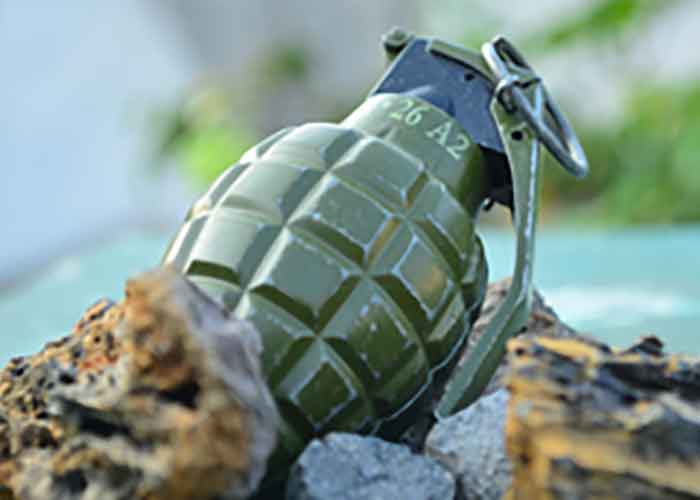
Investigations have found that the use of solar-powered cameras for reconnaissance and grenades is the preferred weapon for attacks — marking a departure from more complex, resource-intensive operations involving improvised explosive devices (IEDs).
Another change found is how the recruitment process is being conducted. The recruitment, earlier carried out across religions, driven largely by Islamic radicalisation, has now been replaced with money. An investigating officer said that the modus operandi has completely changed. Although such modules have been busted in the nick of time, the worry is that these persons had adopted very easy means to carry out attacks, the officer said.
The ISI is no longer running radicalisation camps to recruit the youth into their modules. The kind of brainwashing that used to take place before a youth is roped in earlier is quite minimal, at least when it comes to carrying out attacks in the mainland. In all the recent busts, it was found that most of these youths had not been radicalised or brainwashed. They were all unemployed and lured into the module with money, an official said.
The ISI wants to keep the investments to a bare minimum. Not only does this save money, but the transactions are fewer, and this helps avoid detection when investigating agencies chase the financial trail.
In the latest bust by the Special Cell of the Delhi police, it was also found that the recruits were planning on hitting sensitive locations with grenades. Those arrested have been identified as Manpreet Singh, Anmol, Sahil, Atul Rathee, Rohit, Ajay, Gurjeet Singh, Rimpledeep Singh, Salwinder Singh alias Kalu, Boota Singh, and Harpreet Singh alias Happy.
Grenades are easier to operate when compared to timer bombs. It is one single weapon that needs to be hurled, and this makes the operation relatively easier. In the case of bombs, material has to be sourced and transported. Further, it has to be assembled and timers attached before it is packed. Carrying a bomb and placing it carries a huge risk, especially at sensitive locations. Since these modules only chose to hit sensitive and crowded locations, undertaking operations with a grenade is relatively easier.
An Intelligence Bureau official explained that bombs do cause a much bigger impact when compared to grenades. However, for terror modules looking to carry out safer and lower-cost operations, a grenade makes more sense. They are small enough to be carried and thrown by a single person.
Looking at the pattern in which these modules have been functioning, it is clear that they were okay with a lower-impact attack. However, the bigger goal was to hurl grenades at sensitive locations such as military installations. This makes it clear that the bigger goal is to expose the Indian military and also cause embarrassment, the official added.
Since Operation Sindoor, the ISI has been desperately trying to embarrass the Indian military. It was the Indian armed forces that took down terror infrastructure both in Pakistan and Pakistan-occupied Kashmir (PoK) to avenge the Pahalgam attack. Hence, the emphasis is higher on hitting military installations, so that the armed forces would be embarrassed, another official said.
About the installation of CCTV cameras, the operation that the ISI had planned was a large one. It was not only restricted to Delhi alone. The 11 accused arrested by the Delhi police had managed to place these solar-powered cameras across Rajasthan, Punjab, Haryana and Jammu and Kashmir.
Further, it was also found that the operation was planned in such a cautious manner that the recruited accused were part of multiple groups. One group was not aware of what the other group was doing. The planning was such that the ISI wanted to plug any information leak.
An official said that this operation against such modules would continue and extend across the country. The main focus would be on crowded areas such as railway stations and, of course, places where the military installations are larger in number, the official also added.(Agency)
 FOLLOW NOW