
Washington, May 19, 2026
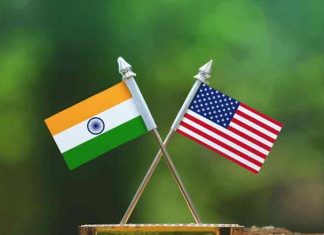
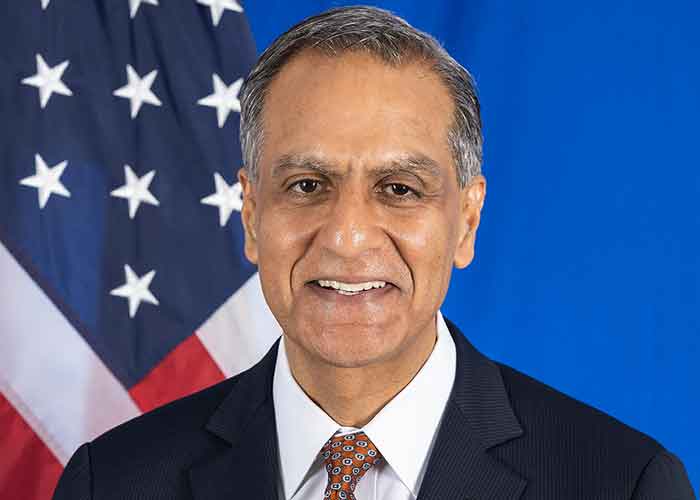
Former US Ambassador to India Richard Verma warned that recent trade disputes, visa restrictions and rising anti-Indian sentiment in the United States had created new strains in the US-India relationship, even as he described the partnership as one of the most consequential in the world.
Speaking at the Capitol Hill Summit 2026 organised by the US-India Friendship Council, Verma said ties between Washington and New Delhi had witnessed “exceptional growth” over the past 25 years, but cautioned that the relationship was now entering a more uncertain phase.
“I’d say the system is flashing a bit yellow,” Verma said.
Verma, who also served as Deputy Secretary of State, said no other bilateral relationship had expanded as rapidly as US-India ties since 2000.
“It would be hard for me to think of another bilateral relationship between the year 2000 and the year 2025 that has grown as much and as deep as the US and India,” he said.
Tracing the evolution of the partnership, Verma recalled that relations had hit a low point during the 1970s and again after India’s 1998 nuclear tests, before undergoing a dramatic transformation beginning with President Bill Clinton’s India visit in 2000.
“It was President Clinton who in the year 2000 said, ‘I want a different relationship with India,’” Verma said.
According to Verma, four pillars — people-to-people ties, security and defence, trade and economics, and clean energy — drove the relationship over the past two decades.
He pointed to the rapid expansion of bilateral trade from virtually nothing to more than $200 billion, as well as major gains in defence cooperation and clean energy collaboration.
“We went from not a single defence exercise to now India doing the most defence exercises with the United States,” Verma said.
At the same time, Verma said several recent developments were causing concern, including restrictions affecting Indian students and growing anti-Indian rhetoric online.
“There were 300 million views of 24,000 posts on X of anti-Indian hate,” he said, citing a recent study. “That is a flashing light for me.”
Verma also criticised tariff policies that he said disproportionately affected India.
“India ends up with 50 per cent tariffs, higher than China, higher than any other country in the world,” he said.
Despite his concerns, Verma said he remained optimistic about the long-term trajectory of the partnership because of deep institutional ties and support from the Indian American community.
“We still care deeply about the relationship,” he said. “Continue to say it’s the most important and most consequential relationship we have.”
Verma also reflected on the 2008 US-India civil nuclear agreement, recalling how the deal required a rare classified session of the US Senate because India was not a signatory to the Nuclear Non-Proliferation Treaty.
“It was the right thing to do,” he said. “And it showed how much we cared about this relationship.”
Verma served as US Ambassador to India from 2015 to 2017 under President Barack Obama and later served as Deputy Secretary of State for Management and Resources. He is currently chief legal officer and head of global public policy at Mastercard.(Agency)
 FOLLOW NOW