

New Delhi, May 19, 2026
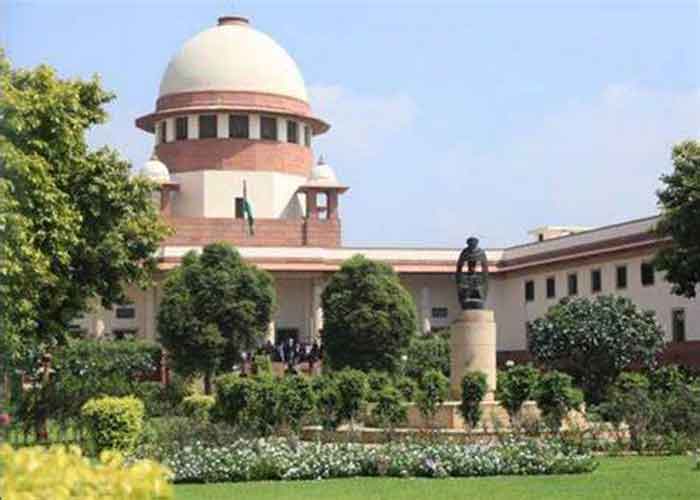
The Supreme Court Collegium, headed by Chief Justice of India (CJI) Surya Kant, has approved proposals for the appointment of 19 advocates and judicial officers as judges of the Madras High Court.
In a statement issued on Tuesday, the apex court Collegium said that in its meeting held on May 18, it approved the proposal dated November 4, 2025, for the appointment of six judicial officers as judges of the Madras High Court.
These include Dr P. Murugan, M.D. Sumathi, S. Alli, C. Thirumagal Chandrasekar, Dharmalingam Lingeswaran, and Karthikeyan Balathandayutham.
“The Supreme Court Collegium, in its meeting held on 18th May, 2026 has approved the following proposals for appointment of below-named persons as Judges in the Madras High Court,” the statement said.
Further, the Collegium approved the proposal dated November 21, 2025, for the appointment of six advocates — Natarajan Ramesh, G.K. Muthukumaar, Ramakrishnan Rajesh Vivekananthan, Sankaranarayanan Raveekumar, Nagarajan Dilip Kumar, and Ellappan Manoharan — as judges of the Madras High Court.
In another proposal dated December 7, 2025, the apex court Collegium cleared the names of advocates Krishnaswamy Govindarajan, Rajnish Pathiyil, K. Appadurai alias Kandavel Appadurai, and Ramasamy Anitha for elevation to the Bench of the Madras High Court.
The Collegium also approved the proposal dated December 10, 2025, recommending the appointment of judicial officers Shanmugam Karthikeyan, Baluchamy Murugesan, and N. Gunasekaran as judges of the Madras High Court.
The Supreme Court Collegium, headed by the Chief Justice of India and comprising the senior-most judges of the apex court, is responsible for making recommendations relating to appointments and transfers in the higher judiciary.
As per the Memorandum of Procedure (MoP) governing the appointment of High Court judges, the proposal for appointment is initiated by the Chief Justice of the concerned High Court in consultation with the two senior-most judges of that High Court.
The recommendation is forwarded by the Chief Justice to the Chief Minister, who transmits it to the Governor.
The Governor, in turn, forwards the proposal to the Union Minister of Law and Justice, along with relevant inputs and documents.
The proposal is then processed by the Centre before being placed before the Chief Justice of India, who consults the senior-most judges of the Supreme Court for finalising the recommendation.
Following the Collegium’s approval, the recommendation is sent to the Central government.
The appointments take effect after the President of India signs the warrants of appointment, and the Department of Justice issues the notification in the Gazette of India.(Agency)
 FOLLOW NOW