
Srinagar, June 22, 2026
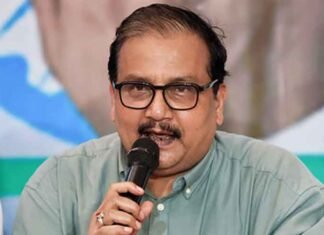
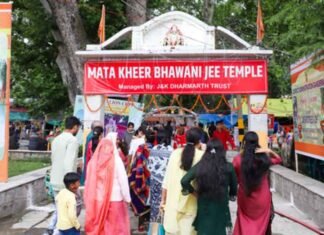
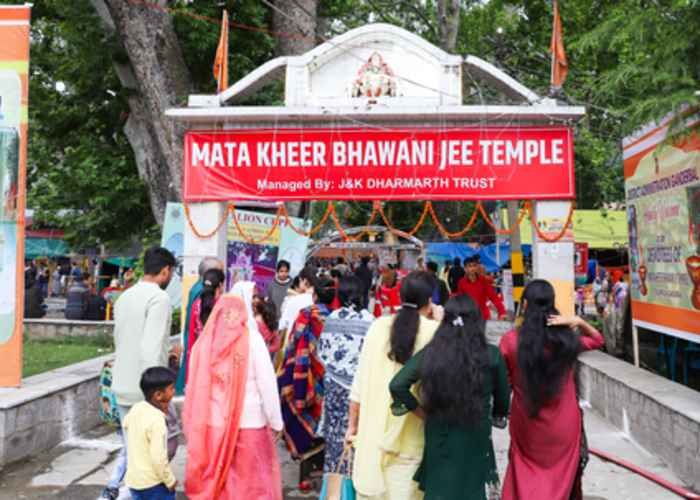
Jammu and Kashmir Lieutenant Governor Manoj Sinha on Monday joined hundreds of devotees from different parts of the country at the revered Mata Kheer Bhawani temple in Tulmul town of Ganderbal district.
The historic shrine witnessed a large gathering of Kashmiri Pandits and other devotees who travelled to the Valley to participate in the annual mela, one of the most important religious occasions for the community. Pilgrims began arriving at the shrine on Sunday, with many spending the night at the temple complex and participating in prayers and religious ceremonies.
Sharing his experience on X, the Lieutenant Governor said, “Visited Mata Kheer Bhawani Temple in Ganderbal today to celebrate Jyeshtha Ashtami and pray for the peace & prosperity of all. Truly special to share this joyful occasion and connect with devotees from every corner of the country.”
Earlier, both Sinha and Chief Minister Omar Abdullah extended greetings to devotees on the occasion.
Addressing the gathering, Sinha said, “Heartiest greetings to all, especially our Kashmiri Pandit brothers and sisters, on the sacred occasion of Jyeshtha Ashtami. May Mata Kheer Bhawani continue to guide us on the path of righteousness and bless everyone with peace, happiness, good health and prosperity.”
Omar Abdullah described the festival as a reflection of Jammu and Kashmir’s rich cultural legacy and pluralistic traditions.
“Mela Kheer Bhawani is an occasion of immense spiritual significance and reflects the rich cultural and civilisational heritage of Jammu and Kashmir. The festival symbolises the values of faith, devotion, harmony and coexistence that have been the hallmark of the region’s centuries-old composite culture,” he said.
“I hope that the sacred occasion would further strengthen the bonds of communal harmony, brotherhood and mutual respect among all sections of society. J&K’s pluralistic ethos has always drawn strength from its shared traditions and cultural diversity,” he added.
The Chief Minister prayed for peace, prosperity and the well-being of the people, expressing hope that the celebrations would usher in happiness, progress and harmony across the Union Territory.
Senior religious leader and Kashmir’s chief cleric, Mirwaiz Umar Farooq, also extended greetings to the devotees.
In a message posted on X, he said, “On the occasion of Mela Kheer Bhawani, I extend my warm greetings to our Kashmiri Pandit brethren. May this day renew the spirit of mutual respect, brotherhood and the shared heritage of Kashmir that we inherited.”
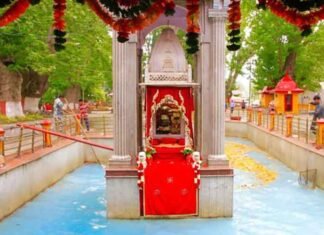
The Mata Kheer Bhawani temple, dedicated to Goddess Ragnya Devi, is regarded as the holiest shrine of the Kashmiri Pandit community. Built around a sacred spring, the shrine holds deep religious significance.
Devotees traditionally offer kheer, a preparation of milk and rice pudding, to the goddess. The festival continues to draw Kashmiri Pandits from across India, many of whom maintain an emotional and spiritual connection with the shrine despite their migration from the Valley during the separatist violence and terrorism of the 1990s.
A long-standing belief among devotees is that the colour of the sacred spring reflects the future of Kashmir. While a pink hue is considered auspicious, a dark or black colour is viewed as a sign of impending adversity. Local elders often recall that the spring reportedly turned black before the tribal invasion of Kashmir in 1947.
The Omar Abdullah-led administration made elaborate arrangements for the annual festival, including security, healthcare, sanitation, transport and accommodation facilities. Security personnel were deployed along the entire route from Srinagar to Tulmul to ensure the smooth and safe conduct of the pilgrimage.(Agency)
 FOLLOW NOW