
Washington, June 18, 2026
Pakistan’s hard-state doctrine may give its security establishment the “illusion of control”, but even on its own terms, it is failing. A doctrine presented as discipline and security must ultimately be judged by its ability to ensure stability, a report has highlighted.
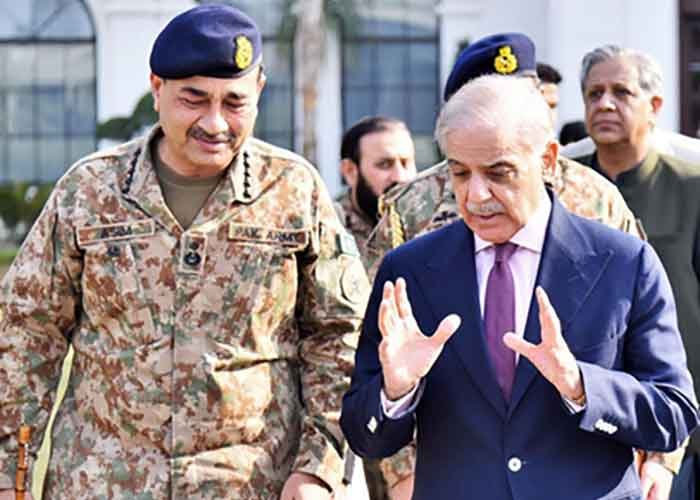
Pakistani Army Chief Asim Munir has introduced a new political vocabulary for the country’s ruling establishment: the “hard state”. In official discourse, it is defined as “discipline, national security, and institutional resolve”. However, in Pakistan’s peripheries, it is increasingly perceived in harsher terms — centralised coercion, military-first governance, and the framing of dissent as a security threat, a report in the US-based Middle East Media Research Institute (MEMRI) stated.
According to it, the phrase has now gained traction across Pakistan-occupied Kashmir (PoK), Balochistan, Khyber Pakhtunkhwa, and Sindh. It observed that public discontent goes beyond issues of poverty and governance, extending to a deeper questioning of the political order itself.
The report noted the core grievance is that Pakistan’s security establishment extracts resources, polices identity, and criminalises dissent, then cites the resulting unrest as evidence for the need for further coercion.
It stated that Pakistan’s policy in PoK reflects a sharp contradiction, with Islamabad presenting itself as a defender of Kashmiri rights abroad while its security establishment in the region suppresses local mobilisation, “treating the civil rights movement as a security threat rather than a political warning”.
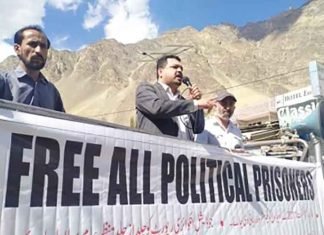
The Jammu Kashmir Joint Awami Action Committee (JKJAAC) emerged from a set of everyday grievances, including electricity tariffs, wheat subsidies, governance failures, elite privileges, and political representation. The civil platform brings together traders, transporters, lawyers, students, and local rights groups. However, on June 5, it was banned under anti-terror provisions by the authorities, its leaders were targetted, sedition cases were initiated against prominent figures, and internet and mobile services were suspended.
“The language used against JKJAAC follows the familiar script of Pakistan’s security establishment: first delegitimise the grievance, then criminalise the protester, then justify force as law and order. A movement demanding cheaper electricity, wheat relief, local rights, and political representation is now being pushed into the frame of sedition, terrorism, and anti-national activity. This is how the hard state manufactures its own justification: it turns public anger into a security file,” the report mentioned.
It stressed that across PoK, Balochistan, Khyber Pakhtunkhwa, and Sindh, the same playbook is followed: movements are banned, leaders arrested, communications suspended, force deployed, foreign hands blamed, and dissent branded anti-national, with the outcome being deeper alienation rather than national integration.
“That is the hard state’s real weakness. It can occupy space, silence streets, and manufacture temporary order, but it cannot create legitimacy through fear. If the security establishment cannot protect civilians, reduce casualties, resolve grievances, or win trust, then the hard state is not a doctrine of strength. It is state failure dressed as discipline,” the report mentioned.(Agency)
 FOLLOW NOW