
New Delhi, May 14, 2026
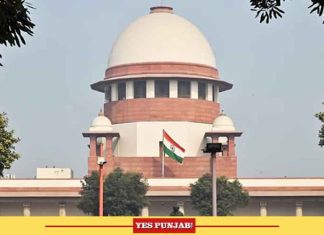
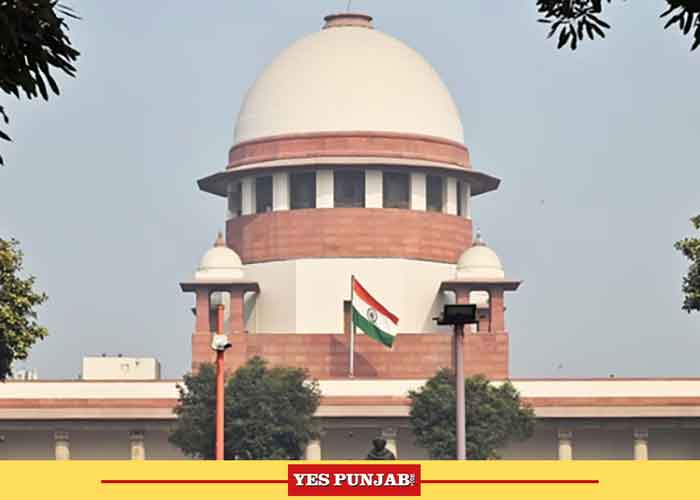
The Supreme Court on Thursday reserved its judgment in the long-pending Sabarimala reference matter after concluding extensive hearings on a batch of petitions raising significant constitutional questions relating to religious freedom, denominational rights and the scope of judicial review over matters of faith.
A nine-member Constitution Bench headed by Chief Justice of India (CJI) Surya Kant, and comprising Justices B.V. Nagarathna, M.M. Sundresh, Ahsanuddin Amanullah, Aravind Kumar, Augustine George Masih, Prasanna B. Varale, R. Mahadevan and Joymalya Bagchi, reserved its verdict after hearing submissions from the Centre, intervenors, religious bodies, review petitioners and amici curiae.
The apex court granted liberty to all parties to file comprehensive written submissions by May 29.
The reference traces its origin to the Supreme Court’s September 2018 verdict permitting entry of women of all age groups into the Sabarimala Lord Ayyappa Temple, striking down the centuries-old practice prohibiting entry of women of menstruating age.
Subsequently, while dealing with review petitions in 2019, the top court refrained from directly reconsidering the correctness of the 2018 judgment and instead referred seven broad constitutional questions to a larger Bench, including issues concerning the interplay between Articles 25 and 26 guaranteeing religious freedom and Article 14 ensuring equality.
Apart from the Sabarimala issue, the nine-judge Constitution Bench also examined allied questions relating to the entry of Muslim women into mosques and dargahs, the rights of Parsi women to access fire temples after interfaith marriages, excommunication practices, and female genital mutilation in the Dawoodi Bohra community.
During the course of the hearings, the Centre and several intervenors urged the apex court to adopt a restrained approach while exercising judicial review in matters of religion and faith.
Solicitor General Tushar Mehta repeatedly argued that courts should ordinarily defer to legislatures and religious communities in matters of reform and that judicial review over questions of faith must remain limited.
Senior advocate Gopal Subramanium contended that the scope of judicial scrutiny under Articles 25 and 26 cannot be equated with ordinary equality review under Article 14 of the Constitution.
“The scope and intensity of judicial review under Articles 25 and 26 is not identical to the scope of review ordinarily exercised under Article 14,” he submitted, arguing that rationality under faith-based matters cannot mirror arbitrariness review under equality jurisprudence.
Senior advocate Rajeev Dhavan cautioned against excessive reliance on the “essential religious practices” doctrine and warned that courts should not become arbiters of theology.
“Your Lordships are not the high pope or priest to wander into this particular area,” Dhavan submitted, arguing that treating essentiality as a threshold requirement could effectively extinguish protections guaranteed under Articles 25 and 26.
Amicus curiae, senior advocate K. Parameshwar also supported submissions opposing the application of rationality review to religious practices, while clarifying that courts could still intervene in cases involving bodily integrity, dignity, or liberty.
During an earlier hearing, Justice Nagarathna had orally observed that indiscriminate challenges to religious practices before constitutional courts could disrupt the “civilisational fabric” of India.
“What is unique about India? We are a civilisation despite having so much plurality and diversity. One of the constants in our society is the relationship between human beings and religion. We cannot break that constant,” Justice Nagarathna had remarked.
Justice Sundresh had similarly observed that indiscriminate judicial scrutiny of religious disputes could destabilise religions themselves.
“Everybody will question everything. Every religion will break,” Justice Sundresh had remarked.
The Supreme Court had earlier clarified that the maintainability of the reference stands conclusively settled and identified seven substantial questions of law for adjudication.(Agency)
 FOLLOW NOW