Home Blog Page 5

Delhi: Crime Branch arrests key operative of ISI-backed transnational arms trafficking-terror module

Arrest Chain

New Delhi, May 10, 2026

The Delhi Police Crime Branch has arrested a key operative allegedly linked to an ISI-backed transnational arms trafficking and terror module, officials said on Sunday.

The accused, identified as Praveen Kumar alias Tittu, 45, is said to be a close associate of notorious South Delhi gangster Rohit Chaudhary. Police recovered an Italian-made semi-automatic pistol and five live cartridges from his possession.

According to Delhi Police, Praveen Kumar was arrested by a team of the Anti-Robbery and Snatching Cell (ARSC) of the Crime Branch led by Inspectors Man Singh and Sunder Gautam under the supervision of ACP Sanjay Kumar Nagpal.

Police said the arrest was made during the ongoing investigation into FIR No. 49/26 registered at the Crime Branch police station on March 14, under various sections of the Bharatiya Nyaya Sanhita (BNS), the Arms Act, and the Unlawful Activities (Prevention) Act (UAPA).

Officials said Praveen Kumar acted as a receiver and facilitator of illegal foreign-made sophisticated weapons allegedly supplied through the international arms trafficking and terror network operated by Shahbaz Ansari.

“So far, 14 accused persons have been arrested in the case, and 25 sophisticated foreign-made weapons, including a sub-machine gun, along with 221 live cartridges have been recovered,” police said.

Investigators claimed the entire network was backed by Pakistan’s Inter-Services Intelligence (ISI), and stringent provisions of the UAPA have already been invoked in the case.

Police said Praveen Kumar, a resident of Khirki Extension in south Delhi’s Malviya Nagar area, currently worked as a property dealer in Aya Nagar. During the investigation, it was found that he was allegedly involved in illegally occupying disputed properties, encroaching upon abandoned and forest land, and carrying out illegal plotting activities in association with Chaudhary’s gang.

“He allegedly used to invest proceeds from illegal activities in gambling and betting operations,” an official said.

Police records show that Praveen Kumar was previously carrying a reward of Rs 2 lakh on his arrest, while gangster Chaudhary had a reward of Rs 4 lakh before being arrested by the Crime Branch following a police encounter.

According to investigators, Praveen Kumar came in contact with co-accused Nishant Arora during his incarceration. After securing bail, he allegedly started procuring sophisticated foreign-made weapons for gang members to create fear and terror in the Aya Nagar-Mehrauli region.

Police described Chaudhary as a notorious criminal involved in multiple cases of murder, extortion, organised crime and illegal possession of weapons. His gang has allegedly operated in areas including Aya Nagar, Pushp Vihar and Ambedkar Nagar, targeting rivals and extorting money from builders, property dealers, and bookies.

Delhi Police had earlier booked Chaudhary under the Maharashtra Control of Organised Crime Act (MCOCA), while several of his associates have continued to face arrests in cases involving firearms and violent crimes.

Praveen Kumar also has a long criminal history, with cases registered against him in Delhi and Uttar Pradesh under charges including attempt to murder, kidnapping for ransom, murder, extortion, rioting and Arms Act violations.(Agency)


Gir Forest offers clarification amidst backlash for Rakul Preet’s casual stroll

Rakul Preet Singh Actress 11

Mumbai, May 10, 2026

Actress Rakul Preet Singh sparked a massive controversy as she was allegedly seen walking casually inside the restricted area of the Gir National Park, raising questions about the forest rules.

A video circulated on social media showed Rakul stepping out and moving freely in the forest area during the promotion of her upcoming movie, “Pati Patni Aur Woh Do”, co-starring Ayushmaan Khurrana, Sara Ali Khan and Wamiqa Gabbi.

Now, the Gir Forest has issued a clarification through their official X (Earlier known as Twitter) handle. They revealed that the clip is from the outside of the compus and not the restricted area of the jungle.

“This video being broadcast is from outside the campus gate and is not from the restricted area. (sic),” read the Tweet.

On Saturday, raising questions on the rules, one of the X users wrote, “Rakul Preet Singh is walking inside the restricted National park as if she is on a morning walk? How come they are allowed to get out of the vehicle? Isn’t it a violation of forest rules? There should not be separate rules for celebrities.”

Another one shared, “Ms Dhurandhar forgot she is in a jungle and not on Mall road. This is how privledge looks like. Rakul Preet Singh taking a walk in Gir Forest safari. It pays to be close to the establishment.”

Meanwhile, during the promotion of “Pati Patni Aur Woh Do” in Gujarat, Ayushmann, Rakul, and Wamiqa were also seen relishing a wholesome Gujarati thali.

While enjoying the appetizing cuisine, Ayushmann, Rakul, and Wamiqa even grooved on their song “Roop Di Rani” from their next.

Jointly backed by T-Series and B R Studios, “Pati Patni Aur Woh Do” is expected to reach the cinema halls on May 15 this year.(Agency)

Rakul-Preet-Singh-Pic

IPL 2026: When and where to watch PBKS vs DC, know all details

Punjab Kings PBKS Team Players IPL

Dharamshala, May 10, 2026

Their campaign in trouble after three successive defeats, the Punjab Kings will clash with the Delhi Capitals in the match number 55 of the Indian Premier League (IPL) 2026 at the Himachal Pradesh Cricket Association (HPCA) Stadium in Dharamshala on Monday.

Punjab began their campaign in dominant fashion, winning six of their opening seven matches and emerging as one of the strongest sides in the tournament. However, their momentum has faded in recent weeks, with Shreyas Iyer’s men suffering three consecutive defeats. As the playoff battle heats up, PBKS will be desperate to halt the slide and strengthen their chances of securing a top-four finish.

On the other hand, the Delhi Capitals find themselves staring at an early exit from the competition. With only four wins from 11 matches, the Capitals have struggled to maintain consistency throughout the season. Even if they win all their remaining fixtures, they can only finish with a maximum of 14 points, leaving their playoff hopes hanging by a thread.

To make matters worse, DC have managed just one victory in their last six outings, and their recent run of poor performances has likely dented the team’s confidence heading into this crucial clash.

When: Monday, May 11, 7:30 PM IST

Where: Himachal Pradesh Cricket Association Stadium, Dharamshala

Where to watch: The PBKS vs DC match will be broadcast on Star Sports channels, with JioHotstar live-streaming the game.

Squads:

Delhi Capitals: Axar Patel (captain), KL Rahul, Kuldeep Yadav, Karun Nair, David Miller, Pathum Nissanka, Tristan Stubbs, Sameer Rizvi, Nitish Rana, T. Natarajan, Mukesh Kumar, Ashutosh Sharma, Dushmantha Chameera, Lungi Ngidi, Vipraj Nigam, Sahil Parakh, Prithvi Shaw, Abishek Porel, Ajay Mandal, Tripurana Vijay, Madhav Tiwari, Auqib Nabi Dar, Mitchell Starc, Kyle Jamieson, and Rehan Ahmed

Punjab Kings: Shreyas Iyer (c), Priyansh Arya, Prabhsimran Singh (wicketkeeper), Nehal Wadhera, Shashank Singh, Marcus Stoinis, Azmatullah Omarzai, Vijaykumar Vyshak, Arshdeep Singh, Yuzvendra Chahal, Harpreet Brar, Suryansh Shedge, Vishnu Vinod (wicketkeeper), Xavier Bartlett, Yash Thakur, Mitchell Owen, Harnoor Singh, Musheer Khan, Pyla Avinash, Marco Jansen, Lockie Ferguson, Cooper Connolly, Ben Dwarshuis, Pravin Dubey, Vishal Nishad.(Agency)

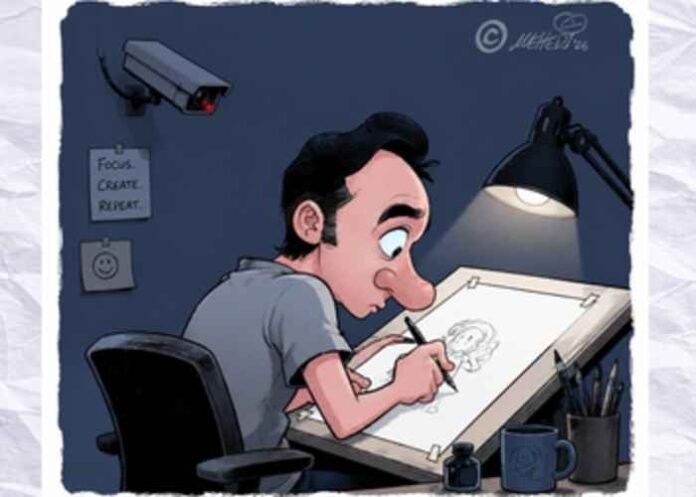
Bangladesh’s political cartoons fading amid self-censorship, corporate pressure: Report

Dhaka, May 10, 2026

Political cartoons in Bangladesh, once regarded as a sharp and fearless medium of public dissent and satire, are steadily disappearing from mainstream media amid growing corporate influence, self-censorship, and the monetisation of news content, according to a report.

The concerns were highlighted in an interview published by Bangladesh-based English daily, The Daily Star, authored by Khairul Hassan Jahin, in which leading Bangladeshi cartoonist Mehedi Haque reflected on the shrinking space for political satire in the country.

Haque, who serves as Executive Editor of the satirical magazine ”Unmad”, Senior Cartoonist at New Age, and Editor and Publisher of Dhaka Comics, said the decline began during a prolonged period of political dominance by a single party, when major corporate groups increasingly entered the media sector and prioritised maintaining favourable ties with the government.

According to him, informal editorial restrictions gradually emerged, particularly around criticism or satire directed at ruling political figures.

He also pointed to the amplifying role of social media, saying online backlash often intensified the perceived risks associated with political cartooning.

“Artists were presented with financially rewarding opportunities, including projects aligned with the ruling establishment. Many preferred those ‘safe’ options over the uncertainty of political satire,” Haque said in the interview.

He added that the decline of political cartoons is driven less by direct censorship and more by self-censorship among artists who fear backlash and professional consequences.

Haque also warned that humour itself is vanishing from public discourse, replaced increasingly by outrage-driven content that is easier to monetise online.

The cartoonist noted that political satire historically functioned as a barometer of press freedom and public dissent in Bangladesh.

“What is being lost is humour itself,” he said, adding that satire traditionally allowed societies to critique power structures while reducing anger and division through wit.

The Daily Star report also highlighted Haque’s criticism of corporate ownership in the media industry, which he said has contributed to greater editorial caution around sensitive political issues.

Despite receiving legal notices over his work, Haque said that factual reporting and responsible satire allowed him to defend his cartoons confidently.

Bangladesh has a long tradition of political cartoons, with satirical illustrations historically appearing prominently in newspapers and magazines as commentary on corruption, governance, and social issues.

Earlier reports also documented how political cartoons once played a major role in protest movements and democratic discourse in the country.

Observers say the conversation around the decline of political cartoons also reflects broader concerns over media freedom and the pressures faced by journalists and artists in Bangladesh’s evolving political environment.

Recent international reports have additionally flagged growing challenges for the country’s media institutions and concerns over press freedom.(Agency)

SC seeks compliance reports from states on 25 per cent RTE quota implementation

Supreme Court Delhi 2

New Delhi, May 10, 2026

The Supreme Court has sought compliance reports from several states and Union Territories (UTs) over the implementation of Section 12(1)(c) of the Right of Children to Free and Compulsory Education Act, 2009, warning that failure to file affidavits may compel the top court to summon the Principal Secretaries of their Education Departments.

A bench of Justices Vikram Nath, Sandeep Mehta and Vijay Bishnoi was hearing a writ petition filed by Md Imran Ahmad concerning the implementation of the 25 per cent reservation mandate for children belonging to weaker and disadvantaged sections in private unaided schools under the RTE Act.

During the hearing, senior advocate Salman Khurshid, appearing for the petitioner, placed before the apex court a chart categorising states and UTs into five groups based on their implementation status of Section 12(1)(c).

According to the chart, the first category comprised states and UTs which had allegedly refused to implement the provision. The second category relates to states and UTs which framed rules allegedly aimed at bypassing or overruling Section 12(1)(c) of the RTE Act.

The third category included states and UTs which were either silent on the issue or had not framed rules to implement the provision, while the fourth category consisted of those which had partially implemented it.

The fifth category comprised states and UTs which claimed to have enforced the provision but had not submitted proof before the Supreme Court.

Taking note of the submissions, the Justice Vikram Nath-led Bench granted four weeks’ time to the states of Punjab, West Bengal, Kerala, Goa, Arunachal Pradesh, Meghalaya, and Nagaland, along with the Union Territory of Puducherry, to obtain instructions and file appropriate affidavits regarding the “true and faithful implementation” of Section 12(1)(c) of the RTE Act.

“Failing which the Court will be compelled to summon the Principal Secretaries of the Education Department of the said States/UTs,” the Supreme Court said in its order passed on May 7.

It further recorded that the Union Territories of Ladakh, Jammu and Kashmir, and Andaman and Nicobar Islands, along with the states of Mizoram and Sikkim, were not represented during the hearing.

The bench directed the registry to forward copies of the order to the Chief Secretaries and standing counsel of the states and UTs concerned within a week and directed them to fully comply with the apex court’s directions within the stipulated period.

The matter has been listed for further hearing on July 22.

Earlier, in February this year, the Supreme Court had expressed displeasure over the delay by certain states in filing responses in the matter and warned that the Chief Secretaries of Telangana, Punjab and Jammu and Kashmir would have to remain personally present if affidavits were not filed.

Subsequently, in March, the counsel appearing for the petitioner informed the top court that all states had filed their respective affidavits. In a recent judgment concerning the denial of admission to a child selected under the 25 per cent quota in Uttar Pradesh, the apex court had reiterated that neighbourhood schools have a binding constitutional and statutory obligation to admit students allotted by the government under the RTE Act.

“The right to education, a fundamental right guaranteed under Article 21A of the Indian Constitution, will remain an empty promise if the mandate of the RTE Act, 2009, is not worked out in its letter and spirit,” the top court had observed.(Agency)

Women face most severe consequences of Pakistan’s structural inequalities: Report

sexual harassment mental deepression

Islamabad, May 10, 2026

Human rights abuses have increased in Pakistan, particularly for the most vulnerable groups. Women experience the most severe consequences of Pakistan’s structural inequalities in the form of a femicide crisis.

Gender-based violence, including acid attacks, forced and child marriage, rape, trafficking, forced conversion, and domestic abuse remain widespread in Pakistan, a report has stated. Hundreds of women are killed each year in so-called “honour killings”, often by relatives, over perceived family shame. At least 405 cases were reported in 2024; however, the real figures are likely more, due to low reporting and weak and inconsistent enforcement, according to a report in Genocide Watch.

More than 2,000 domestic violence cases and 5,000 accounts of rape were recorded in 2024, demonstrating Pakistan’s status as one of the most dangerous countries in the world for women.

According to a 2025 United Nations report, two out of every three Pakistani women are not given reproductive autonomy, and they face abuse and pressure about their reproductive health. In September last year, the Lahore High Court ruled that marriages after puberty are valid under Islamic law, as girl marriage remains widespread in Pakistan, with millions married under the age of 18 years, according to the report in Genocide Watch.

Pakistan was ranked at the last spot in the World Economic Forum’s Global Gender Gap Index, and it faces an education crisis, with over 21 million children reportedly out of school due to poverty, social pressures, child labour, and discrimination.

Apart from gender inequality, religious minorities remain vulnerable in Pakistan. Ahmadis, Christians, and Hindus face discrimination, violence, and social exclusion due to blasphemy laws and weak enforcement. At the same time, journalists, activists, and academics face censorship, violence, threats, arrests, and murder, all perpetrated by the Pakistani government, according to the Genocide Watch report.

Human rights are further complicated in Pakistan due to security challenges, as militant groups, including Tehreek-e-Taliban Pakistan, the Islamic State of Khorasan Province, Al-Qaeda, and the Balochistan Liberation Army (BLA) carried out attacks in 2025 and 2026.

Genocide Watch urged the European Union to use GSP+ review procedures to press Pakistan on narrowly defined reforms in freedom of expression, religious freedom, and women’s rights. It urged partner states to expand emergency relocation, humanitarian visas, and protection of referrals for journalists, defenders, and religious minorities who face immediate risk.

In the report, Genocide Watch stated, “Security and diplomatic engagement with Pakistan should include public human rights benchmarks but should not assume major conditionality beyond what existing bilateral channels can support. The United Nations High Commissioner for Human Rights should campaign to consider Pakistan as a country of special concern, because of the country’s concerning record of human rights abuses against ethnic and religious minorities. Pakistan’s diplomatic and economic partners, such as the United States, China, and the United Kingdom, should urge and incentivise the country to combat honour killings and implement structural and systemic changes that would protect the lives and futures of women.”(Agency)

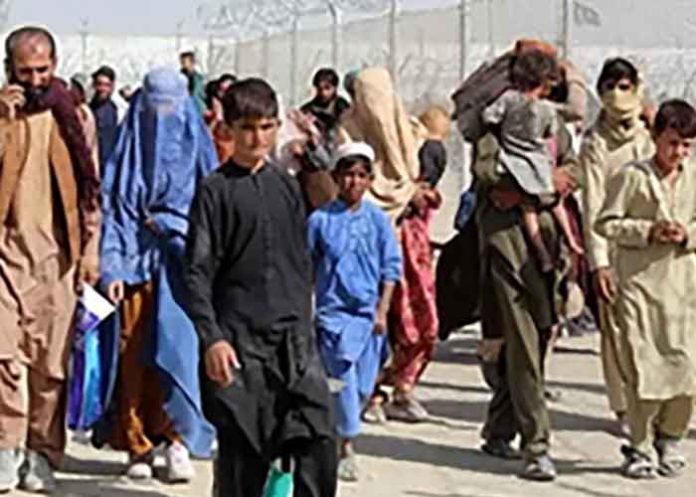
Rights body slams Pakistan over forced expulsion of Afghan migrants

Afghanistan-refugees-return-home

Islamabad, May 10, 2026

Pakistan’s Human Rights Commission has termed Pakistan’s forced expulsion of Afghan migrants “inhumane” and stressed that Islamabad’s action has pushed the lives of thousands of families into crisis, a report has stated.

In its annual report, the human rights body stressed that Afghan refugees access to essential services like healthcare, medical treatment, and financial support has been severely restricted after Pakistan government enforced a policy to deport undocumented migrants, Shia Waves reported.

The human rights agency stated that Pakistan’s decision has put additional pressure on Afghan refugees, further increasing their struggles. It has voiced concern over the denial of essential services and forced expulsion of Afghan migrants, stressing that these families were facing deteriorating situation.

The commission urged Pakistan to follow human rights principles and respect for human dignity when dealing with migrants. It stated that Pakistan’s policy regarding the expulsion of Afghan migrants has sparked international concern, Shia Waves reported.

Last month, US-based advocacy group Human Rights Watch (HRW) said that the Pakistani authorities have increased raids, arbitrary detentions and forced deportation of Afghan refugees after renewed border clashes with Afghanistan. HRW noted that thousands of vulnerable Afghan refugees, including children, have been facing serious problems in accessing healthcare, education and other essential services due to police operations.

It also highlighted that Pakistan’s forced deportation of Afghans may amount to violations of the country’s obligations as a party to the UN Convention Against Torture and the customary international law prohibition against refoulement or forced return to a place where they would face a genuine risk of persecution, torture, or other ill-treatment, or a threat to their life.

“Pakistani authorities are spreading fear among Afghan refugees instead of treating them as people in need of protection. Abusive police practices are forcing people to forgo food and healthcare while mass deportations are returning refugees to possible persecution and worse in Afghanistan,” emphasised Fereshta Abbasi, a researcher at HRW.

Abbasi urged Pakistan to take action against abusive police practices and immediately stop forcibly returning Afghan refugees. She urged the international community to raise their concerns about these practices with the Pakistani government and denounce continuing human rights violations by Afghanistan.

As the fighting between Pakistan and Afghanistan has escalated since February, Pakistani police have increased operations against the Afghan people in several areas of the country, conducting door-to-door raids, late-night home searches, and arrests without warrants, the statement released by HRW revealed.

Police have arrested Afghans with valid visas and those without proper documents, which many Afghans lack since the Pakistani authorities stopped renewing Proof of Registration cards and other residency documents for Afghan refugees in 2023. Police usually transfer detained refugees to holding centres and then deport them. Over 146,000 Afghans have been deported from Pakistan in 2026, with the numbers increasing since April 1.(Agency)

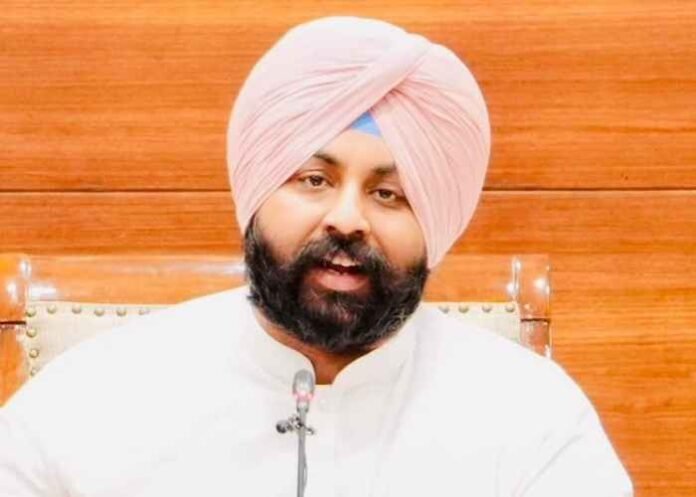
Punjab Surpasses Kerala In School Education, Emerges As India’s Top-performing State In NITI Aayog Report: Harjot Bains

Chandigarh, May 10, 2026(Yes Punjab News)

Marking a historic turnaround for government schools in the state, Punjab has been recognised as one of India’s best-performing states in school education, with the NITI Aayog Education Quality Report 2026 placing it ahead of Kerala, long considered India’s gold standard in school education, on key foundational learning metrics.

Hailing the achievement as the beginning of ‘Punjab’s Era’ driven by systemic reforms and grassroots dedication, Punjab Education Minister Harjot Singh Bains stated, “This honour belongs to every parent, student and teacher who refused to give up on government schools. This is not a one day miracle. When policy, intent and execution walk together, results follow.”

Sharing details of the report, he said, “Punjab recorded 82% proficiency in language and 78% in mathematics in Class 3, surpassing Kerala’s 75% and 70% respectively. In Class 9 mathematics, Punjab scored 52%, significantly higher than Kerala’s 45%.”

Highlighting the impact of the Punjab Government’s reforms, the minister continued, “Chief Minister Bhagwant Singh Mann led Punjab Government’s post COVID pandemic recovery push through Mission Samarth and the Schools of Eminence programme has yielded tangible results.”

Citing findings from the NITI Aayog report, he added, “99.9% of government schools now have electricity, 99% have functional computers and over 80% are equipped with smart classrooms. Additionally, over 90% of Class 10 students now transition smoothly to Class 11, indicating a sharp decline in dropout rates. The student teacher ratio has also been improved to an ideal 22:1.”

Referring to the report’s observations, Harjot Singh Bains said, “The NITI Aayog report specifically praised Punjab for bridging the urban rural divide in education and ensuring equal opportunities for village students and girls. Punjab’s adoption of global best practices has led to a sharp rise in competitive exam success among government school students. As many as 786 government school students have cleared JEE Main and 1,284 students have qualified for NEET so far.”

Sharing details of teacher training and infrastructure expansion, the Punjab Education Minister stated, “Teacher training programmes in Finland and Singapore, rolled out under the state’s education reforms, have translated into results on the ground. This shows our classrooms can compete with the best. Punjab has recruited 13,000 teachers and staff and rolled out the English Edge Programme for nearly 3 lakh students, besides establishing 118 Schools of Eminence.”

“With the right policy, intent and performance, quality education is inevitable. Our teachers have proved it,” Harjot Singh Bains added, while noting that, “NITI Aayog has now validated what the state has been seeing on the ground. Government school children are not just catching up, they are leading.”

Father remembers ‘struggle for food’ after Vijay takes oath as Tamil Nadu CM

Chennai, May 10, 2026

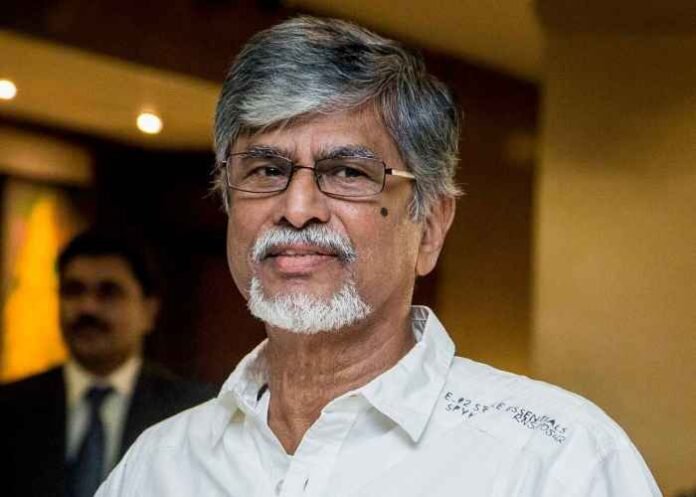
As Tamilaga Vettri Kazhagam (TVK) President C. Joseph Vijay took the oath as Tamil Nadu Chief Minister, his father, S.A. Chandrasekhar, got emotional, remembering the struggles he once made for his family.

“He (Vijay) was born in 1974. When he was born, I was an assistant director. I struggled for even food. That’s that remembrance,” the father said.

Chandrasekhar, a veteran filmmaker, told reporters that he was proud of his son and that Vijay “always fulfils his promises”.

He added that a long-cherished dream of his was finally being fulfilled by his son.

“This was my dream, and my son has fulfilled that dream. He is now the Chief Minister of Tamil Nadu. If Vijay says something, he will definitely do it,” he said.

“In every matter, he (Vijay) has the mindset of fulfilling what he promises. He speaks only about what he knows he can achieve, and he has followed this principle since childhood,” Chandrasekhar added.

CM Vijay’s niece Pallavi said the swearing-in was an “emotional and proud” moment for the family.

Meanwhile, TVK MLA Maria Wilson said: “The entire Tamil Nadu people are very happy to see their own son, their own brother, take oath as the Chief Minister of Tamil Nadu. This was the moment they were waiting for three years.”

Wilson stated that many people had said that it would not be possible for Vijay to become Tamil Nadu Chief Minister, but the day has become a “reality”.

The TVK MLA emphasised that CM Vijay has announced a White Paper on state finances, which, he said, has never been done by any Tamil Nadu Chief Minister in the past.

During his first address after assuming office as the Chief Minister, Vijay said he rose from ordinary circumstances and was not born into political privilege.

Recalling his long journey from cinema to politics, he said he was the son of an assistant film director and understood poverty and hunger firsthand.

“I am not someone who comes from a royal political background. I am one among you. I feel like your son, your brother, your younger sibling. It is because you felt the same way that you brought me to this position,” he said.

In an emotional and politically charged address, the new Chief Minister promised transparent governance, women’s safety, welfare-oriented administration, and a corruption-free government, while thanking the people for placing their trust in him.(Agency)

NCW chief Vijaya Rahatkar interacts with women inmates of Tihar Jail

Vijaya Kishore Rahatkar NCW

New Delhi, May 10, 2026

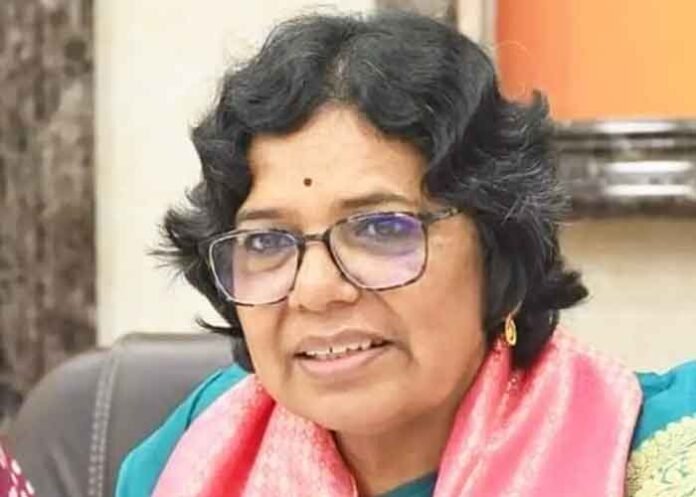
National Commission for Women Chairperson Vijaya Rahatkar visited Tihar Jail here to interact with women inmates and reiterated the need to ensure their dignity, safety, mental health, and rehabilitation opportunities, an official said on Sunday.

Commending Tihar authorities for their achievements, she said, “From the perspective of prison reforms, Tihar is functioning as a model jail.”

Taking to social media, Rahatkar said on X, “Today, I visited Tihar Jail to review the facilities available for women inmates, welfare measures, rehabilitation initiatives, and their living conditions.”

She said that on this occasion, Director General (Prisons) Anand Mohan, Deputy Inspector General Kuldeep Singh, Superintendent Amita Suman and other officials were present.

Rahatkar said that during the inspection, an extensive tour was conducted of various parts of the jail premises, including the barracks and cells for women inmates, the creche facility for children living with women inmates, the fashion lab, sewing and skill training centre, digital learning room, recreational facilities, kitchen, medical facilities, and counselling room.

“I also interacted with the women inmates to review the rehabilitation and skill development programmes being run in the jail. Special emphasis was placed on initiatives to empower women inmates through vocational training, education, counselling, and mental health support to ensure their social rehabilitation,” she said.

“While appreciating the efforts to provide skill-based training and welfare assistance to women inmates, I reiterated the need to ensure the dignity, safety, mental health, and rehabilitation opportunities for all women inmates,” she said, after her visit on Saturday.

Earlier during her visit to Mumbai, the NCW Chairperson visited the KEM Hospital and reviewed operations of the government-run One Stop Centre meant for women affected by violence, an official said.​

During the visit, Rahatkar interacted with the staff and offered suggestions to enhance the Centre’s services.​

In a message on social media, the NCW Chairperson said, “Visited the One Stop Centre operating in the KEM Hospital premises at Parel in Mumbai. It was satisfying to see the medical room, counselling room, temporary shelter facility, and the overall pleasant environment at the centre.”(Agency)