
New Delhi, November 9, 2026 (Yes Punjab News)
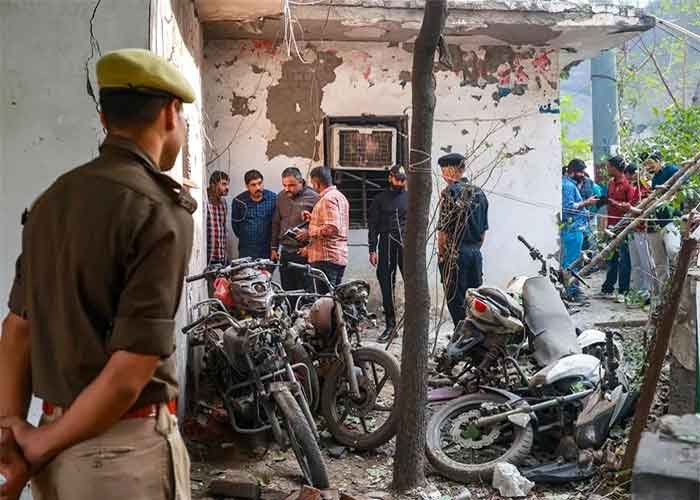
A suspected terror angle is being investigated in the blast at the Vasundhara police outpost in Uttar Pradesh’s Ghaziabad, with a National Investigation Agency (NIA) team visiting the site to gather information. One food delivery executive was injured in the incident.
Investigators are examining a social media post by a group identifying itself as Tehreek-ul-Mujahideen (TuM), which claimed responsibility for the blast. An Intelligence Bureau official said the claim was being assessed amid the emergence of several similar proxy organisations.
TuM is not a new name. A group by the same name was formed in 1990 by Yunus Khan, initially stating that its objective was to secure the liberation of Jammu and Kashmir from India. It first carried out grenade attacks before shifting towards radicalisation and providing logistical support to outfits such as Hizbul Mujahideen and Lashkar-e-Taiba, according to the official.
Recent charge sheets filed by the Jammu and Kashmir State Investigation Agency (SIA) have reportedly uncovered a narcotics network linked to the outfit. The official said the module was being managed by Pakistan-based Mushtaq Ahmad Khan, alias Khalid Bhai, and that narcotics proceeds were used to fund other terror groups operating in Jammu and Kashmir.
The official added that TuM now had several splinter factions that had been investigated in connection with cybercrime and smaller ground-level operations. Agencies are examining whether the group claiming responsibility for the Ghaziabad incident is a newly created offshoot.
Officials said several proxy groups had emerged in recent months, particularly after Operation Sindoor. While some allegedly operate as fronts for larger outfits such as Lashkar-e-Taiba and Jaish-e-Mohammed, others remain active primarily on social media, issuing threats and making claims that can divert investigators’ attention.
Another official named The Resistance Front, the People’s Anti-Fascist Front (PAAF), Jammu and Kashmir Ghaznavi Force (JKGF), United Liberation Front (ULF) and Kashmir Tigers (KT) among groups allegedly operating as proxies for Lashkar-e-Taiba, Jaish-e-Mohammed or Hizbul Mujahideen.
The official also referred to Tehreek-e-Taliban Hindustan (TTH), which was allegedly created by the Shehzad Bhatti network to project an Indian offshoot of the Tehreek-e-Taliban Pakistan (TTP).
Officials said investigating such claims and exposing alleged proxy networks was becoming an important part of India’s counter-terrorism efforts. The agencies are examining the Ghaziabad claim to establish whether it has any genuine operational link to the blast.
 FOLLOW NOW