


Mandi Gobindgarh in Punjab emerged as one of the worst-affected locations, recording an Air Quality Index (AQI) of 445 on November 8, placing it in the ‘Severe’ category. Its AQI stood at 399 on November 9, according to reported Central Pollution Control Board (CPCB) data.
Other Punjab cities also reported high pollution levels, with Ludhiana recording an AQI of 313, Jalandhar 298, Amritsar 234 and Patiala 210.
The situation in neighbouring Haryana was equally concerning. Bahadurgarh recorded an AQI of 389, followed by Rohtak at 379, Bhiwani at 377, Charkhi Dadri and Sirsa at 363 each, and Gurugram at 316. These readings placed several cities in the ‘Very Poor’ category.
Experts have attributed the deterioration to a combination of firecracker smoke and agricultural residue burning during the ongoing paddy harvesting season. Despite restrictions, firecrackers were reportedly burst beyond permitted hours in several areas, adding to the concentration of harmful pollutants.
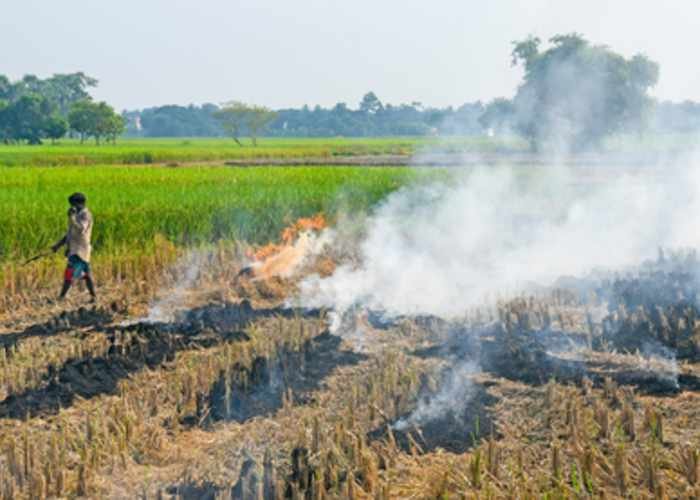
Farm fires have also increased in Punjab. As many as 1,152 fresh stubble-burning incidents were reported on November 8, taking the seasonal tally to 4,459.
Smoke from agricultural fields, combined with emissions from vehicles and industries and dust from construction activity, has further aggravated pollution levels.
The deteriorating air quality poses particular risks to children, senior citizens and people with asthma, heart conditions and other respiratory ailments. Exposure can cause coughing, breathing difficulties, throat irritation and eye discomfort, while severe pollution may affect even otherwise healthy individuals.
Residents have been advised to limit outdoor activities, avoid morning walks in heavily polluted areas and wear well-fitted N95 masks when outdoor exposure is unavoidable.
Experts have called for stricter enforcement of firecracker restrictions, better management of crop residue and stronger monitoring of industrial and vehicular emissions. They have also warned that falling temperatures and low wind speeds during winter could trap pollutants close to the ground and prolong the smog episode.
 FOLLOW NOW