


New Delhi, July 16, 2026
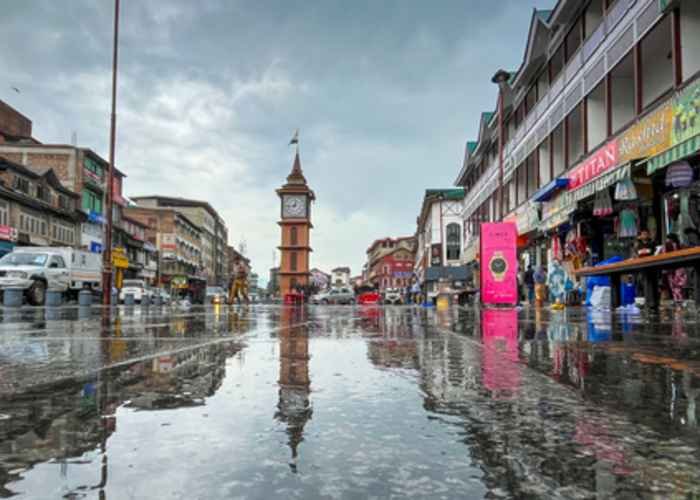
History often remembers a single day that changes the course of generations. For Jammu and Kashmir, 13 July 1931 was one such day. The firing outside the Central Jail in Srinagar was not merely an unfortunate incident in which 22 protesters lost their lives. I
t marked the beginning of a psychological, political and social divide that gradually transformed the character of Kashmir. The consequences of that day reached far beyond the Valley, influencing the politics of the princely state, shaping the events leading to Partition, and ultimately becoming part of a larger geopolitical contest that continues to influence South Asia even today.
The tragedy of that day should therefore neither be viewed only as a democratic uprising against an autocratic ruler nor solely as a communal confrontation. It was the moment when existing grievances were converted into competing political identities, leaving scars that successive generations have struggled to heal.
Before 1931, Jammu and Kashmir was ruled by Maharaja Hari Singh under the Dogra monarchy. The state faced genuine economic and administrative challenges. The Muslim majority complained of inadequate representation in government services, heavy taxation and limited opportunities in administration. The Great Depression had also severely affected the Valley’s silk and shawl industries, increasing unemployment and economic hardship. These grievances were real and demanded reforms.
At the same time, Kashmiri Pandits, though numerically small, occupied significant positions in the civil administration because of higher literacy levels developed over generations. They were equally anxious about protecting their place in government employment and preserving the State Subject protections introduced in 1927.
Kashmiriyat still remained the dominant social identity. Kashmiri Pandits were influential in administration not because of political patronage but because they had invested in education for centuries. They had served in scholarship, philosophy, Sanskrit learning, Persian administration and later modern civil services across India and Central Asia. Their contribution to governance was part of Kashmir’s civilisational heritage rather than merely an outcome of Dogra rule.
Thus, by 1931, Kashmir had already developed social fault lines but they had not yet become an irreversible communal divide.
The immediate trigger came after the arrest of Abdul Qadeer, whose speech openly challenged the authority of the Maharaja. During his trial inside Srinagar Central Jail, thousands gathered outside demanding access to the proceedings. As tensions escalated, clashes broke out between the crowd and the state authorities. The Governor ordered the police to open fire, resulting in the deaths of 22 protesters.
The firing shocked the entire state. What followed proved equally significant. Communal violence spread in parts of Srinagar, with attacks on Hindu-owned shops and properties and loss of lives on both sides. The atmosphere of shared cultural coexistence that had long defined Kashmiriyat suffered its first major political rupture.
This transformed the public memory of the day. For many Muslims, it became the beginning of a struggle for political rights and representative government. For many Kashmiri Pandits, the subsequent violence created a lasting sense of insecurity and vulnerability. Two entirely different historical memories emerged from the same event, and both continued to shape Kashmir’s politics for decades.
The events of July 1931 also transformed Kashmir’s political landscape. Sheikh Mohammad Abdullah emerged as the most influential political leader of the Valley. The formation of the All Jammu and Kashmir Muslim Conference in 1932 provided organised political expression to Muslim aspirations. Later, Sheikh Abdullah broadened its vision by converting it into the National Conference in 1939, seeking to build a secular political movement.
Despite this ideological shift, the emotional memories created in 1931 remained powerful. Political mobilisation increasingly drew upon religious identity, making it difficult to restore the earlier social harmony completely.
The internal divisions within Jammu and Kashmir did not develop in isolation. They unfolded at a time when the British Empire viewed the northern frontiers of the princely state as strategically vital in the context of the Great Game with the Soviet Union and control over Middle Eastern oils.
Gilgit occupied exceptional importance because it overlooked routes connecting Central Asia, Afghanistan, China and the Indian subcontinent. Maharaja Hari Singh had resisted direct British control over this frontier. However, after the political instability of 1931, the British found greater leverage over the state. In 1935, the Maharaja leased the Gilgit Agency to the British administration, enabling them to strengthen their strategic position along the northern frontier.
Many historians view this lease primarily as an outcome of imperial strategic interests. However, the fact is that the political instability after 1931 weakened the Maharaja’s negotiating position and indirectly facilitated British objectives. While interpretations differ, there is broad agreement that the unrest increased British influence over the state’s strategic affairs.
The legacy of 1931 extended into the dramatic events of 1947. By then, political identities within Jammu and Kashmir had become deeply polarised. The British withdrawal from India coincided with competing national aspirations, communal tensions and strategic calculations involving the northern frontiers.
The subsequent tribal invasion, the accession of Jammu and Kashmir to India, the coup in Gilgit led by Major William Brown, and Pakistan’s control over large parts of the former princely state permanently altered the map of the region.
A significant body of strategic scholarship argues that British policymakers regarded Pakistan as a more dependable strategic partner for protecting access to the Middle East and containing Soviet influence during the emerging Cold War. Every decision in the Kashmir Settlement was consciously directed towards this objective and British strategic thinking undoubtedly attached extraordinary importance to the Pakistan occupying northern frontier of Kashmir.
Perhaps the greatest consequence of 13 July 1931 lies not in territorial changes but in the psychology it created.
For large sections of Kashmiri Muslims, it symbolised political awakening and resistance against autocratic rule.
For many Kashmiri Pandits, it represented the beginning of political uncertainty and communal insecurity.
These contrasting memories gradually weakened the shared civilisational identity that had defined Kashmir for centuries. Over time, political narratives increasingly overshadowed the older traditions of coexistence, mutual respect and cultural continuity.
Even today, discussions about 13 July evoke sharply different emotions because each community remembers different aspects of the same history.
More than 90 years later, Kashmir continues to live with the consequences of those divisions. Political changes after 2019 have altered the constitutional framework, yet historical reconciliation remains incomplete.
From an Indian strategic perspective, many analysts argue that a durable settlement of the Kashmir question will ultimately require addressing the unresolved status of Pakistan-occupied territories, whose separation has shaped the region’s security environment since 1947.
Some of the obvious conclusions which are strategically established over decades of experience, including recent conflict in West Asia, are that Western powers continue to support and use Pakistan primarily to secure Middle Eastern oil, and to control the region through proxy war; that only the reunification of the entire erstwhile princely state can permanently resolve the Kashmir issue; and, that India’s access to Central Asia and to its traditional trade routes depends upon the recovery of Pakistan-occupied territories.
These are not only strategic arguments, but stronger routes to establish peace in the region and it may not be convenient to those who have been reaping the benefits from the unsettlement of Kashmir. They believed that democratic India would lean toward a neutralist or pro-Soviet foreign policy, whereas Pakistan would remain a loyal, pro-Western ally.
What remains beyond dispute is that peace cannot be built by ignoring history.
Thus, the story of 13 July 1931 is not simply about a firing outside Srinagar Central Jail. It is the story of how legitimate grievances, communal anxieties, political mobilisation and imperial strategy intersected at a critical moment in history.
That single day widened the deepest crack in Kashmiri society.
The internal fractures that emerged in the aftermath of 1931 coincided with the strategic interests of external powers in Kashmir’s northern frontiers, ultimately contributing to a geopolitical contest whose consequences continue to influence South Asia.
The continuing division of the erstwhile princely state has affected not only the relationship between Kashmiri Muslims and Kashmiri Pandits but also India’s strategic access to Central Asia, Afghanistan and the wider Eurasian landmass.
From this perspective, any durable future for Kashmir must go beyond divisive narratives and focus on restoring civilisational trust, regional stability and northern frontiers strategic connectivity which is the right of India bestowed through the total unification of erstwhile Kashmir Riyasat with India.(Agency)
 FOLLOW NOW