
New Delhi, April 26, 2026
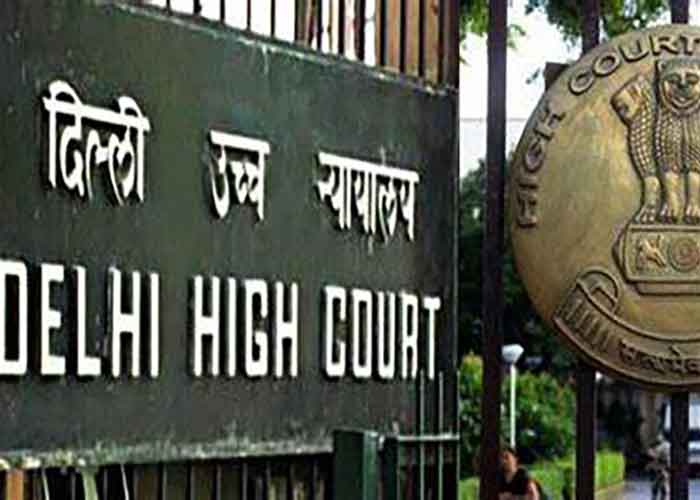
The Delhi High Court has ruled that while an employer retains inherent powers to suspend an employee facing sexual harassment allegations, universities and colleges cannot constitute parallel fact-finding committees outside the statutory mechanism prescribed under the Sexual Harassment of Women at Workplace (Prevention, Prohibition and Redressal) Act, 2013.
The ruling came from a single-judge Bench of Justice Purushaindra Kumar Kaurav, hearing a petition filed by Prof Rasal Singh, Principal of Ramanujan College, who had challenged his suspension as well as the constitution of an ad hoc fact-finding committee set up by Delhi University’s Deputy Registrar (Colleges) following complaints of sexual harassment by faculty members.
Setting aside the suspension order issued against the petitioner, the Delhi High Court ruled that though the college had authority to suspend him pending inquiry, the language used in the suspension order was “stigmatic” and legally unsustainable.
“The said Suspension Order, in the facts of the instant case, is stigmatic in nature, deserves to be set aside,” Justice Kaurav held.
However, the order clarified that the suspension power itself remains intact and may be exercised by an employer in appropriate cases under existing service rules.
“Despite the PoSH Act not providing for the interim measure of suspension, an employer in exercise of its inherent rights can suspend a person who is the subject-matter of an inquiry under the PoSH Act,” the Delhi High Court said.
At the same time, Justice Kaurav strongly disapproved of Delhi University’s decision to create an ad hoc fact-finding committee before referring the complaints to the Internal Complaints Committee (ICC), holding such an exercise to be outside the framework of the PoSH Act.
“The creation of a fact-finding committee in order to determine whether a given complaint is to be sent to the ICC/Local Committee is de hors the provisions of the PoSH Act, and impermissible in law,” the judge observed.
The Delhi High Court underscored that the PoSH Act establishes a self-contained statutory mechanism for handling complaints of sexual harassment, and allowing parallel committees would undermine the legislative intent.
“The constitution of such an ad hoc committee would in fact be in express derogation of the object and purpose of the PoSH Act, and also frustrate the intention of the legislature,” it said.
The order further observed that complaints of sexual harassment must be dealt with only by specialised committees constituted under the statute and warned that extra-statutory inquiries could compromise confidentiality, procedural safeguards, and natural justice.
Referring to the impugned suspension order, the Delhi High Court found that describing allegations as involving “serious misconduct and harassment” before completion of the inquiry cast an impermissible stigma on the petitioner.
“A colleague, or prospective employer, before whose eyes pass the words ‘serious misconduct and harassment’, shall cause only an unfavourable and prejudicial impression,” Justice Kaurav said.
While quashing the suspension order, the Delhi High Court granted liberty to Ramanujan College’s governing body to issue a fresh suspension order in legally compliant terms.(Agency)
 FOLLOW NOW