Home Blog Page 7

Cong Leader pens Letter, Urges Environment Minister to shelve Great Nicobar development project

Great Nicobar Project

New Delhi, May 10, 2026

The Congress on Sunday once again opposed the Great Nicobar Island development project, calling the compensatory afforestation argument “bogus” and seeking access to the report of a High-Powered Committee (HPC) set up by the National Green Tribunal (NGT) to review the green nod to the project that entails felling of more than seven lakh trees.

In a letter to the Environment Minister Bhupender Yadav, former Union Minister and Congress MP Jairam Ramesh said, “In the interests of good governance and informed public debate, please make the HPC report public” and “pause, reflect, and revisit the project in its present design and detail”.

Ramesh challenged the Frequently Asked Questions published by the Union government on the project, rubbishing the claim that potential ecological impacts of the project are being effectively handled through a detailed Environmental Management Plan.

He said that the HPC was constituted by the NGT in 2023 holding that there were “unanswered deficiencies” in the clearance and directing the Committee to re-visit the environmental clearance.

Opposing the Environment Ministry’s stand that the HPC report is confidential, Congress MP Ramesh said, “I am at a complete loss to understand the logic and legality behind the claim of the Ministry of Environment, Forests and Climate Change that the HPC’s report is confidential. This goes against all basic principles of transparency and accountability to which you claim commitment.”

Questioning the confidentiality of the report, the Congress leader said, “When the original environmental clearance appraisal process was in public domain, is it legal to contend that the product of a court mandated reconsideration exercise is confidential?”

Ramesh, the Congress General Secretary Communications Incharge, said, “When the Environmental Impact Assessment reports, detailed project reports, master plan for the township and even the Detailed Project Report of the airport are in the public domain, what is the basis to contend that the HPC report is confidential? In the interests of good governance and informed public debate, please make the HPC report public.”

Seeking a rethink on the project, the Congress leader said, “The Great Nicobar Island’s biodiversity is globally unique, and new discoveries are being made from time to time. It is this unique ecosystem that will be destroyed by the Great Nicobar Island development project.”

“The compensatory afforestation argument is completely bogus, and you know it. Security experts have themselves written that the country’s essential security needs can be met without inflicting such ecological devastation. I once again urge you to pause, reflect, and revisit the project in its present design and detail,” Ramesh added.

Earlier, dismissing environmental concerns, the Union Environment Ministry said that the proposed Great Nicobar Island development project balances port-led growth with calibrated environmental safeguards and protection of indigenous communities.

The Project seeks to transform Great Nicobar into a strategic maritime and economic hub by leveraging its proximity (about 40 nautical miles) to the East–West shipping route and reducing dependence on foreign transshipment ports keeping in view the defence and national security purpose, it added.

“Key components of the projects include: An international Container Transhipment Terminal with a capacity of 14.2 million TEU (Twenty-Foot Equivalent Unit); greenfield International Airport (4,000 Peak Hour Passengers-PHP); a 450 MVA (Megavolt Ampere) gas and solar-based power plant and a new township spanning 16,610 hectares,” the Ministry said in a statement.(Agency)

Misl Satluj Gears For Punjab Assembly Elections: Bibi Jasmeet Kaur Chhina Launches Election Campaign In Sanaur Constituency

Patiala, May 10, 2026(Yes Punjab News)

Misl Satluj, a political organization committed to preserving and strengthening Punjab’s economic, social, and cultural framework, has accelerated its preparations for the upcoming Punjab assembly elections.

Party president Ajaypal Singh Brar stated that Misl Satluj will field its candidates in the forthcoming elections and will promote women and youth in leadership roles so that Punjab can once again become the number one state in the country. He said this initiative would bring fresh thinking and new energy into politics.

He further informed that, as part of the party’s effort to promote women leaders, Bibi Jasmeet Kaur Chhina, president of the women’s wing of Misl Satluj and wife of Sikh struggle martyr Bhai Satnam Singh Chhina, has already been declared the party’s candidate from the Sanaur Assembly constituency.

Today, Bibi Jasmeet Kaur Chhina paid obeisance and offered prayers at the historic Gurdwara Bahadurgarh Sahib before formally launching her election campaign. Following the Ardas, she began a public outreach campaign by directly interacting with the people of the Sanaur constituency.

A large number of Misl Satluj leaders, workers, and supporters were present on the occasion and expressed their support with great enthusiasm.

Addressing the gathering, Bibi Jasmeet Kaur Chhina said that efforts would be made to establish specialized technical educational institutions and centers for higher education in Sanaur to strengthen the constituency economically. She also stated that assistance from social organizations and NRIs would be sought to establish educational institutions aimed at providing higher and technical education to women, thereby improving the standard of living of women in Sanaur.

She appealed to the voters of the Sanaur constituency to support Misl Satluj and become partners in building a new, prosperous, and progressive Punjab.

Brief Profile of Bibi Jasmeet Kaur Chhina

Bibi Jasmeet Kaur Chhina is the wife of renowned Sikh struggle martyr Bhai Satnam Singh Chhina.

She completed her schooling from government schools in village Sheikhpura and Bahadurgarh town. She earned a graduation degree and later completed a postgraduate diploma in Fashion Designing.

In 1983, she became a member of the All India Sikh Students Federation. Along with her family, she participated in the Dharam Yudh Morcha and courted arrest. Due to her support for the Sikh militant movement, she remained imprisoned in Amritsar Central Jail in connection with a murder case.

After being released from jail a year later, she married Bhai Satnam Singh Chhina in Uttar Pradesh, who was then playing a leading role in the Sikh struggle. She was also detained for five months in a jail in Uttar Pradesh.

She tirelessly served alongside her husband during the Sikh movement. After her husband’s martyrdom, she was again imprisoned in Amritsar Jail for eight months and was released in 1996.

Later, she actively worked for three years in Chandigarh with the human rights team of Shaheed Bhai Jaswant Singh Khalra. In 2000, she worked for some time at Punjabi University, Patiala, before moving abroad with her family for a better life.

After returning in 2017, Bibi Chhina contributed to various social causes, including free eye operation camps, women’s healthcare initiatives, and flood relief camps.

Since 2023, she has been continuously serving as president of the women’s wing of Misl Satluj and is now active in electoral politics from the Sanaur constituency.

New Bengal LoP requests BJP govt to continue schemes started by Trinamool

Kolkata, May 10, 2026

A day after his Trinamool Congress named him as its head in the West Bengal Assembly, making him the new Leader of Opposition, veteran leader Sobhandeb Chattopadhyay on Sunday requested the newly sworn-in BJP government in the state to continue the schemes launched by the previous government.

Speaking to IANS, Chattopadhyay urged that since Kolkata is called “Mini-India”, everyone should be treated equally, irrespective of caste, class or religion.

“The atrocities being committed against the common man must stop immediately. These atrocities are being inflicted upon the poor, and all of it must end. This is my request to the government leaders and the Chief Minister,” he said.

“Kolkata is often called ‘Mini India’ — people of all castes and creeds live together. This is true throughout Bengal. Everyone must be viewed through the same lens, as citizens of the country,” he added.

Chattopadhyay further asserted that one should not look at someone based on whether they are Hindu, Muslim, Christian, or Sikh, or whether they are from an upper or lower caste. “Everyone must be treated equally so that our democratic rights are protected,” he said.

Referring to Chief Minister Suvendu Adhikari’s oath, the Trinamool leader said: “He (Adhikari) had said that he would abide by the Constitution. All Ministers have to take this oath. I also believe that whatever is mentioned in the Constitution, each person should be treated equally. ”

He highlighted that the current schemes, which are being availed by people in the state, should not be stopped.

“It is my request that whatever the government had granted should not be taken back,” he said.

Chattopadhyay stated that it is the duty of all political parties to face the situation at hand.

Referring to the Trinamool’s defeat in the Assembly polls, he said: “Today we have to face this situation also. Earlier too, I have been in the Opposition for a long time, from 1991 to 2011.”

About central paramilitary forces deployed in the state, he remarked: “I don’t have any faith in the central forces. We saw how they worked during the election.”

Apart from the new LoP, the Trinamool Congress appointed former minister Firhad Hakim as the Chief Whip and Asima Patra and Nayna Bandyopadhyay as Deputy Leaders of the Opposition.(Agency)

UP Cabinet Expansion: Bhupendra Chaudhary, Manoj Pandey among six sworn in as Ministers

Yogi Adityanath UP CM

Lucknow, May 10, 2026

In a significant political move ahead of the 2027 Uttar Pradesh Assembly elections, Chief Minister Yogi Adityanath on Sunday carried out the much-anticipated expansion of his Council of Ministers, inducting six new ministers and promoting two Ministers of State in an apparent bid to strike a balance between caste, regional and organisational equations.

Governor Anandiben Patel administered the oath of office and secrecy to the newly inducted ministers at a ceremony held at Raj Bhavan in Lucknow.

Former Uttar Pradesh BJP president Bhupendra Singh Chaudhary was the first to take oath as a Cabinet minister, underlining his growing importance within the party, particularly in western Uttar Pradesh. He was followed by Manoj Pandey, a prominent Brahmin leader and former Samajwadi Party MLA, who recently joined the BJP.

The other leaders inducted into the ministry include Surendra Diler, Krishna Paswan, Hansraj Vishwakarma and Kailash Rajput. In addition, Ministers of State Ajit Pal and Somendra Tomar were elevated, reflecting the BJP’s effort to maintain administrative and regional balance within the government.

Speaking after taking the oath, Krishna Paswan said the government under Prime Minister Narendra Modi and Chief Minister Yogi Adityanath would continue to work with greater commitment and speed for the development of the state.

The Cabinet reshuffle is being viewed as part of the BJP’s broader social engineering strategy ahead of the Assembly polls. Of the six newly inducted ministers, one belongs to the Brahmin community, three are from Other Backward Classes (OBCs), and two are Dalit leaders.

Political analysts believe the inclusion of Manoj Pandey is aimed at strengthening the BJP’s outreach among Brahmins, while the induction of Bhupendra Chaudhary is expected to bolster the party’s standing among Jat voters and in western Uttar Pradesh.

They also see the expansion as an attempt by the BJP leadership to reinforce social representation, regional inclusivity and coordination with allies before the high-stakes 2027 elections.

The previous expansion of the Yogi Adityanath government during its second term had taken place on March 5, 2024, ahead of the Lok Sabha elections, when Om Prakash Rajbhar, Dara Singh Chauhan, Anil Kumar and Sunil Sharma were inducted into the Cabinet.

Under constitutional provisions, Uttar Pradesh can have a maximum of 60 ministers, including the Chief Minister. Before Sunday’s expansion, the Yogi Cabinet had 54 ministers, leaving six vacancies, all of which have now been filled.(Agency)

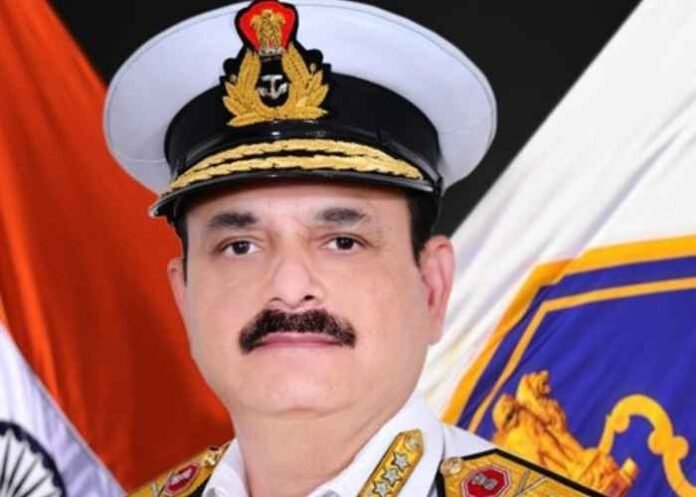
Vice Admiral Sanjay Vatsayan to take charge of Western Naval Command

New Delhi, May 10, 2026

In a significant development, Vice Admiral Sanjay Vatsayan has been appointed as the chief of the Indian Navy’s Western Naval Command, to succeed Vice Admiral Krishna Swaminathan, who has been named as the new chief of the force.

Currently serving as the Deputy Chief of Naval Staff, Vice Admiral Vatsayan is slated to take charge of one of the country’s most strategically important naval commands, headquartered in Mumbai.

This naval command is regarded as the Indian Navy’s ‘Strike Force’, entrusted with the responsibility of ensuring India’s maritime security, combat readiness, and strategic operations within the Arabian Sea region.

Its role in monitoring the western maritime frontiers and safeguarding maritime interests is considered to be of paramount importance.

Vice Admiral Vatsayan joined the Indian Navy in January 1988 and trained as a specialist officer in gunnery and missile systems. Over the course of his long military career, he has commanded several major warships and naval units. He has held command of key Indian Navy warships such as INS Nishank, INS Vibhuti, INS Kuthar, and INS Sahyadri.

He has also served in several pivotal capacities, including as the Commander of the Eastern Fleet, Chief of Staff of the Eastern Naval Command, and in various key roles related to policy, plans, and force development at the Headquarters of the Integrated Defence Staff.

In August last year, he assumed office as the 47th Deputy Chief of Naval Staff. For his distinguished service and exemplary leadership, he has been conferred with the Param Vishisht Seva Medal, the Ati Vishisht Seva Medal, and the Nao Sena Medal.

Defence experts believe that his extensive operational experience, strategic acumen, and leadership capabilities will further bolster the combat readiness and maritime security framework of the Western Naval Command.

The government named Vice Admiral Swaminathan as the Chief of Naval Staff on Saturday.

Current Navy chief, Admiral Dinesh Kumar Tripathi, is set to retire from service on May 31, and Swaminathan, who will be promoted to four-star rank, will succeed him.(Agency)

Delhi HC grants interim relief to Aman Gupta in personality rights suit

Aman Gupta Entrepreneur

New Delhi, May 10, 2026

The Delhi High Court has granted interim protection to entrepreneur and “Shark Tank India” judge Aman Gupta, restraining multiple entities from allegedly exploiting his personality rights, trademarks, voice, image, and other distinctive attributes through unauthorised merchandise, AI-generated content, fake social media accounts, and misleading commercial listings.

A single-judge Bench of Justice Tushar Rao Gedela passed the ex parte ad interim injunction in a commercial suit filed by Gupta against several defendants, including unidentified John Doe entities, after observing prima facie infringement of his personality and publicity rights.

In its order, the Delhi High Court noted allegations relating to unauthorised commercial endorsements, fake event booking listings, sale of merchandise bearing Gupta’s slogans and likeness, AI-based chatbot impersonation, circulation of objectionable and pornographic content, and fake Instagram profiles using his identity.

Gupta, co-founder of boAt and founder of OFF/BEAT, claimed that his name, image, likeness, voice, mannerisms, and registered slogans such as “Hum Bhi Bana Lenge” and “Down, but not out” had acquired substantial goodwill and commercial value through his entrepreneurial ventures, media appearances, and public recognition.

Justice Gedela observed that Gupta has developed a substantial public profile as an entrepreneur, investor, public speaker, and television personality through his association with “Shark Tank India” over the last five seasons. The order stated that the material placed on record showed widespread misuse of Gupta’s persona and trademarks across digital platforms.

“The manner in which the defendants are exploiting his name, voice, persona, slogans, registered trademarks of the plaintiff positively assert the underlying fact of the plaintiff’s personality, which are exclusive to him and none else,” the Delhi High Court said.

It added that sexually explicit and AI-generated deepfake material allegedly created using Gupta’s identity required urgent judicial intervention. “It goes without saying that the sexually explicit material/videos created by the defendants using the personality traits and attributes of the plaintiff, surely is an aspect which needs immediate and urgent consideration by the Court,” Justice Gedela observed.

The Delhi High Court restrained the defendants from misusing or exploiting Gupta’s name, image, voice, videos, GIFs, contact details, or any aspect of his persona without authorisation, including through AI and deepfake technologies.

It also restrained the defendants from infringing Gupta’s registered trademarks and from passing off goods or services as being endorsed or associated with him. Further, Google LLC and other platform-related defendants were directed to remove or block identified infringing content and disclose details relating to certain allegedly impersonating accounts identified in the complaint.

The order also granted Gupta liberty to notify platforms regarding newly discovered infringing websites and online accounts during the pendency of the suit, following which platforms were directed to suspend or lock such domain names and URLs upon receipt of supporting evidence.

The matter has been listed before the Joint Registrar on August 3 for completion of pleadings and before the Delhi High Court on October 1.(Agency)

Our Goal Is To Take Punjab’s Cyclists To Olympic Level: Cycling Association Of Punjab

Patiala, May 10, 2026(Yes Punjab News)

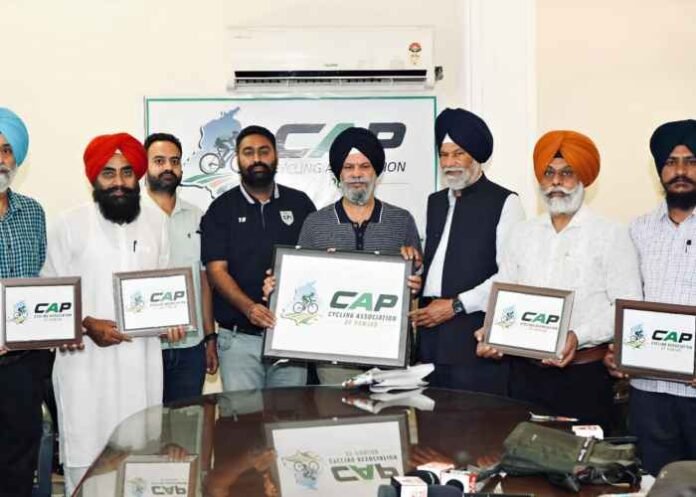
Addressing an important press conference at the office of the Cycling Association of Punjab (CAP), located at Surya Complex, President Charanjit Singh Dhaliwal and General Secretary Jagdeep Singh Kahlon unveiled a comprehensive roadmap to usher cycling in Punjab into a new era. On this occasion, the official logo of the Cycling Association of Punjab (CAP) was also launched. Former Cabinet Minister Surjit Singh Rakhra was present as a special guest.

They stated that the core objective of CAP is not merely to promote the sport, but to develop it into a globally competitive discipline. They emphasized that the soil of Punjab naturally possesses strength, endurance, and passion, which, with proper direction and opportunities, can be transformed into international-level achievements.

President Charanjit Singh Dhaliwal, in his address, said that the Association will initiate talent hunt programmes at the district and block levels to identify emerging players from rural areas. He added that plans have been prepared to establish modern cycling academies in every district, where athletes will be provided with coaching, balanced nutrition, accommodation, and high-quality equipment.

General Secretary Jagdeep Singh Kahlon stated that CAP will launch the Punjab Cycling League, offering players a major platform to showcase their talent along with cash prizes. In addition, a clear and structured annual calendar of district, state, and national-level competitions will be prepared to ensure consistent competitive exposure for athletes.

He further stated that scientific methods will be adopted for high-performance training, including data analysis, performance monitoring, fitness management, and recovery systems. To provide international-standard coaching, collaborations with foreign coaches and experts will also be undertaken.

Taking major steps in infrastructure development, CAP plans to establish modern velodromes, high-performance centres, and regional training hubs. This will create a strong and sustainable framework for cycling in Punjab.

Highlighting Punjab’s rich cycling legacy, they stated that cyclists from the state have brought pride to India on international platforms, and the time has come to revive that legacy.

Reaffirming its commitment to clean sport, CAP emphasized that anti-doping awareness campaigns, workshops, and educational programmes will be conducted to strengthen ethics and integrity among athletes.

Furthermore, CAP will promote cycling not just as a competitive sport, but also as a lifestyle. Large-scale cycling campaigns will be organised to promote fitness, environmental sustainability, and social connectivity. On this occasion, discussions were also held with coaches from across Punjab to develop a strong roadmap for the future of athletes.

In conclusion, both office-bearers encouraged the youth, stating that with dedication, discipline, and hard work, they can bring glory to their state and country at the global level.

They expressed confidence that with strong governance, modern training, and grassroots development, Punjab will soon regain its distinctive identity in cycling.

On this occasion, former Cabinet Minister Surjit Singh Rakhra appreciated the efforts of the Cycling Association of Punjab and said, “From soil to sky – Punjab cycling will rise again.”

Among those present were Joint Secretary Sukhjinder Singh, Treasurer B.S. Sudan, Vice President Bawa Singh, Joint Secretary Satwinder Singh, Sarpreet Singh, Sukhwinder Singh, Harpreet Kaur, Mohit Kumar, Parmvir Singh Grewal, Bhupinder Kumar, Gurpreet Kaur, along with players, coaches, sports enthusiasts, and other office-bearers.

Bollywood beauties Kajol, Sara & Rakul wish the incredible women in their lives on Mother’s Day

Mumbai, May 10 (IANS) Commemorating Mother’s Day on Sunday, several beauties from Bollywood took to social media to wish the powerful women in their lives.

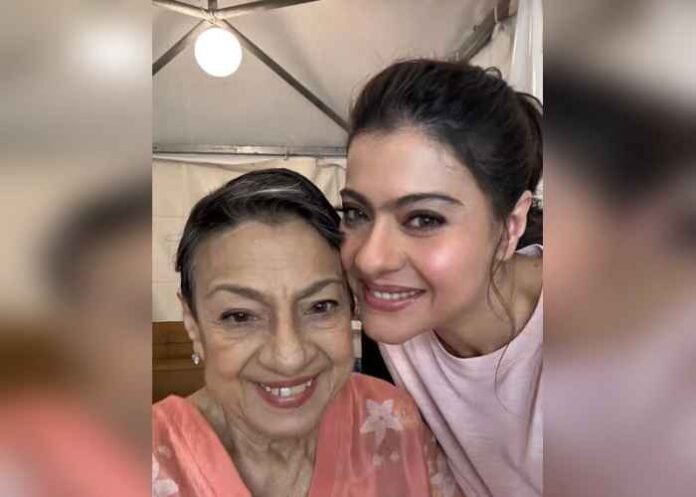
Kajol dropped a picture with mom Tanuja and wrote, “We are both part of the #mothersclub but she is presiding chairman and CEO.. bowing down to the one and only #mymom ! She is my Kali , Durga , Lakshmi and Saraswati all rolled into one. Even the goddess knows that (sic).”

Sara Ali Khan also praised mother Amrita Singh, saying, “My mommy my world. Can’t get over it. Will always try to be even an ounce of the woman mommy jaan is.”

Rakul Preet Singh added, “To my mom and my mother in law, Happy Mother’s Day. One gave me life, the other gave me another beautiful family to call my own. Thank you both for your unconditional love, your guidance, and for always standing by us with so much strength and grace. Having two mothers to love and look up to is truly one of life’s biggest blessings.”

Malaika Arora penned, “To the woman who taught me strength, grace & unconditional love…Forever your little girls Happy Mother’s Day, mama.”

Shriya Pilgaonkar shared, “my Devi . my Sukoon. I love u…Always the best adventures with you…Happy Mother’s Day to my life force @supriyapilgaonkar…Love you across lifetimes.”

Additionally, through her latest social media post, actress Isha Koppikar also expressed her heartfelt wish for her daughter Rianna.

The ‘Ek Vivaah… Aisa Bhi’ actress revealed that, “The Greatest Happiness For Me Will Be When My Daughter Fulfills Her Dreams Herself”.

As her Mother’s Day message, Isha further stressed that “Real Parenting Means Raising Children With Strength And Self-Respect”.

There are many more B-town actresses who compiled lovely Mother’s Day wishes for their mommy dear.(Agency)

Operation Sindoor marked decisive shift in India’s anti-terror doctrine: Report

Operation-Sindoor

New Delhi/Colombo, May 10, 2026

One year after Operation Sindoor, the military campaign continues to be viewed as a defining moment in India’s evolving security doctrine, signalling a major shift in the country’s approach towards terrorism and national security, according to a recent report.

Operation Sindoor was launched by the Indian armed forces on May 6 and 7, 2025, in retaliation for the Pahalgam terror attack in which 26 innocent people were killed by Pakistan-backed terrorists. During the operation, Indian forces carried out a series of precision strikes targeting nine high-value terror camps located in Pakistan and Pakistan-occupied Kashmir.

According to the report titled “One Year after Operation Sindoor: India’s doctrine of resolve” by political analyst A. Jathindra published in the Sri Lankan Guardian, the military campaign reflected a combination of political determination, military precision and strategic clarity.

“It was a campaign marked by military precision, political resolve, and strategic clarity. More significantly, it reshaped perceptions of India’s posture against terrorism, signalling a readiness to act with firmness when national security is at stake,” the report published in the Sri Lankan Guardian stated.

It said the long-term significance of Operation Sindoor lay not only in the military action itself but also in the broader strategic message it conveyed regarding India’s security policy.

“As the lessons of Operation Sindoor are absorbed into policy and practice, its legacy lies not only in the actions taken but in the enduring message it conveys: that safeguarding peace requires both strength and foresight. In this balance between resolve and responsibility, India’s security doctrine finds its renewed direction,” Jathindra wrote.

The report also referred to a 28-minute documentary released by the Defence Ministry during the Joint Commanders’ Conference in Jaipur. The documentary described Operation Sindoor as a “punitive and targeted campaign” aimed at dismantling terror infrastructure across the Line of Control and deep inside Pakistan-occupied Jammu and Kashmir.

According to the documentary, more than 100 terrorists were eliminated during the operation. It portrayed the campaign as a carefully coordinated military action supported by synchronised political and strategic decision-making.

The report noted that Prime Minister Narendra Modi, who featured prominently in the documentary, declared that India would “identify, track and punish every terrorist and their backers” and warned that any future attack on Indian territory would invite an “overwhelming response” on India’s own terms.

The report also cited remarks made by Deputy Chief of Army Staff Lieutenant General Rajiv Ghai, who said that “the mission was not an end but the beginning of India’s sustained campaign against terrorism.”

“Against this backdrop, one can conclude that Operation Sindoor will not end as long as Pakistan persists in weaponising jihadist terrorism against India,” Jathindra wrote in the report.

The immediate trigger for Operation Sindoor was the April 22, 2025, terror attack in Pahalgam’s Baisaran Valley in Jammu and Kashmir. The brutal massacre was carried out by The Resistance Front (TRF), which the report described as a proxy outfit of the Pakistan-based terror group Lashkar-e-Taiba, allegedly backed by the Pakistan Army and Inter-Services Intelligence (ISI).

The report also highlighted remarks made by Pakistan Army Chief Field Marshal Asim Munir shortly before the Pahalgam attack.

“We are different from Hindus in every possible way,” Munir had reportedly said, while also referring to Kashmir as Pakistan’s “jugular vein”.

The report noted that days after those remarks, Hindus were selectively targeted and killed in broad daylight during the Pahalgam terror attack.

“The timing of the attack left little doubt about Pakistan’s intent and reinforces the perception that terrorism remains central to Islamabad’s policy towards India,” the report stated.

The April 22 terror attack saw Pakistan-backed terrorists single out victims after asking about their religion, forcing them to recite the Islamic ‘kalima’ to identify non-Muslims. Among those killed were 25 tourists and one local pony ride operator who tried to save the tourists. Several victims were newly married, and many were shot at close range in front of their families.

In response, Indian armed forces launched Operation Sindoor on May 6 and 7, carrying out what officials described as a “focused, measured and non-escalatory” military operation against terror infrastructure in Pakistan and Pakistan-occupied Kashmir.

The report stated that the operation has since been described as India’s “most significant military campaign since the 1971 war” and noted that it reflected a new strategic doctrine based on short-range, calibrated offensives aimed at inflicting substantial damage while maintaining battlefield dominance.

Quoting American military analyst John Spencer, the report stated that Pakistan’s retaliatory attempts, including drone swarms, missile launches and rocket attacks, were effectively neutralised by India’s air defence systems.

“India relied on its indigenous Integrated Air Command, Control and Communication System (IACCCS), involving Akashteer, to repel attacks,” Spencer said, adding that India emerged “strategically on top.”

The report further observed that beyond counter-terror operations, Operation Sindoor also demonstrated India’s growing military capability and regional strategic dominance.

“The winner is absolutely clear. India has had successful retaliation strikes on major terror camps inside Pakistan, which were considered outside of India’s range. India has not only blocked Pakistan’s efforts to retaliate, but also delivered very precise damage to Pakistani air defences and air bases. New Delhi has sent a clear message: we can hit whatever we want to hit in Pakistan, and you cannot stop us,” the report quoted Austrian aerial warfare analyst Tom Cooper as saying.

The report also referred to Prime Minister Modi’s remarks after the operation, which it described as indicative of a major doctrinal shift in India’s security posture.

“We will not tolerate nuclear blackmail,” PM Modi had declared. “We have established a new normal. Now we will not distinguish between terrorists and those who nurture and support terrorists. Both are enemies of humanity.”

According to the report, Pakistan had for decades viewed India as a “soft state”, believing that nuclear deterrence would prevent New Delhi from responding militarily to terror attacks.

Citing strategic analysts, the report said that Prime Minister Modi, along with National Security Advisor Ajit Doval, introduced a new deterrence doctrine under which India would no longer remain constrained by fears of nuclear escalation when responding to major terrorist attacks.

The report concluded that Operation Sindoor symbolised the emergence of a “new normal” in India’s approach to state-sponsored terrorism.

“The operation was not a one-off retaliation but a demonstration of sustained military superiority. Over five days of conflict, India established clear dominance. For India, the lesson is unmistakable: deterrence lies not in restraint but in readiness to strike. Sindoor institutionalised that resolve, ensuring that Pakistan’s reliance on terrorism will be met with overwhelming force,” the report added.(Agency)


Why Mamata Banerjee’s defeat resonated beyond India?-FairPoint

Mamata Banerjee West Bengal CM

New Delhi, May 10, 2026

There was something unusual about the reaction to the Assembly election results this time. State elections in India routinely produce celebrations, accusations, posturing and political drama. But the outcome in West Bengal travelled far beyond India’s borders.

From Dhaka to Washington, the result triggered reactions rarely seen after a state poll in India. That alone suggested that what happened in Bengal was not being viewed merely as a regional political shift. It was being read as something larger — a strategic and ideological development in one of India’s most sensitive border states. And, the international attention it attracted was equally striking.

US President Donald Trump congratulated Prime Minister Narendra Modi on what the White House described as a “historic” and “decisive” mandate in West Bengal. Several international publications portrayed the result as a breakthrough moment for PM Modi in a state that had remained politically resistant to the BJP for years.

The obvious question is: why did a state election command such extraordinary global attention? Victories in Haryana, Rajasthan or Chhattisgarh do not evoke reactions of this scale abroad. West Bengal, however, occupies a different place in India’s political imagination. Geography and demography make it uniquely sensitive. Sharing a long and porous border with Bangladesh, the state has for years remained central to debates around illegal infiltration, border security and demographic change.

For years, the BJP has argued that the Mamata Banerjee government looked the other way while infiltration from Bangladesh continued unchecked. The allegations are not new.

Ironically, Mamata Banerjee herself once raised similar concerns. In 2005, as a Lok Sabha member, she had dramatically protested in Parliament over infiltration from Bangladesh, calling it a “disaster” for the country. On the streets of West Bengal, too, she repeatedly accused the then Left Front government of using illegal immigrants as a political vote bank.

But politics often reshapes positions faster than circumstances change. After coming to power in 2011, Mamata Banerjee’s stand appeared to undergo a sharp reversal. The issue that once formed the centrepiece of her political attacks gradually disappeared from her rhetoric. Instead, she became one of the fiercest critics of attempts to identify or deport illegal immigrants.

The sharpest example came during the Assam NRC exercise in 2018. While the Supreme Court-monitored process sought to identify illegal immigrants in Assam, Mamata Banerjee openly attacked the exercise, warning of “civil war” and “bloodbath” if the Centre continued with the policy. This opposition was aimed at protecting a political support base shaped over years of unchecked migration.

The BJP repeatedly built its Bengal campaign around this accusation. Union Home Minister Amit Shah, while speaking in Parliament during the debate on the Immigration and Foreigners Bill in March 2025, directly accused the Trinamool Congress government of enabling illegal immigration by facilitating the issuance of Aadhaar cards and voter IDs. He claimed that many Bangladeshis caught in different parts of the country possessed documents originating from West Bengal’s border districts, including the 24 Parganas.

Infiltration has remained a contentious issue in Bengal for decades. Border districts have witnessed demographic shifts significant enough to alter political calculations. Security agencies have repeatedly flagged concerns about illegal cross-border networks. The issue is no longer viewed merely through the lens of economics or welfare distribution; it is increasingly tied to questions of national security and internal stability.

The reactions emerging from Bangladesh after the election have only added to these anxieties. While sections of Bangladesh’s political establishment reportedly sent congratulatory messages to the BJP leadership, some Islamist voices reacted sharply against the Bengal verdict.

One Jamaat-e-Islami leader reportedly made inflammatory remarks calling for resistance against Delhi and spoke irresponsibly about Bengal’s separation from India. Such statements may represent fringe rhetoric, but they underline why political developments in West Bengal are being watched so closely beyond India’s borders. In Pakistan, discussions were held on the development, with many describing Mamata Banerjee’s defeat as a setback for the Indian opposition.

The intensity of these reactions reveals something important. Beyond Bengal, Mamata Banerjee had increasingly come to be viewed by many political and ideological groups as one of the strongest leaders capable of taking on Prime Minister Narendra Modi nationally. Her politics, often seen as centred around Muslim outreach, had earned her support among sections that viewed the BJP’s rise with concern.

That is why her defeat generated unusually sharp reactions outside India as well. While vested interests and ideological groups in neighbouring countries may interpret the result through their own political lens, the verdict delivered by Bengal’s voters is clear and strong.

Now, with the BJP forming the government in Bengal with a commanding mandate, expectations will be enormous. The party has promised a tougher stance on infiltration, stronger border management, expanded fencing and stricter enforcement against illegal residency networks.

Bengal has suffered enough through decades of political violence, fear, religious polarisation and uneven development. This election was not merely a rejection of Mamata Banerjee’s 15-year rule; it was also an expression of exhaustion and aspiration.

The people of Bengal have voted for security over violence and uncertainty, development over appeasement, and governance over perpetual conflict. They want jobs for the youth, better roads and infrastructure, dignity in everyday life, and the freedom to live.(Agency)