

Chandigarh, May 1, 2026 (Yes Punjab News)
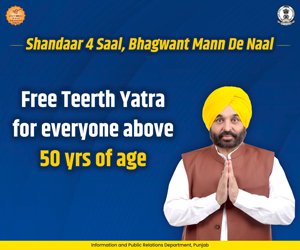
So far, around 1 lakh dialysis procedures, worth ₹16.5 crore, have been performed under the Bhagwant Mann Government’s Mukh Mantri Sehat Yojna (MMSY).
As chronic kidney disease rises across India, government-backed cashless dialysis programmes are emerging as a lifeline. Yet experts warn that survival is still being shaped more by access and affordability than by cure.
Dhian Singh from Ludhiana visits the hospital twice a week. For someone who has been undergoing long-term dialysis, he often faces a range of persistent physical and metabolic symptoms, even with regular treatment. However, there is some relief when it comes to financial assistance, the use of the Sehat Card. “Ever since I registered for the Mukh Mantri Sehat Yojana, I have been getting my dialysis free of cost at Simrita Nursing Home,” says the man who has received cashless treatment more than a dozen times so far.
For patients living with chronic kidney disease (CKD), life does not move in days or weeks. It moves in cycles of a machine. Two to three times a week, for nearly four hours at a stretch, blood is drawn from the body, filtered through a dialysis unit, and returned cleansed of toxins that failing kidneys can no longer remove. It is a procedure that sustains life, but does not restore health.
Across India, CKD has become a major public health concern, closely linked to the rising burden of diabetes and hypertension.
Public health experts estimate that hundreds of thousands of patients progress to end-stage kidney disease each year, requiring either long-term dialysis or kidney transplantation to survive. Globally, the World Health Organization classifies CKD as one of the fastest-growing non-communicable diseases, driven by ageing populations and lifestyle-related risk factors. In India, however, the crisis is compounded by cost.
A single haemodialysis session can cost between ₹1,500 and ₹4,000 in the private sector. With most patients requiring two to three sessions a week, annual expenses can quickly run into several lakhs, well beyond the reach of most households without sustained financial assistance. For many families, treatment decisions are shaped as much by economics as by medical need.
It is in this space that government-supported programmes such as the Mukh Mantri Sehat Yojna (MMSY) in Punjab are playing a critical role in preventing treatment discontinuity.
In most patients, CKD is essentially the final pathway of multiple long-term conditions that silently damage kidney function for years before symptoms appear. Under the Mukh Mantri Sehat Yojna, dialysis services are offered free of cost in government and empanelled private hospitals, reducing out-of-pocket expenditure that earlier forced many patients to skip or delay sessions.
On this, Health Minister Dr Balbir Singh said, “1 lakh free dialysis treatments, worth 16.5 crore have been delivered under Sehat Yojana so far. No patient should miss dialysis due to cost.”
A nephrologist, Dr Sourav Goyal from Delhi Heart and Multispeciality Hospital, Moga, emphasises that the impact of financial coverage in dialysis care goes far beyond convenience. “Dialysis is not curative; it is a life-sustaining therapy.
If a patient misses even one or two sessions, toxins accumulate rapidly, and complications can become fatal,” Dr Goyal says. “What cashless access ensures is continuity, and in dialysis care, continuity is survival,” he adds.
Sharing his experience, he adds, “We perform more dialysis sessions each month than we used to earlier, and many are conducted as part of cashless treatment. This is a huge support for patients and also a relief for us as doctors, as it prevents treatment discontinuation due to financial burden.”
He further highlights that India’s larger challenge lies in early detection. “Most patients are diagnosed very late, when kidney function is already severely compromised. At that stage, options are limited to dialysis or transplant.”
Medical research consistently shows that a significant proportion of CKD patients in India face catastrophic health expenditure, with families often exhausting savings or falling into debt within months of starting treatment.
 FOLLOW NOW